Equipment Trailers. The Complete Guide.

An equipment trailer is a heavy open trailer built to carry machines, skid steers, mini excavators, tractors, and compact construction equipment. It's defined by frame strength, ramp system, and honest payload. Buy by the heaviest machine you'll load plus attachments, then verify the truck can legally pull the combination. Everything else is options.
What an equipment trailer actually is
An equipment trailer exists to move machines. Not mulch, not furniture, machines, with their weight concentrated on tracks or wheels that punish a deck in ways a spread load never does. That single fact drives every design choice, heavier frame rails, tighter crossmember spacing, real ramps, and axles rated for the truth instead of the brochure.
The line between an equipment trailer and a heavy utility trailer is payload and deck engineering. The line between it and a flatbed is mostly the ramp system and the dovetail, since flatbeds serve freight and materials while equipment trailers serve things that drive aboard. And the line between bumper-pull and gooseneck versions is capacity, since roughly 14,000 pounds is where the gooseneck starts earning its price.
What actually rides on them is skid steers, mini excavators, tractors, forklifts, scissor lifts, attachments, and the occasional vehicle. The load defines the trailer. A 7,000-pound skid steer with a bucket needs a very different machine than a 3,000-pound compact tractor, even though both park on "an equipment trailer."
The buying process runs backward from the machine. Weigh it honestly, machine plus the heaviest attachment plus fluids, and add margin. That number picks your capacity class, the capacity class picks your axles, and the axles and total weight pick your truck. Buyers who start with the truck they own and work forward usually end up with a trailer that can't legally do the job.
Ramps, decks, and getting machines aboard
Ramps are the working end of an equipment trailer and the first place cheap builds fail. Stand-up ramps store vertically at the rear, spring-assisted, quick to deploy, and add rear weight. Slide-in ramps store under the deck, lighter duty as a rule, and slower to set. Mega ramps and full-width ramp gates carry tracked machines without point-loading. Whatever the style, the rating that matters is per-ramp capacity under a moving machine, which concentrates far more force than a parked one.
Loading angle decides what can actually climb aboard. Low-clearance machines, scissor lifts and some tractors, hang up on steep approaches. A dovetail, the sloped rear deck section, cuts the angle. The tradeoff is rear overhang that drags on steep driveways and eats into flat deck length. If you haul low machines, the dovetail earns its keep. If you don't, it's lost deck.
Deck construction takes the machine's weight where it stands. Treated wood decks are standard, repairable, and grip tracks well. Steel decks resist gouging from tracks and forks but cost more, weigh more, and get slick when wet. Diamond-plate over the fenders and a rubrail with stake pockets round out a working deck. Crossmember spacing, 16 inches or tighter, matters more under a tracked machine than any deck surface choice.
Securement is a legal system, not an afterthought. A loaded machine wants four points of independent tie-down with rated chains and binders, and DOT expects working-load limits that match the machine. Use welded D-rings rated in tons, not stamped sheet loops. Plan the loading and securing routine before the first haul, and check your state's regulations on securement and marking. The fine rides with the driver.
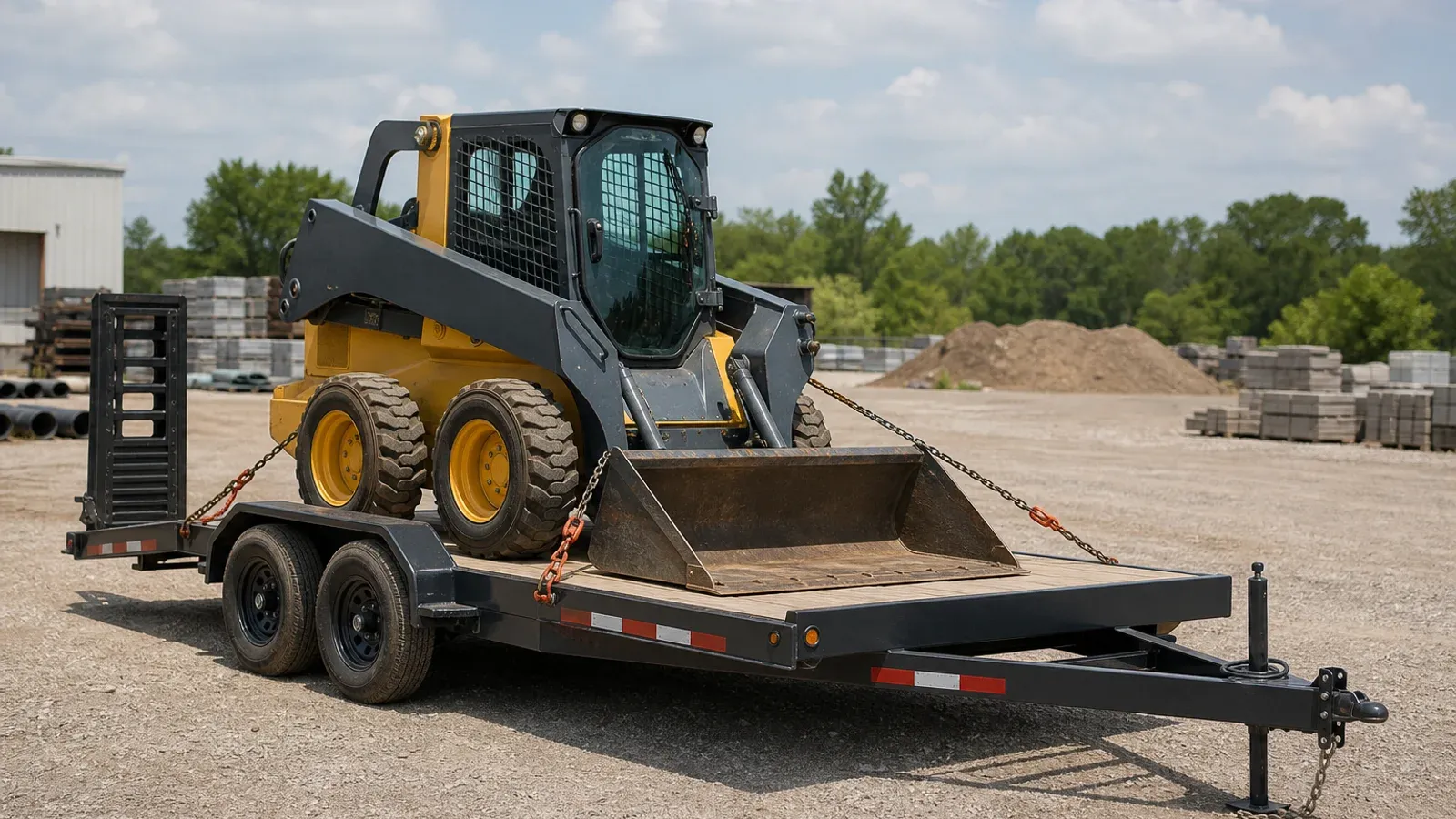
Equipment trailer sizes and real payload
Equipment classes are named by GVWR, and payload is GVWR minus the trailer's real empty weight. Heavy frames cost payload, so a 14,000-pound trailer weighing 4,400 empty hauls 9,600, not 14,000. The certification label and a scale ticket beat every brochure.
| Class | Typical GVWR | Typical Payload | Common Fit |
|---|---|---|---|
| 16 to 18 ft, 10,000 lb | 9,900 to 10,400 lb | 7,000 to 7,800 lb | Compact tractors, small skid steers |
| 18 to 20 ft, 14,000 lb | 14,000 lb | 9,400 to 10,400 lb | Full-size skid steers, mini excavators |
| 20 to 24 ft, 16,000 lb | 15,000 to 16,000 lb | 10,500 to 11,800 lb | Larger excavators, dual machines |
| Gooseneck classes | 20,000 to 25,000+ lb | 14,000 to 19,000 lb | Dozers, backhoes, multi-machine |
The 14,000-pound class is the center of the market because it matches the most common machines. An 8,000-pound skid steer with a 1,200-pound attachment fits with margin. The same math pushed to a 10,000-pound excavator does not, and running at 98 percent of rating every day is how axles and buyers age prematurely.
The truck is half the combination. A loaded 14K trailer wants a three-quarter-ton at minimum, and tongue weight at 10 to 15 percent of loaded weight counts against the truck's payload, not just its tow rating. Above the 14K class, the gooseneck connection moves that weight into the bed over the axle and raises the safe ceiling. That's the whole gooseneck versus bumper-pull decision in one sentence.
Deck length follows the machine plus its geometry. Measure the machine with attachments mounted, add room for chain angles, and remember the dovetail isn't flat storage. An 18-foot deck plus 2-foot dovetail hauls most skid steer setups. Excavators with blades want the 20-plus range.
Equipment trailer sub-types
Skid-steer models are the trade special, typically 14K bumper-pulls with tight crossmembers, stand-up ramps, and deck lengths matched to the machine. Heavy-duty covers the 16K-and-up tier where triple axles and gooseneck connections take over. If your machines are growing with your business, buy the class above today's fleet. Machines only get heavier.
The features that actually matter
Skip the cosmetic tier. Aluminum wheels, two-tone paint, and toolboxes at dealer prices haul nothing. The one upgrade that always pays on a working trailer is the next axle tier and the brakes that come with it.
Equipment trailer brands
Equipment is where the major open-trailer brands compete hardest, because contractors buy on spec and talk to each other. Reputations here are earned over years of Monday mornings, not marketing.
Big Tex and PJ carry the broadest equipment lines and dealer networks. Load Trail and Iron Bull compete aggressively on spec-per-dollar. Diamond C positions premium with distinct engineering and finish. Lamar runs strong in the middle of the market. Compare matched configurations, same GVWR, same deck, same ramp system, then let the axle brands, frame steel, and warranty terms break the tie.
What equipment trailers cost
Equipment pricing scales with the capacity class. The 10K tier starts in the mid four figures. The 14K workhorse class clusters higher, and gooseneck heavy classes climb well into five figures. Steel prices, freight, and regional demand move the numbers season to season, which is exactly why a static price table on a website ages badly and a dated, sourced price guide doesn't.
The padding hides in the same three places as always, freight and prep line items, dealer-installed accessories, and the finance office. On equipment trailers, add a fourth, the ramp upgrade. Some builders quote a base with light-duty slide-ins and price the ramps your machine actually needs as an option. Spec the ramps into the base comparison or the quotes aren't comparable.
Buy the class, not the deal. A discounted 10K trailer under a machine that grosses 9,800 with attachments isn't a bargain, it's a rolling violation with no margin for mud on the tracks. Rate the trailer above your honest worst-case load and the deal math takes care of itself over the years you'll own it.
Fleet buyers, get the out-the-door quote on identical spec sheets from three dealers, and ask each about parts stock for axles, brakes, and ramps. The cheapest quote from a dealer who stocks nothing costs the most the first week a trailer sits.
Know the fair price before you go
The free Price Guide lists current dealer and MSRP prices for hundreds of new trailer models, brand by brand, with a confidence label on every number.
Get the Price GuideEquipment trailer FAQ
What size equipment trailer do I need for a skid steer?
Most full-size skid steers with an attachment land in the 14,000-pound GVWR class on an 18 to 20-foot deck. Weigh the machine with its heaviest attachment and confirm payload, not GVWR, covers it with margin.
Bumper-pull or gooseneck?
Under 14,000 pounds loaded, bumper-pull does the job for less money and works with any properly rated truck. Above that, the gooseneck is safer, more stable, and usually required by the physics.
What truck do I need for a 14K equipment trailer?
A properly equipped three-quarter-ton at minimum, and check payload against tongue weight, not just the tow rating. Loaded heavy classes want a one-ton.
Do I need a CDL to tow an equipment trailer?
Possibly, based on combined weight ratings and use, not on how heavy the load happens to be that day. The common trigger is a combination rating over 26,000 pounds. Verify against your state's rules.
Wood deck or steel deck?
Wood grips, absorbs impact, and repairs plank by plank. Steel resists track and fork damage but costs weight and money. The full comparison covers it. Most buyers run wood and never regret it.
What do equipment trailers weigh empty?
Roughly 2,800 to 3,600 pounds in the 10K class, 3,800 to 4,800 in the 14K class, more with steel decks and heavy ramps. Empty weight is payload you don't get, so compare it between matched models.
Do all axles need brakes?
At 14K and above, yes in practice and in most states by law. Below that it varies. Every braked axle needs a working controller in the truck.
Tilt deck or ramps?
Tilt trailers trade ramp handling for a moving deck and hydraulic upkeep. Great for low machines and solo operators, more to maintain. The comparison breaks down when each wins.