Best Trailers for Hauling a Mini Excavator.

Mini excavators span 1.5 to 10 metric tons, so the trailer answer spans three classes. The popular 3.5 to 5-ton machines ride the 14K equipment trailer, the trade standard. Under 2 tons, the 10K tier handles it. Past 6 tons, you're in gooseneck territory. Weigh the machine with its bucket and thumb, watch the boom while loading, and chain all four corners plus the blade.
Mini-ex weights by the ton class
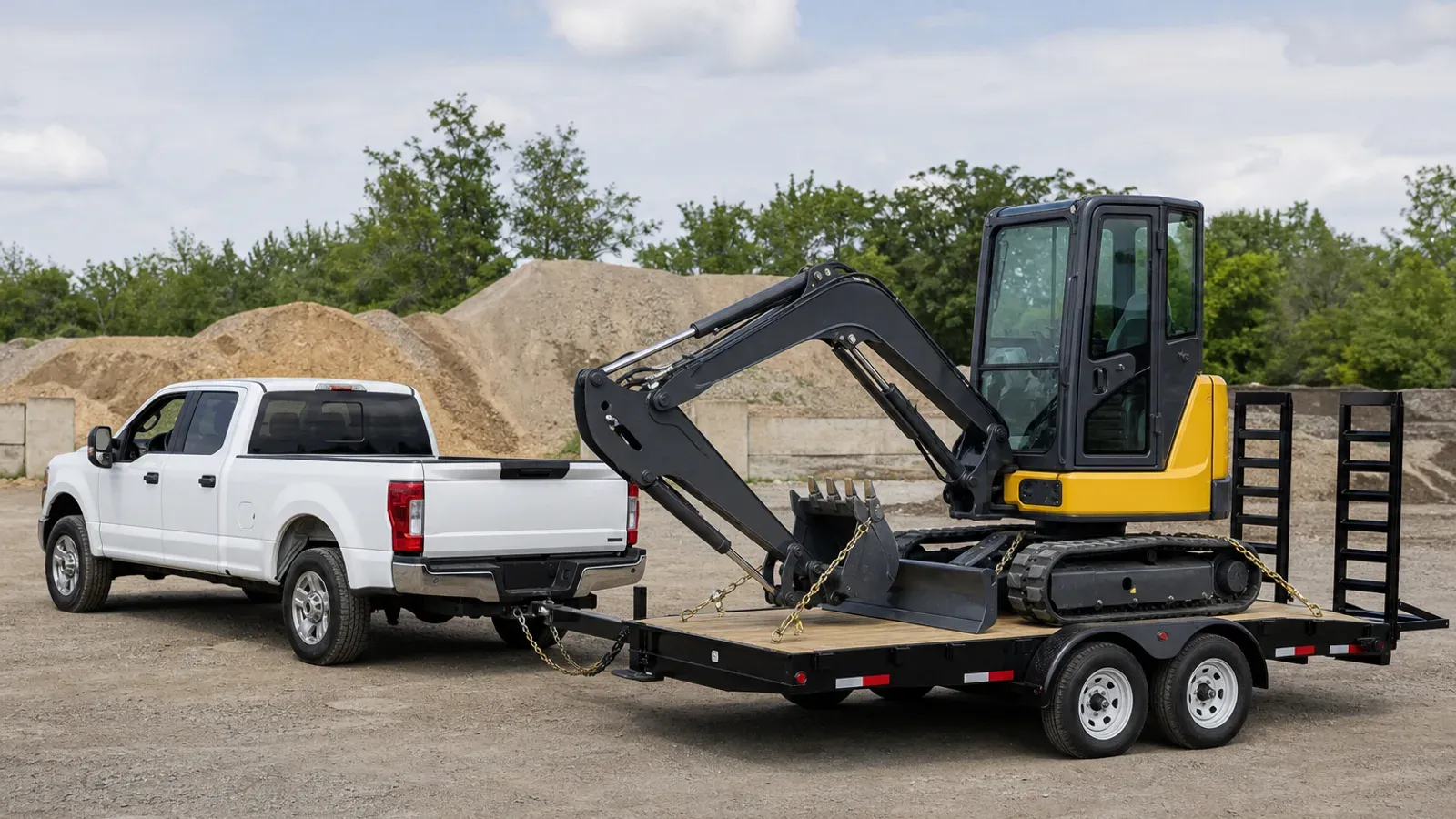
The mini excavator market sorts itself in metric tons, and the trailer classes line up cleanly once you're honest about real weights. Most spec sheets quote operating weight with the standard bucket, but thumbs, quick couplers, cab options, and rubber-versus-steel tracks all move the number. The machine boards the trailer at its worst: wet, muddy, and fully equipped.
| Ton Class | Real Weight Range | Trailer Class | The Standard Answer |
|---|---|---|---|
| 1 to 2 ton | 2,600 to 4,800 lb | 7K to 10K | 16-ft 10K equipment |
| 2.5 to 3.5 ton | 5,500 to 8,300 lb | 10K to 14K | 18-ft 14K equipment |
| 4 to 5 ton | 8,800 to 12,000 lb | 14K, near the edge | 20-ft 14K, honestly loaded |
| 6 to 10 ton | 13,000 to 23,000 lb | 16K to 25K+ | Gooseneck heavy classes |
The 4-to-5-ton row earns its asterisk. It's the market's hottest class and the one that flirts with the 14K trailer's edge. A 5-ton machine with a thumb and full tank can crowd 12,000 pounds against a payload of 9,400 to 10,400, which is over, not close. The class's honest ceiling is the machine's real scale weight. Buyers who guess end up paying for the gooseneck tier one citation at a time.
The machine's geometry adds its own quirks. The boom and blade change the footprint by feet depending on stow position, the house swings and has to be locked for transport, and rubber tracks grip ramps well while steel tracks need more care. Deck length has to cover the machine blade-to-bucket in travel position plus chain room, which is how the 18 and 20-foot standards became standard.
Best trailers by ton class, ranked
The center of the market rides the 14K equipment trailer, 18 feet for the 2.5-to-3.5-ton machines and 20 feet for the 4-to-5s. The purpose-built features, tight crossmembers, rated ramps, and corner D-rings, serve the excavator exactly as they serve its skid-steer cousin. The 14K class truck math applies unchanged: three-quarter-ton minimum, loaded honestly.
The light lane runs the 16-foot 10K tier for 1-to-2-ton machines, and at the very bottom, heavy 7K trailers carry the micro machines rental yards run. Check the payload subtraction against real weight, not the ton badge. The heavy lane is the gooseneck equipment tier from 6 tons up, 20K-plus classes behind one-tons, with the CDL math attached.
A couple of special cases. Low ground clearance isn't the mini-ex's problem, so the tilt premium buys less here than elsewhere, unless you're a solo operator loading all day. And the machine's dirt-work life makes the dump trailer the fleet's usual second purchase, because the excavator digs what the dump hauls. The dump-versus-equipment page covers the order of operations.
Booms, blades, and the four-corner chain
Loading is a boom-management exercise. The machine climbs in low range, blade leading uphill or trailing per the manufacturer's book, with the boom low and centered as ballast. Resist the classic temptation to use the boom to assist the climb, because it works right up until it doesn't. Lock the house straight, set the blade down on the deck at the parking mark, and lower the boom and bucket to the deck or the blade per the stow spec. Do that and the tongue weight target lands right where the deck mark says.
Chaining runs four corners plus the attachments. Use rated chain and binders at the machine's factory points, with the working-load limits summing to DOT's arithmetic. Give the blade its own securement or chain it down, and tie the bucket-and-thumb assembly flat, because a swinging thumb is a wrecking ball with a pin. The house lock is transport equipment, not a suggestion. The securing fundamentals close the checklist the same way every load.
The road follows the class rules. Run brakes all around with the controller tuned, honor the loaded combination's regulations on securement and marking, and remember the license line that the 5-ton-and-up world crosses routinely. Re-check the binders at ten miles. And knock the mud off the tracks before boarding, because the excavator hauls more dirt in its undercarriage than most trailers admit.
Mini excavator hauling FAQ
What size trailer for a 3.5-ton mini excavator?
An 18-foot 14K equipment trailer, the class standard, with roughly 8,300 real pounds sitting comfortably inside a 9,400-plus payload. Weigh the machine with its attachments to confirm.
Can a 14K trailer haul a 5-ton mini ex?
At the honest edge, sometimes. A 5-ton with thumb and fuel can pass 11,000 to 12,000 pounds, over most 14K payloads. Scale the machine, because the answer is on the ticket, not the badge.
What truck do I need?
A three-quarter-ton at minimum for the loaded 14K classes, and a one-ton for the gooseneck tiers. Payload against tongue or pin weight decides, as always.
How do I tie down a mini excavator?
Four rated chains at the factory corner points, blade and bucket secured separately, house locked, and boom stowed per the book. Sum the working-load limits against the machine's weight.
Rubber or steel tracks on the ramps?
Rubber grips ramps well. Steel wants traction bars or wood decking and more care. Either way: low range, boom low, and no boom-assisted climbing.
Do I need a CDL for excavator hauling?
The 5-ton-and-up world crosses 26,000 combined pounds routinely in commercial use. Run the rules against your real ratings before your business plan assumes otherwise.