Gooseneck Equipment Trailers Explained.

A gooseneck equipment trailer moves the hitch into the truck bed and pushes the capacity ceiling past 20,000 pounds. It hauls the excavators, dozers, and multi-machine loads bumper-pulls legally can't. The working classes run 20 to 30-foot decks behind one-ton trucks. Buy it when your machine math passes 9,500 pounds, or when the fleet is growing that way. It's the equipment trade's serious tier, priced and licensed accordingly.
What a gooseneck equipment trailer is
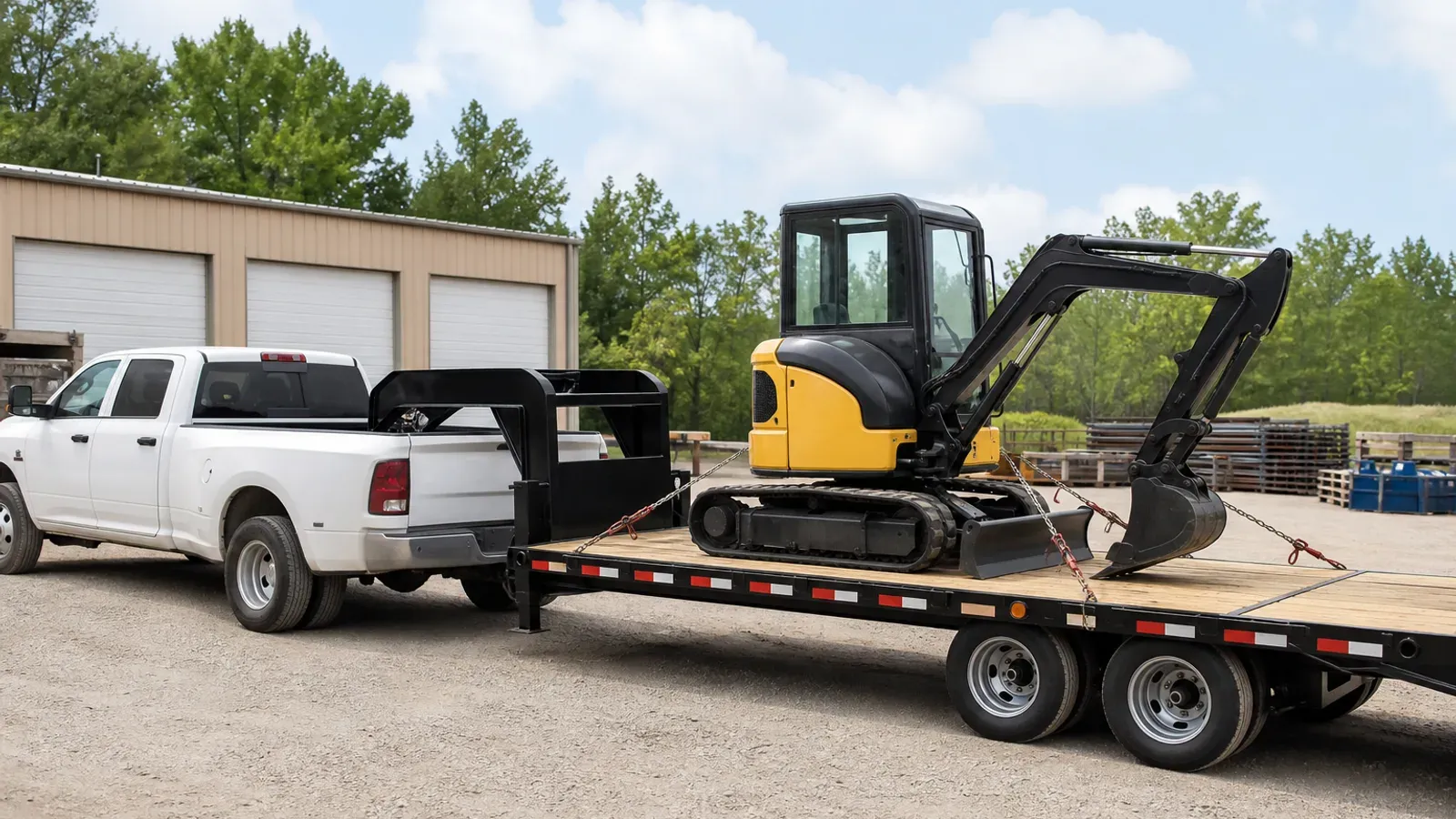
This is the trailer the equipment trade means when it says trailer. It's a heavy deck behind a gooseneck connection, with the coupler riding a ball in the truck bed over the rear axle. Capacity classes start where the bumper-pull tops out and run past 25,000 pounds GVWR. Every excavation outfit, land-clearing crew, and heavy-machine hauler eventually parks one in the yard, because the machines eventually demand it.
The neck buys three things the guide's gooseneck coverage details: capacity past bumper physics, stability by geometry, and turning that puts long decks into tight sites. On the equipment version, those translate into the loads that matter, a 12,000-pound excavator with a thumb, a dozer and its attachments, or two compacts riding together. The loads that write checks.
The deck menu is the equipment standard, expanded. You get 20 to 30-foot lengths, flat decks with stand-up ramps, beavertails and mega ramps for tracks, and the hydraulic dovetail at the premium end, which folds the tail to the ground for low iron. Choose wood or steel decks per the deck debate, expect tighter crossmembers than anything lighter, and count on tie-down hardware rated in tons, because the cargo is.
The commitments come attached. You'll need a one-ton truck, frequently a dually, plus the bed hitch install and the CDL math that most working combinations at this tier trigger. The gooseneck equipment trailer is a commercial tool, and everything below it prices, specs, and licenses like one.
Pin weight, decks, and heavy loading
Pin weight is the tier's controlling number. Fifteen to 25 percent of loaded weight rides the pin, 3,000 to 5,500 pounds on the working classes, pressed into the truck bed over the axle and counted against the truck's payload. That math built the tier's truck fleet. Single-rear-wheel one-tons handle the lighter classes, duallys carry the heavy ones, and the gooseneck hitch install, rails or pucks bolted to the frame, is part of the entry fee.
Loading heavy machines is a procedure, not an event. The machine climbs rated ramps or the beavertail in low gear, tracks centered and a spotter watching the ramp flex, then parks at the deck mark that sets pin weight right. Four-point chain securement with rated binders follows, working-load limits matched to the machine per DOT's arithmetic, and the towing fundamentals apply at their most serious. The hydraulic dovetail rewrites the climb for low-clearance iron, since the deck comes down to the machine. Its premium is the whole difference between loading a scissor lift and improvising one.
Machine position does double duty at this tier. It sets pin weight, and on long decks it manages axle loading, since the trailer's tandems or triples carry their rated share only when the mass sits over them. Park a machine too far forward and it overloads the pin and the truck. Too far back and it unloads the pin and invites the sway the neck otherwise prevents. Mark the deck for each machine, the way the yard's veterans all do.
The running gear is commercial. Expect tandem 10K or 12K axles, triples at the top, brakes on every axle with electric-over-hydraulic at the heavy end, load range G rubber, dual 12K jacks, and a maintenance calendar you treat as fleet overhead. At these weights the running gear is infrastructure, so the guide's brand-and-parts advice applies double.
Gooseneck equipment sizes and payload
| Class | Typical GVWR | Typical Payload | Common Fit |
|---|---|---|---|
| 20 to 24 ft, tandem 7K | 14,000 to 15,900 lb | 9,500 to 11,300 lb | The bumper-pull crossover |
| 24 to 28 ft, tandem 10K | 20,000 to 22,000 lb | 13,800 to 16,000 lb | The working standard |
| 28 to 32 ft, tandem 12K | 23,000 to 25,900 lb | 16,000 to 19,000 lb | Big excavators, dual machines |
| 30 to 36 ft, triple or dovetail | 25,000 to 30,000+ lb | 17,500 to 22,500 lb | Dozers, max legal loads |
Payload is GVWR minus empty weights that start at 6,000 pounds and climb, because the neck and heavy frame are steel you pay for twice, once at the register and once against every load. Compare scale weights between builds, since the spread at this tier is four figures of daily capacity.
The license line runs right through the middle of the table. Nearly every working combination here stacks past 26,000 combined pounds with a trailer over 10K, which is CDL territory for commercial use, decided by ratings rather than the day's load. Federal and state regulations cover it, and the tier's buyers spec GVWR with those rules open. Some deliberately cap ratings, but most just get the license the work requires.
Where the gooseneck equipment trailer wins and loses
The buying rule comes from the guide. Run backward from the heaviest machine plus attachment, add margin, and buy the class above a growing fleet's current math. At this tier that discipline is measured in five-figure increments, which is exactly why it pays.
Gooseneck equipment FAQ
When do I need a gooseneck instead of a bumper-pull?
When machine plus attachment passes roughly 9,500 pounds, or loaded trailer weight passes 14 to 15K. The comparison draws the line in detail.
What truck does the tier need?
A one-ton is the working floor, and a dually once pin weights climb past what single rear wheels carry. Payload against pin weight decides, not tow rating.
How much does an excavator-class setup haul?
The 20 to 22K working classes carry 13,800 to 16,000 usable pounds, a 12 to 14K excavator with attachments and margin. The heavy classes stretch to 22,000-plus.
Do I need a CDL?
For commercial use at this tier, almost certainly, since combined ratings pass 26,000 pounds by design. Check the rules and get the license the work requires.
Is the hydraulic dovetail worth it?
For low-clearance heavy machines loaded regularly, yes, it replaces ramps, risk, and a spotter. For wheeled machines that climb fine, it's a premium spent on someone else's problem.
Wood or steel deck at this tier?
Wood remains the standard and repairs plank by plank under track abuse. Steel earns its cost under severe daily duty. The deck comparison runs it.