Trailer Brakes Explained.

Electric drum brakes run the trailer world. A magnet applies the shoes on the controller's command, they're standard from the 7K classes up, and most states require them past 3,000 pounds. Electric-over-hydraulic upgrades the heavy tiers to disc stopping, and surge brakes serve rentals and boats. Brakes on every axle beat the one-axle minimum anywhere it's offered, and adjustment and magnet service are the maintenance you'll actually do.
Three ways trailers stop
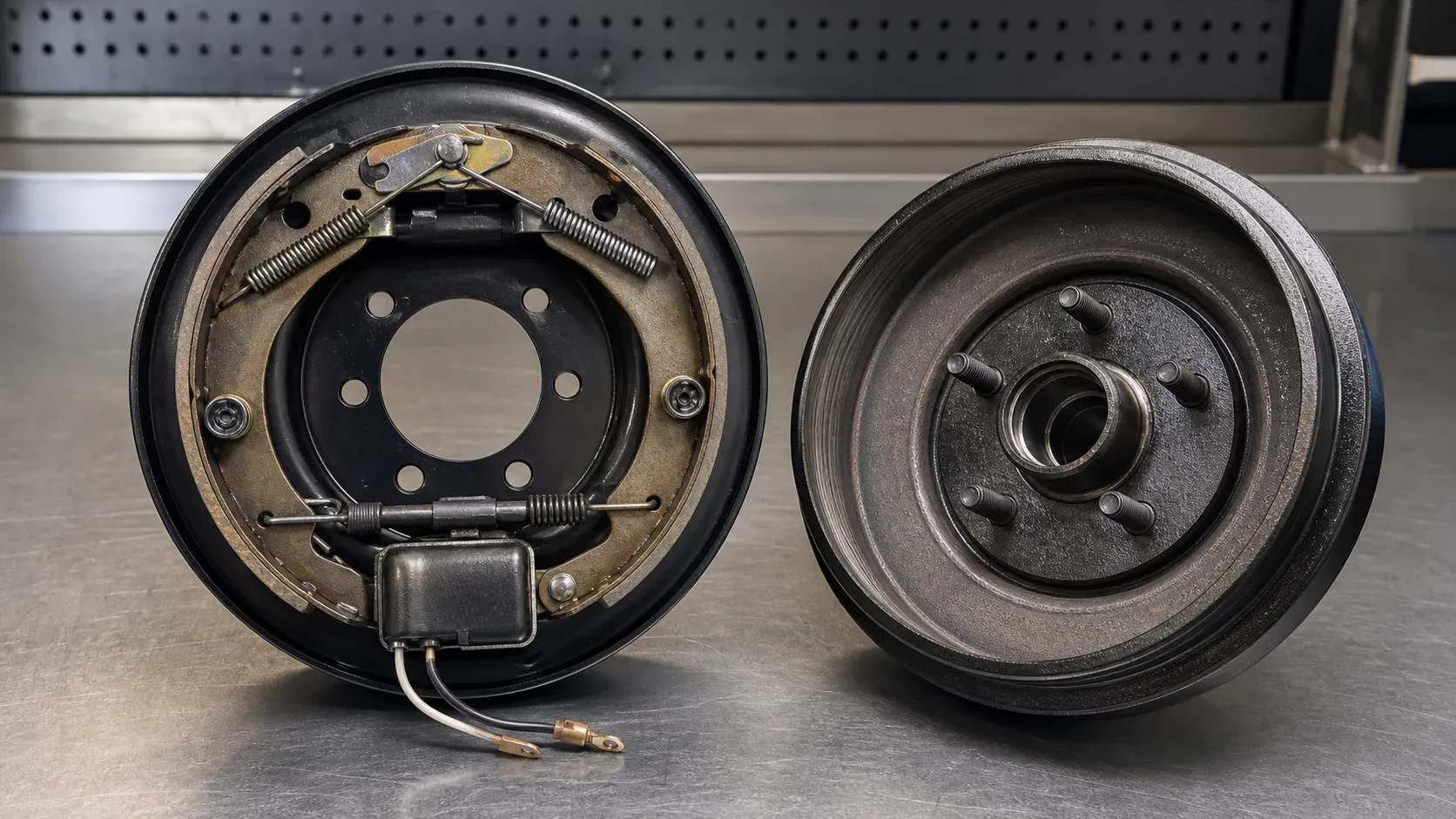
Electric drums are the market's standard. A magnet inside each braked hub grabs the drum's face when the controller sends voltage, levering the shoes outward in proportion to the signal. It's simple, cheap, and serviceable everywhere. The truck-side half of the story, controllers, gain, and the 7-pin's brake circuit, lives at the controller page. This page owns the trailer side.
Electric-over-hydraulic is the heavy tiers' upgrade. The controller's signal drives a trailer-mounted pump that pressurizes hydraulic disc calipers, giving shorter stops, fade resistance on grades, and wet-weather consistency that drums can't match. It's standard or optional on heavy dumps, gooseneck freight decks, and the 16K-and-up classes, and it costs a real premium plus a pump on the maintenance calendar. Above all of it, the air-brake commercial tier runs the semi world's system where electric ends.
Surge brakes are the third path. A hydraulic master cylinder in the coupler applies the trailer's brakes when it pushes against the decelerating truck, so the system is self-contained with no controller. It's the standard on rental fleets and boat trailers. The trade is that you get no driver modulation and no manual application, and reversing needs a lockout, which the reverse circuit on the wiring page releases.
Thresholds, axle counts, and service
The law sets floors by GVWR. Most states require brakes past 3,000 pounds, some at 1,500, and several require all axles braked at the higher tiers. Every braked trailer also carries the breakaway requirement, the pin-switch and battery that lock the brakes on separation, tested at hookup, per the rules and the routine on the controller page. The 2,990 badge exists precisely to duck these thresholds, per the GVWR page.
The axle-count decision matters more than the legal floor. One braked axle satisfies most minimums at the 7K tier, but braking both axles shortens loaded stops meaningfully at every class. The option costs little at purchase against what it saves at your first emergency stop, which is why every trailer page on this site recommends it without hedging.
Service is the honest tax on drums. Shoes wear and self-adjusters seize, so a seasonal manual adjustment keeps the shoes close and the stopping crisp. Magnets wear flat and get replaced in pairs. The whole system announces neglect as a trailer that stops worse than it did last month, and that symptom is worth believing. Bearings share the hub, per the axle page, so a smart shop services both in one teardown. EOH systems trade shoe adjustment for fluid, pad, and pump care. Either way it's brake maintenance, done on the calendar or on the shoulder.
Brake FAQ
When are trailer brakes required?
In most states past 3,000 pounds GVWR, some at 1,500, and several on all axles at heavier tiers. The breakaway system rides along wherever brakes do.
Electric or electric-over-hydraulic?
Electric drums serve through the 14K classes honestly. EOH's disc stopping earns its premium on the 16K-and-up tiers, on grades, and in heavy daily work.
One braked axle or all?
All of them, at every class where it's offered. The one-axle build meets the minimum, the full set meets the load, and the option is the best safety per dollar on the market.
Why do my trailer brakes fade?
Usually drums out of adjustment, then worn magnets, then controller gain. Seasonal adjustment keeps the shoes close and the stops honest.
What are surge brakes?
Coupler-actuated hydraulics that apply on the trailer's own push, the rental and marine standard. They're self-contained and unmodulated, with reverse lockouts either wired or manual.
How often do trailer brakes need service?
Adjust seasonally, and inspect shoes and magnets at the annual bearing service, replacing them in axle pairs. Brakes and bearings share one teardown.