Heavy-Duty Pintle Trailers Explained.

Heavy-duty pintle is the air-brake commercial tier, the tag trailers rated 30,000 to 50,000-plus pounds that run behind medium and heavy-duty trucks. Nobody debates the ring-and-hook connection here, they just spec it, and the trailer is one piece of a fleet's compliance program. Glad hands, commercial inspections, and CDL operation define this tier more than any trailer spec does. It's equipment-transport infrastructure, and you buy it and run it that way.
Where pintle stops being a pickup conversation
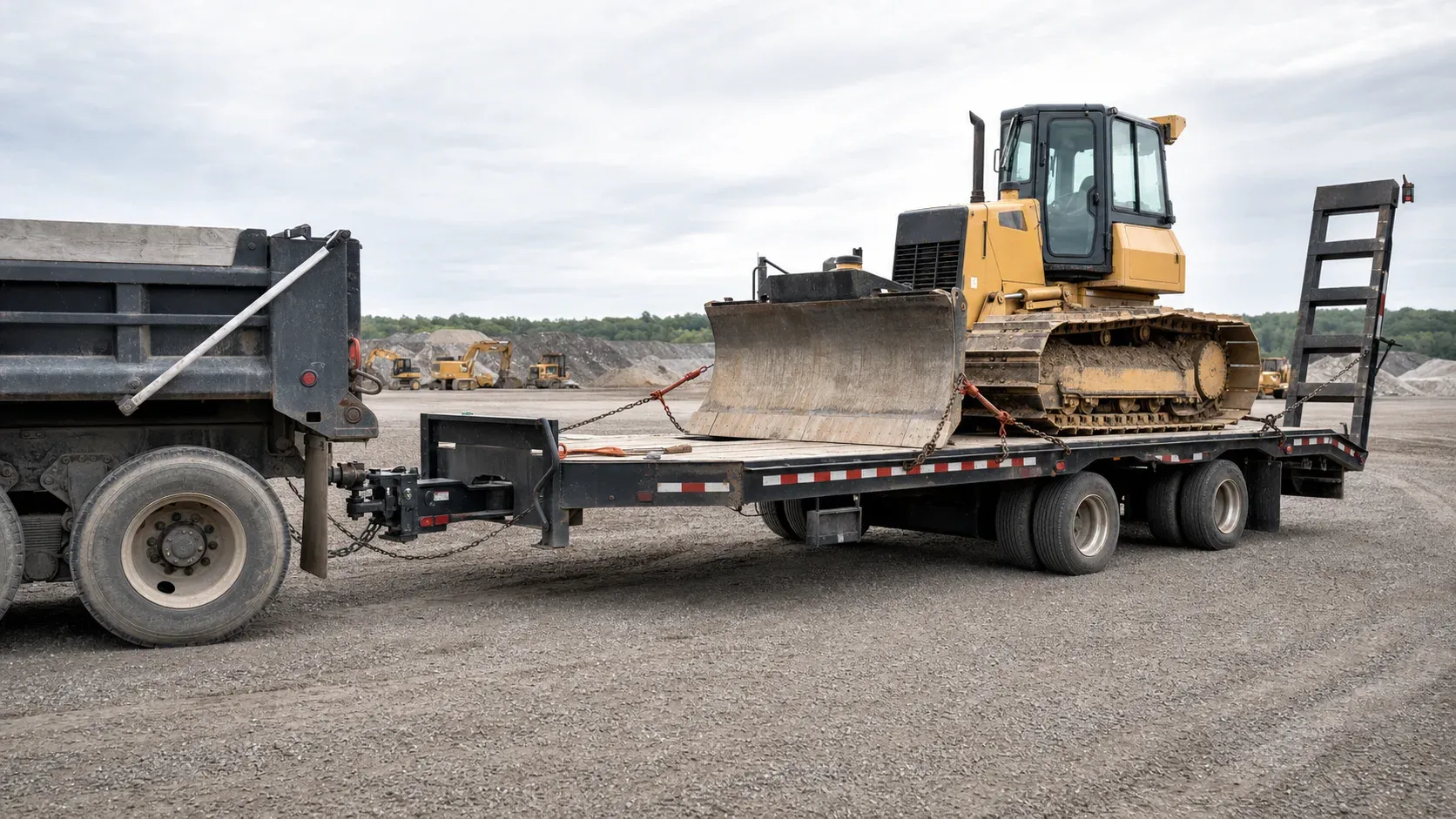
This is where the usual pickup-and-trailer math stops applying. The tag trailers rate 30,000 to 50,000-plus pounds, ride behind F-650s, F-750s, and Class 7 and 8 chassis, and hook up through pintle hooks rated in the six figures of pounds. The ring-and-hook connection makes its severe-duty case here, at a scale where no ball coupler ever competed. The buyers are municipal fleets, utility contractors, equipment dealers, and construction outfits that move dozers and excavators every day. Their trailers are line items in a fleet budget, not driveway decisions.
Think of it as the pintle tag grown to its ceiling. Full decks ride behind the ring with beavertails and mega ramps for tracked iron, air brakes replace electric, and the securement discipline from the equipment trailers runs at DOT's commercial intensity. The basic idea doesn't change at this tier. What changes are the systems around it, and those systems are what you're really buying.
The buyers are fleets, by definition. The purchase runs on spec sheets, parts commonality, and the dealer's service bench, and the complete pintle guide covers the fleet side in more detail. The casual buyer the lighter tiers serve dropped out two weight classes ago.
Air brakes, glad hands, and compliance
Air brakes define the tier. Electric brakes give out right where these weights start, so the heavy tags run full air systems. That means brake chambers at every axle, glad-hand connections that mate the truck's air lines to the trailer's, and spring brakes that hold a parked trailer in a way electric never could. Air compatibility between truck and trailer is the first spec question you ask. The daily pre-trip air check, watching for leaks, watching pressure build, running a tug test, is a routine that commercial operation writes into law.
The running gear is commercial scale. You get tandem and tridem axle groups rated at 20,000-plus pounds per axle, hub-piloted wheels on heavy rubber, and axle ratings stacked with the kind of margin fleets audit. Suspension, whether spring or air-ride, gets spec'd to the loads and the roads between sites. The lunette-and-hook hardware scales up to match, with 3-inch rings on adjustable plates and hooks rated past 60,000 pounds. The same height-and-level setup rules from the main guide apply, just with a loaded ten-ton emphasis.
Compliance is the ownership model. That means CDL operation with no exceptions, DOT numbers and inspection schedules, securement under the federal equipment rules with chain inventories sized for dozers, and the annual-inspection paper trail these buyers already keep fleet-wide. The trailer joins a compliance system, and the builders who serve this tier build for the audit as much as for the load.
Heavy pintle classes and payload
| Class | Typical GVWR | Typical Payload | Common Fit |
|---|---|---|---|
| Tandem air tag | 30,000 to 36,000 lb | 22,000 to 27,500 lb | Excavators, dozers, loaders |
| Tridem air tag | 40,000 to 50,000+ lb | 30,000 to 38,000 lb | The tier's ceiling, max iron |
The payload math still governs, just at fleet scale, with empty weights of 8,000 to 12,000 pounds. Axle-group ratings have to meet the bridge formula and state weight law, so loads here get planned against permits as routinely as against payloads. The truck side runs medium-duty and up, sized by the same lowest-number logic every combination follows, only with another digit on the numbers.
The heavy pintle tier's ledger
The buying rule here belongs to the fleet. Spec for the heaviest machine plus room to grow, standardize the connection and parts across the yard, and buy from the builder whose service bench actually answers the phone. At this tier, downtime is measured in idle iron.
Heavy pintle FAQ
What weights do heavy pintle tags carry?
Payloads run 22,000 to 38,000 pounds across the tandem and tridem air classes. This is the excavator-and-dozer tier, and it rides behind medium-duty and heavier trucks.
Why air brakes instead of electric?
Electric brakes give out below these weights. Air systems deliver the force and the fail-safe spring brakes that commercial law requires. Glad-hand compatibility with the truck is your first spec check.
What truck pulls the tier?
Medium-duty and up, from the F-650 class through Class 8, with air systems, rated hooks, and payload math run at commercial numbers.
Is a CDL required?
Yes, without exception at these commercial weights, along with the full DOT compliance stack a fleet already runs. The regulations are effectively the operating system here.
Pintle or gooseneck at these weights?
Goosenecks give out below this tier, since a pickup bed won't carry an 8,000-pound pin. The ring-and-hook behind a real truck is the answer, which is why this tier settled on it decades ago.
What should fleets standardize?
The connection hardware, ring sizes, and brake and hub parts across the yard. When any truck can move any tag, that's where the quiet efficiency comes from.