Pintle Tag Trailers Explained.

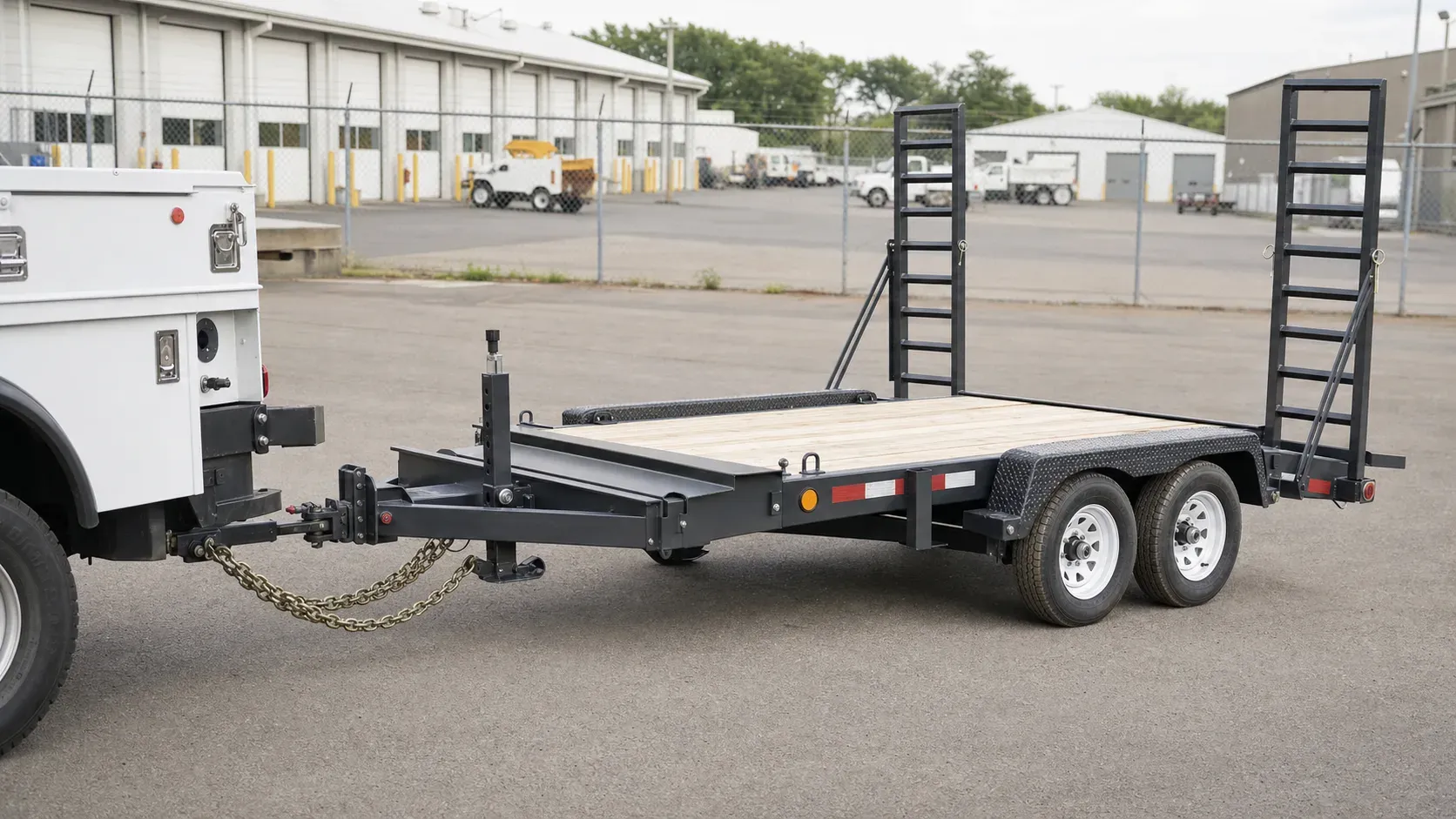
The pintle tag is the classic setup, a full heavy deck that rides behind the truck on the lunette ring. Fleets and municipalities standardized this tag-along geometry decades ago. Classes run from 14K up into air-brake territory, the deck follows equipment convention, and the ring shrugs off the rough ground that wears out ball couplers. It's the severe-duty generalist, and that's exactly why fleets buy it.
The tag-along that fleets standardized
Tag describes the geometry. The trailer carries its full weight on its own axles behind the truck, tagging along on the pintle connection instead of pressing a neck into a bed. The pintle tag is the classic configuration covered in the main guide, the heavy deck on the ring that construction fleets, municipalities, and utilities run as the yard's default.
The deck comes straight from the equipment world, wood or steel over I-beam mains, ramps or beavertails at the rear, and ton-rated tie-downs, everything the equipment trailers spec. It all connects through the forged ring, and that ring's tolerance for abuse is the whole case for pintle. Rough sites, mixed trucks, and decades of service, the tag handles the fleet life the ball world has to work around.
The fleet logic is the real product here. One connection standard across every truck means any truck can move any trailer, and that standardization pays off day after day. The tag's simplicity helps too, with no bed hardware and no pin-weight bed math, so the trucks stay interchangeable in a way goosenecks never allow. Municipal yards run tags for exactly this reason. The flexibility is the whole point.
Tag balance, ring height, and the rough-ground life
Tag geometry has its own balance math. The full deck rides on its axles, and tongue load on the ring targets the familiar 10 to 15 percent at the light classes. It runs lower on heavy tags, where the axles sit more centrally and carry more of the load. Set the lunette height loaded on the adjustable plate to level the deck against whichever truck the yard sends, and redo that adjustment for each combination.
The ring's slop earns its keep here. Site entrances, rutted ground, and the angles that bind a rigid coupler pass through the hook as harmless noise, and that famous clunk is just the connection not caring. The safety systems still come along for the ride, crossed chains, a charged breakaway, and air lines on the heavy classes, because a tough ring never gets you out of running the backups.
The classes carry heavy-duty running gear, brakes on every axle, electric through the middle classes and air above, G-rated rubber, and dual jacks under working noses. The weights force a real maintenance calendar. And working combinations cross the CDL threshold by design, so plan on the license.
Pintle tag sizes and payload
| Class | Typical GVWR | Typical Payload | Common Fit |
|---|---|---|---|
| Tandem 7K | 14,000 to 15,000 lb | 9,500 to 10,500 lb | Municipal general, light equipment |
| Tandem 10K to 12K | 20,000 to 24,000 lb | 14,000 to 17,500 lb | The fleet standard |
| Triple axle | 24,000 to 30,000 lb | 17,000 to 22,000 lb | Heavy iron tags |
| Air-brake tag | 30,000 to 50,000+ lb | 22,000 to 40,000 lb | Commercial equipment transport |
This is the main guide's table with the tag note added, and the tag spans all of it, since it's the pintle world's default shape. The payload math governs against frames heavy enough that they cost real empty weight. On the truck side, the light classes work behind one-tons with rated receiver plates, and the heavy classes need the medium-duty chassis fleets already run.
The tag's ledger
The buying rule comes down to how you work. Severe duty, mixed trucks, and decades of service point to the tag. Pavement towing behind a personal truck was always the ball hitch's customer.
Pintle tag FAQ
What's a tag trailer versus a gooseneck?
The tag rides its full weight on its own axles behind the truck, while the gooseneck presses a neck into the bed. It comes down to fleet flexibility versus capacity geometry, and the main guide breaks that down.
What tongue weight does a tag run?
Ten to 15 percent at the light classes, lower on heavy tags where the axles sit more centrally. Set it loaded with the adjustable lunette, and redo it for each combination.
What truck pulls a pintle tag?
One-tons with rated plates at the light classes, medium-duty chassis above. Just verify the truck-side hitch rating, since it's usually the weak link.
Why do fleets run tags?
Standardization. One connection across every truck and trailer, plus the ring's rough-ground tolerance. That flexibility is the product.
Do tags need a CDL?
Working combinations cross 26,000 combined pounds by design, so check the rules. The heavy classes assume you hold the license.
Electric or air brakes?
Electric through the middle classes, air above 25K where the commercial systems take over and bring their own compliance rhythm.