Pintle Trailers. The Complete Guide.

A pintle trailer connects with a steel ring, a lunette eye, dropped over a hook on the truck instead of a ball coupler. The connection is the toughest in towing, rated far past ball limits and tolerant of abuse that destroys ball couplers. Buy pintle for severe duty, off-road sites, and fleet or municipal work. The price is a noisier, looser connection on pavement.
What a pintle trailer actually is
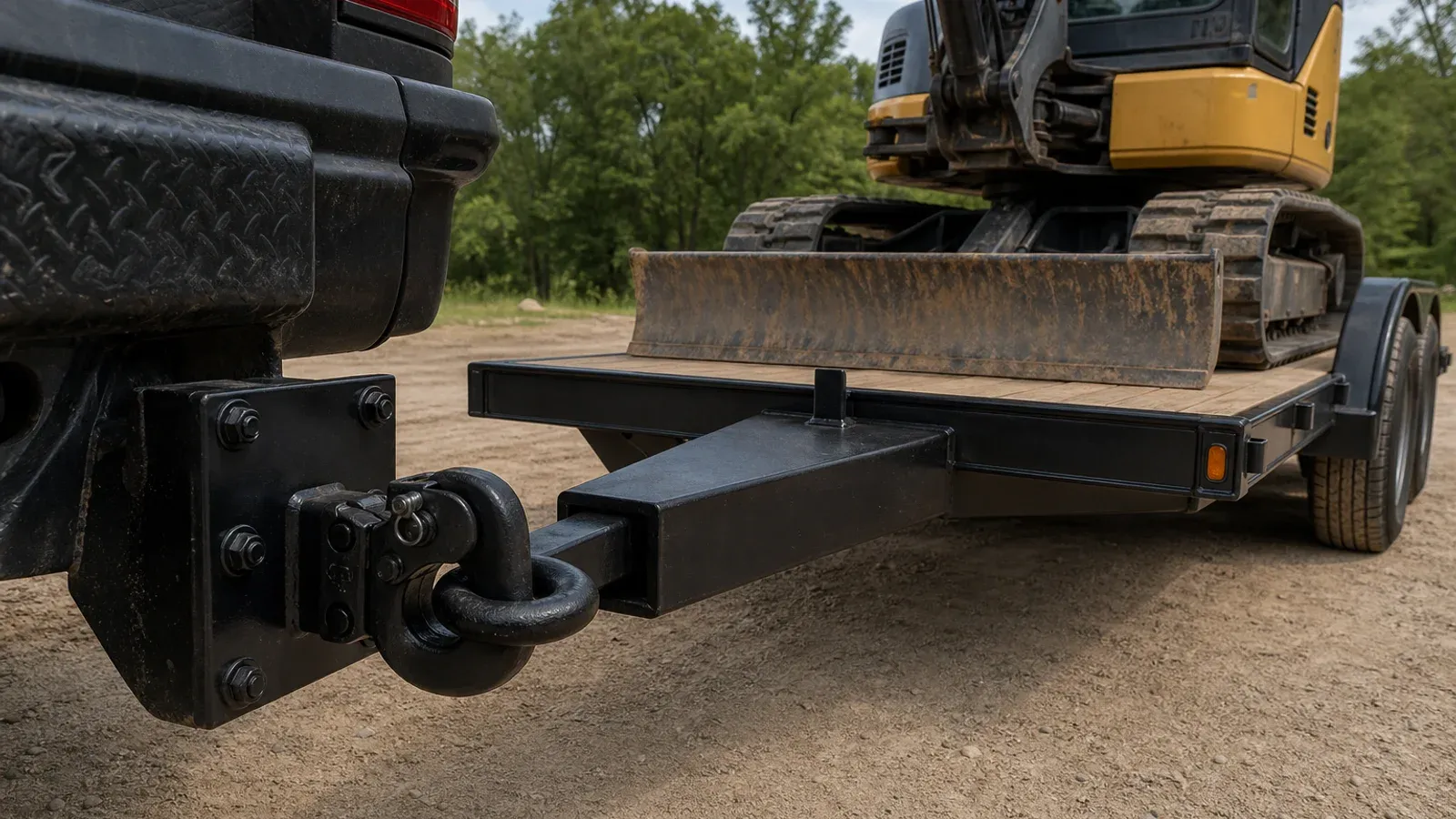
Pintle describes the hitch, not the trailer behind it. A lunette eye, a forged steel ring on the trailer's tongue, drops over a pintle hook or into a combination hitch on the truck, and a latch closes the jaw over it. The rest of the trailer is whatever the work needs, an equipment deck, a dump body, a tag-along for a dozer. What the pintle brings is a connection born in military and construction service, built for loads and terrain that break ball couplers.
The engineering argument is simple. A ball coupler grips a sphere and depends on precise fit, and its capacity tops out where the ball's neck does, roughly 30,000 pounds for the biggest gooseneck balls and far less for bumper balls. A pintle ring is solid forged steel with no moving fit to wear or fail, rated to 60,000 pounds and beyond in heavy classes. The slop between ring and hook, the connection's famous rattle, is also its tolerance, it absorbs angle and shock that would stress a rigid coupler, which is why pintles rule rough ground.
The tradeoffs are honest. That same slop means clunk and bang on every start, stop, and pothole, the pintle soundtrack every operator knows. The truck needs a pintle hook or combination hitch, standard on fleet and municipal trucks, an added plate on personal ones. And at equal ratings the ball connection tows smoother on pavement, which is why the pintle versus ball question resolves almost entirely on duty and terrain.
Who runs pintle. Construction fleets moving equipment between rough sites, municipalities and utilities standardizing one hitch across every truck, farms with tag-along implements, and the military surplus tradition that started it all. If the trailer lives on pavement behind a personal truck, the ball world serves better. If it lives in the dirt behind whatever truck is available, pintle is the standard for a reason.
Rings, hooks, and severe-duty ratings
The lunette eye is the trailer's half, a forged ring, commonly 2.5 or 3 inches inside diameter, bolted or welded to the tongue at a set height. Adjustable-height lunettes on a bolt plate let one trailer match different trucks, a fleet essential. The ring's rating is stamped and absolute, and matching ring size to hook jaw is the first compatibility check, a 3-inch ring in a hook jawed for 2.5 rattles worse and wears both.
The truck's half comes in three forms. The pintle hook proper, a jaw and latch that captures the ring, rated by class into six figures of pounds in commercial versions. The combination hitch, a hook with a ball mounted in its base, the fleet favorite because one hitch tows both connection types. And the receiver-mount pintle plate, which brings pintle capability to a standard receiver at the receiver's own rating, not the plate's. The lowest rating in the stack rules, as always.
Height and angle setup matter more with pintle than ball. The connection tolerates angle but the trailer still wants to tow level, and lunette height should be set with the trailer loaded. Tongue weight rules don't vanish because the hitch is tough, 10 to 15 percent of loaded weight still belongs on the ring, and heavy pintle classes still count that weight against truck payload.
Safety hardware scales with the class. Rated safety chains crossed under the tongue, a breakaway system wired and charged, and on air-braked heavy classes, glad-hand connections and the full commercial inspection routine. Pintle trailers cluster at weights where brakes on every axle and CDL math are the norm, a combination over 26,000 pounds of ratings in commercial use is license territory, and most working pintle rigs are exactly that.
Pintle trailer sizes and real payload
Pintle trailers live at the heavy end. The connection's overhead only pays where ball couplers run out, so the classes start around 14,000 pounds GVWR and run past 25 tons in commercial tag trailers. Payload follows the eternal rule, GVWR minus real empty weight, and heavy pintle frames are not light.
| Class | Typical GVWR | Typical Payload | Common Fit |
|---|---|---|---|
| Tandem 7K axles | 14,000 to 15,000 lb | 9,500 to 10,500 lb | Equipment, municipal general work |
| Tandem 10K to 12K | 20,000 to 24,000 lb | 14,000 to 17,500 lb | Excavators, dozers, fleet duty |
| Triple axle | 24,000 to 30,000+ lb | 17,000 to 22,000 lb | Heavy iron, max tag loads |
| Air-brake tag | 30,000 to 50,000+ lb | 22,000 to 40,000 lb | Commercial equipment transport |
The truck side scales to match. The lightest pintle classes work behind a one-ton with a rated receiver plate. The middle classes belong to real work trucks, and the air-brake tags ride behind medium and heavy-duty chassis with hydraulic or air brake integration. Pintle is the one category on this site where the tow vehicle is as likely to be an F-750 as an F-350, and the ratings math runs the same way regardless, lowest number in the chain wins.
Deck configuration follows the equipment world. Most pintle trailers are equipment decks, wood or steel over I-beam frames, with stand-up ramps or beavertails for tracked machines. Dump bodies and specialty builds share the connection. If the deck questions sound familiar, they should, the equipment trailer rules apply verbatim, pintle just changes what's on the tongue.
Air brakes enter the picture in the heavy classes and change the ownership math, inspection requirements, glad-hand compatibility with the truck, and the maintenance routine all step up to commercial standards. Fleets know this cold. First-time heavy buyers should price the compliance, not just the trailer.
Pintle trailer sub-types
The tag configuration is the classic, a full deck riding behind the truck on the ring. The equipment builds tune ramps, crossmembers, and tie-downs for machines exactly as their ball-hitched cousins do. Heavy-duty covers the air-brake commercial tier where the pintle connection is simply assumed. Pick the deck by the load, the class by the weight, and the pintle came along because the duty demanded it.
The features that actually matter
The skip pile is short in this category, pintle buyers rarely order chrome. The money decision is the axle-and-brake tier, and the answer at these weights is always the tier above the minimum.
Pintle trailer brands
Pintle is a fleet and heavy-equipment category, and the brand list tilts toward builders with commercial and municipal order books.
Felling builds serious tag trailers with a municipal and utility fleet reputation earned over decades. Big Tex, PJ, and Load Trail offer pintle options across their heavy equipment lines. Kaufman ships heavy tags direct at sharp prices, weigh freight and service against that. Iron Bull presses spec value into the category. Fleet buyers should also weigh parts commonality with existing trailers, one brand's brake and hub standard across a yard is worth real money in the shop.
What pintle trailers cost
Pintle pricing tracks the heavy equipment market it lives in. The 14K tag classes price alongside equivalent ball-hitched equipment trailers, the ring itself adds little, and the 20K-plus classes climb well into five figures with air-brake commercial tags beyond that. The connection is cheap, the capacity it enables is what costs.
Quote comparison in this category is a spec-sheet discipline. Axle brand and tier, brake type, ramp system, deck material, and lunette rating all vary between similar-looking tags, and fleet-oriented builders quote options differently than retail lots. Demand matched specs in writing, the usual out-the-door sweep applies, freight, prep, doc fees, and the accessory sheet.
The buying mistake unique to pintle is hitch-side neglect. The trailer's ring is rated for everything, and the receiver-mount plate on the truck is rated for the receiver, which may be half the number stamped on the ring. Budget the truck-side hitch as part of the purchase, a proper rated pintle hook or combination hitch, mounted to the frame, not the bumper's sheet metal.
Fleets should price the standardization dividend. One connection type across every truck and trailer means any truck moves any load, and that flexibility has cashflow value no single-trailer quote captures. It's the quiet reason municipalities never left pintle, and it's worth a line in any fleet's buying math.
Know the fair price before you go
The free Price Guide lists current dealer and MSRP prices for hundreds of new trailer models, brand by brand, with a confidence label on every number.
Get the Price GuidePintle trailer FAQ
What is a pintle hitch?
A hook-and-ring connection, a forged lunette eye on the trailer drops into a latching pintle hook on the truck. It's the severe-duty standard, rated far past ball couplers and tolerant of rough terrain that destroys them.
Why do pintle trailers rattle and clunk?
The ring rides loose in the hook by design, that slop absorbs shock and angle off-road. On pavement it announces every start and stop. Reduced-slop hooks and combination hitches quiet it somewhat, the character remains.
Pintle or ball hitch?
Ball for pavement towing and personal trucks, smoother and quieter at equal ratings. Pintle for severe duty, off-road sites, and fleets standardizing one connection. The comparison runs it fully.
What ratings do pintle hitches carry?
Lunette eyes and commercial pintle hooks run from 12 tons to 30-plus in heavy classes, far past any ball. The receiver-mount plates on pickups carry the receiver's rating, not the ring's, the lowest number rules.
Do I need a CDL for a pintle trailer?
At this category's weights, often yes for commercial use, the common trigger is combined ratings over 26,000 pounds with a trailer over 10,000. Check the rules, most working pintle rigs live past the line.
Can I put a pintle hitch on a pickup?
Yes, receiver-mount plates and bolt-on combination hitches fit standard trucks. The rating is the receiver's and the mount's, verify both against the loaded trailer before trusting the ring's bigger number.
What's a combination hitch?
A pintle hook with a ball in its base, towing either connection type. It's the fleet standard because one truck serves every trailer in the yard.
Are pintle trailers just for construction?
Construction, municipal, utility, agriculture, and military surplus are the heartland, anywhere trailers meet rough ground and mixed truck fleets. Pavement-only personal towing is better served in the ball world.