Best Trailers for Hauling Equipment.

Equipment hauling is bought backward from the machine list. The heaviest machine plus its attachment plus margin writes the trailer class, and the loading method, ramps, tilt, or dovetail, follows the clearance. Mowers ride utility trailers, skid steers the 14K standard, and excavators the gooseneck tiers. Four-point chains with rated binders are federal law on machines. The list decides everything, so write it first.
The machine-list method
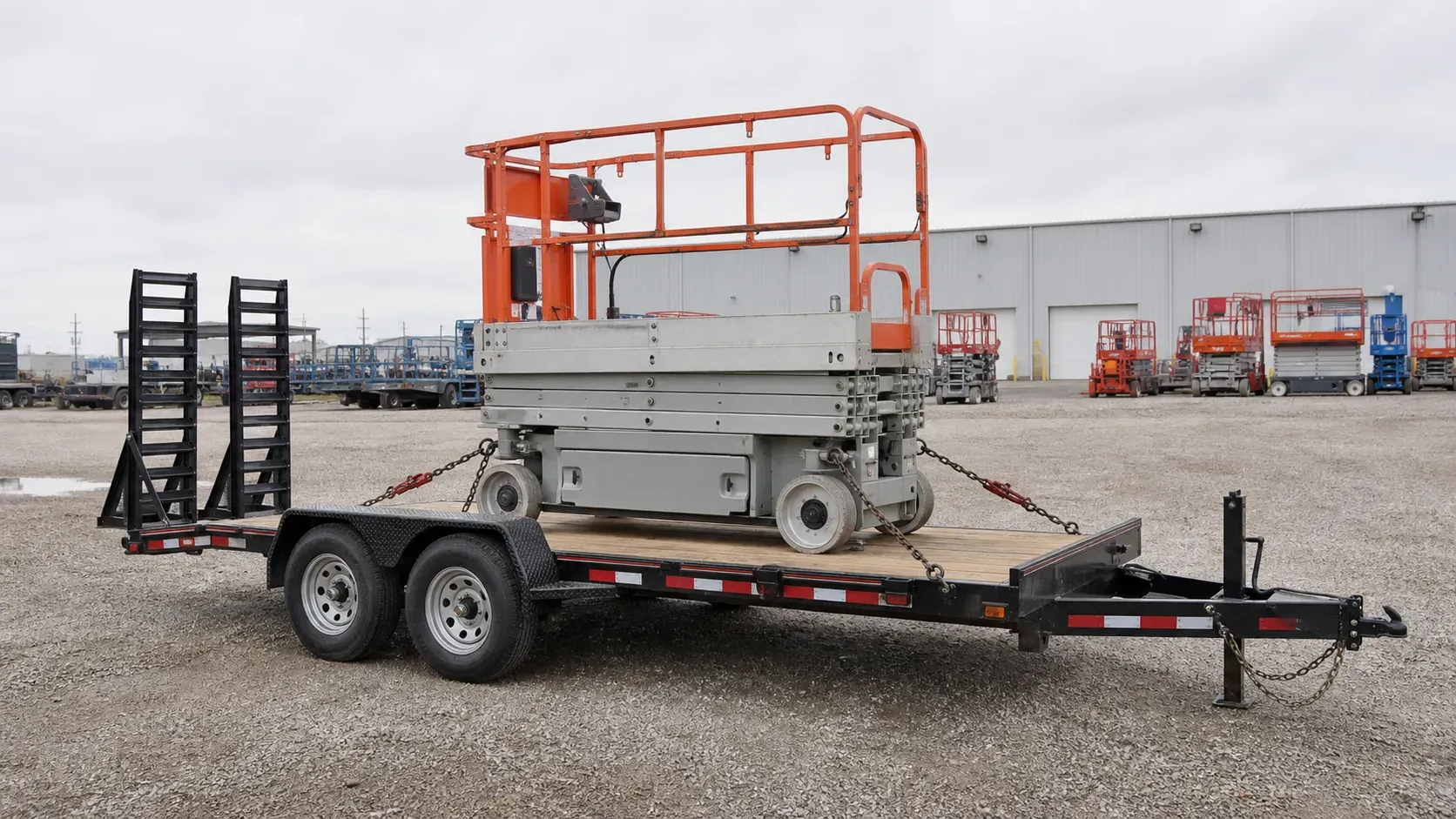
Every equipment page on this site runs one method, and here it is stated plainly. List the machines with real weights from the plates, not from memory. Add each attachment, since buckets, forks, and mowers' collectors all count. Add margin for growth, because fleets buy heavier machines, never lighter. The biggest number plus margin is the trailer class, and the lowest ground clearance on the list picks the loading method.
| Machine Tier | Typical Weight | The Trailer Answer |
|---|---|---|
| Mowers, compact utility | 800 to 2,000 lb | Utility and landscape classes |
| Compact tractors, small skids | 2,500 to 5,500 lb | 10K equipment decks |
| Skid steers, mini excavators | 6,000 to 10,000 lb | The 14K standard |
| Excavators, dozers, loaders | 10,000 to 22,000 lb | Gooseneck tiers |
| Heavy iron | 22,000 lb and up | Heavy gooseneck and pintle |
The payload subtraction verifies every row, and the machine-specific pages run each tier deep, the skid steer, the mini excavator, and the tractor. Think of this page as the map they all hang from.
Decks and loading methods, matched
The deck follows the tier. Equipment trailers are the purpose-built category, with tightened crossmembers, rated anchors, and ramp systems the guide covers, the bumper-pull classes through 14-to-16K and the gooseneck builds above. Width comes into play at the wide tiers, where tracked and dual-wheel machines cross the fender math into deckover territory.
The loading method follows the clearance. Standard machines climb ramps, stand-ups through mega ramps by weight. Frequent loading and low frames buy the tilt deck's single plane, and the equipment tilt page covers that build. The lowest heavy iron ends at the hydraulic dovetail, the top of the ladder every clearance-limited page climbs. Dovetails and beavertails soften every rung.
Loading and the securement law
Loading follows the same routine every time. Low gear, straight approach, a spotter on the blind side, the machine parked at the deck mark that sets tongue or pin weight, attachments lowered to the deck, parking brake set, and hydraulics locked. The tilt and ramp pages carry their own method-specific steps, but the basic routine is universal.
Securement on machines is federal, not stylistic. Four points minimum on independent chains, rated binders, working-load limits summing past half the machine's weight, attachments secured separately where the rules read them as cargo, and the ten-mile re-tension that the towing fundamentals prescribe for everything and DOT audits on iron specifically. Treat the chain inventory as part of the trailer purchase, graded, tagged, and inspected like the legal equipment it is, which the rules spell out.
The combination math closes it. Weigh tongues and pins against the truck's placard, the three-quarter-ton under the 14K standard, one-tons under the necks, and the CDL line crossed by design at the commercial tiers.
Equipment hauling FAQ
What size trailer do I need for my equipment?
The heaviest machine plus attachment plus growth margin writes the class, per the tier table. The machine list decides, and the payload subtraction verifies.
How do I secure a machine on a trailer?
Four independent chain points with rated binders, WLLs summing past half the machine's weight, attachments tied separately, re-tensioned at ten miles. It's federal law, not preference.
Ramps or tilt deck?
Frequency and clearance decide, and the comparison lays it out. Monthly loading keeps ramps' savings, while weekly-plus and low frames buy the tilt.
When does equipment hauling need a gooseneck?
Machines past roughly 9,500 real pounds, which the hitch comparison covers. The 14K bumper-pull standard ends where excavators begin.
Do I need a CDL to haul equipment?
For commercial combinations past 26,001 combined pounds, yes, which the gooseneck tiers assemble by design. The rules run your combination.
Where do attachments ride?
Lowered to the deck, or on the fixed front of partial-tilt builds, secured separately. They count in both the weight math and the securement rules.