Best Trailers for Hauling a Skid Steer.

A full-size skid steer with an attachment weighs 7,000 to 9,500 pounds, so the 18 to 20-foot 14,000-pound equipment trailer is the standard answer, pulled behind a three-quarter-ton with brakes all around. Compacts ride the 10K tier, and large-frames push you into gooseneck math. Weigh the machine with the attachment mounted, because that number picks everything else.
Skid steer weights, the honest version
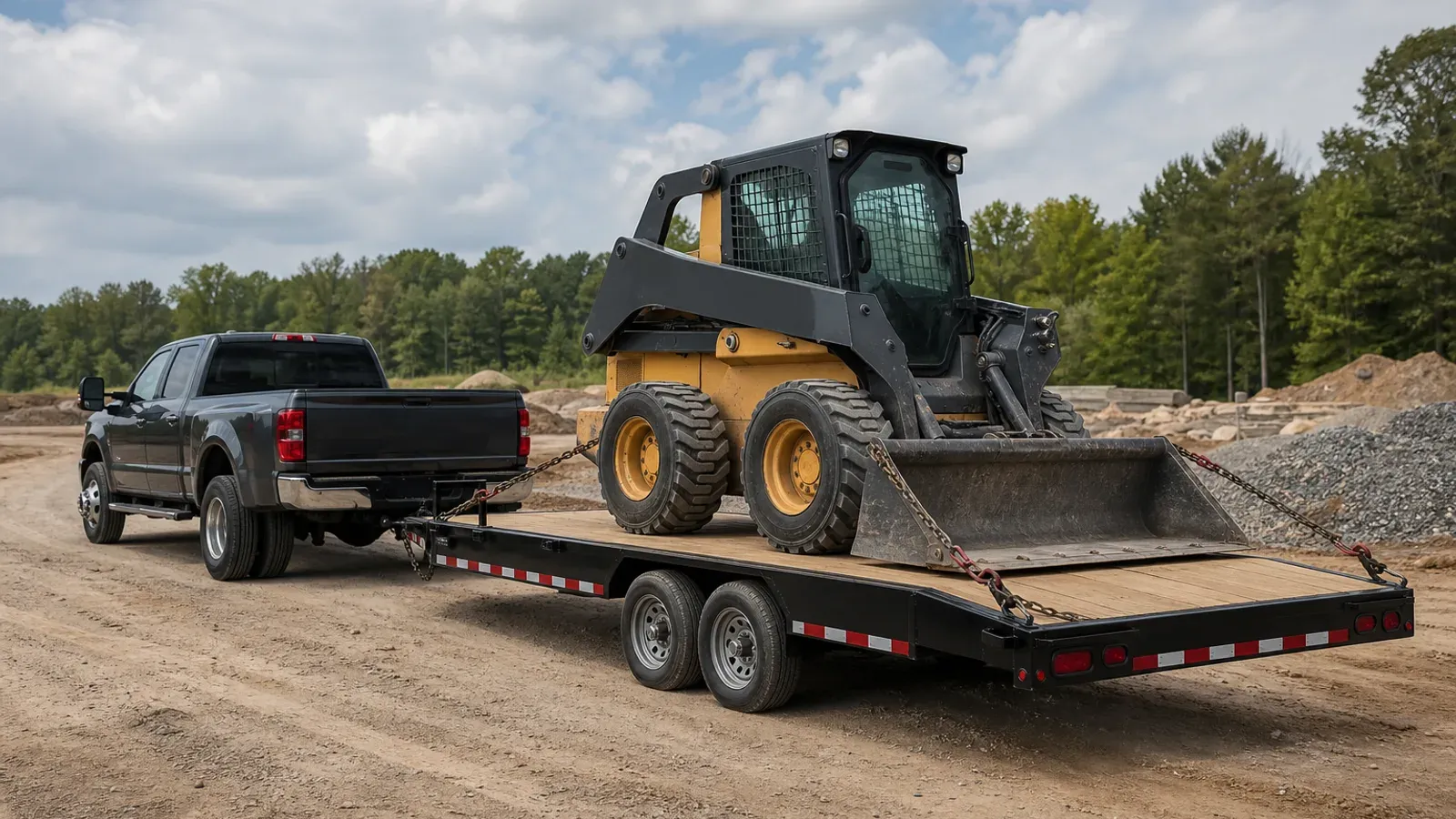
Skid steer trailer math starts with the lie everyone tells themselves, the brochure weight. Operating weights quote the stripped machine, but the one that actually boards the trailer carries a bucket or breaker, a full tank, mud in the undercarriage, and often a second attachment along for the ride. Weigh the working configuration, or add 15 percent to the brochure and call it honest.
| Machine Class | Operating Weight | With Attachment, Real | Trailer Class |
|---|---|---|---|
| Mini and walk-behind | 2,500 to 4,000 lb | 3,000 to 4,800 lb | 10K, even heavy 7K |
| Compact frame | 5,000 to 6,500 lb | 5,800 to 7,600 lb | 10K to 14K |
| Full-size frame | 7,000 to 8,500 lb | 8,000 to 9,700 lb | 14K, the standard |
| Large frame, tracked | 9,000 to 12,000 lb | 10,200 to 13,500 lb | 16K-plus, gooseneck |
Tracks weigh more than wheels. The same model in CTL form runs 1,000-plus pounds over its wheeled twin, and the attachment matters just as much, since a breaker or mulching head can outweigh a bucket three to one. Spec the trailer for the heaviest machine in its heaviest configuration, weighed on a scale once, and give yourself enough margin to stay off the rating's edge.
The machine's shape drives the rest. Four small contact patches concentrate the weight, which is why crossmembers matter. It climbs steep but bottoms attachments on bad transitions, which is the ramp question. And it chains at four factory corner points, which is the securement question. Purpose-built trailers answer all three by design.
Best trailers for a skid steer, ranked
The standard answer is the skid-steer equipment trailer, an 18 to 20-foot 14K bumper-pull with 16-inch crossmembers, rated stand-up ramps, and corner D-rings placed for the machine's chains. The 14,000-pound class gives you 9,400 to 10,400 usable pounds, enough for full-size machines with attachments and margin to spare. That's why the whole trade standardized here.
The compact lane runs the 16-foot 10K tier, honest for mini and compact frames with the same features scaled down, and the heavy-duty utility crossover suits mixed operations where the skid steer shares a trailer with material loads. The large-frame lane is the gooseneck equipment tier, because machines past 9,500 real pounds want the 16K-plus classes and the one-ton that pulls them.
The special cases have their own pages. If you run low-clearance work or load solo every day, look at the tilt deck. If your dump trailer moonlights, the ramp-gate dump math works for compacts and struggles at full-size. And the dump-versus-equipment comparison settles the one-trailer question every growing dirt outfit eventually asks.
Loading, chaining, and the daily discipline
Load low and slow, bucket down the ramps. Climb in low range with the attachment curled and inches off the deck, so it works as ballast and insurance, tracks or tires centered on the ramps. Park at the deck mark that sets tongue weight at 10 to 15 percent. Mark the deck the first time and load to that mark forever, and back-blade the mud off before boarding, because the undercarriage's dirt is both payload and projectile.
Chain it like DOT is watching, because eventually they are. Run four points of rated chain and binders from the machine's factory tie-downs to the trailer's corner D-rings, with working-load limits that sum to match the machine's weight. Secure the attachment separately, bucket flat on the deck with its own chain or strap. Set the parking brake, lock the controls, and run the securing fundamentals in the same order every load until your hands do it without your head.
The combination keeps its own rules. Loaded 14K work goes behind a three-quarter-ton minimum, with the controller tuned to the weight and brakes on both axles doing their share. The commercial rules come along too, from securement and marking to the CDL math that kicks in near the top of the class. Ten miles out, re-check the binders. Chains settle like straps do, just louder when they finish.
Skid steer hauling FAQ
What size trailer do I need for a skid steer?
Full-size machines with an attachment want the 18 to 20-foot 14K equipment trailer, the trade standard. Compacts ride the 10K tier, and large frames go gooseneck.
Can a half-ton tow a skid steer?
Mini and light compact setups, marginally, and only with the payload math run honestly. Full-size machine work is three-quarter-ton territory, and tongue weight decides before tow rating does.
How do I tie down a skid steer?
Four rated chains and binders, factory tie-down points to corner D-rings, working-load limits matched to machine weight, and the attachment chained separately and flat on the deck.
Can I haul a skid steer in a dump trailer?
Compacts, yes, in ramp-gate models with rated floors and payload. Full-size machines belong on an equipment deck, and the comparison runs the limits.
Do tracks change the trailer choice?
Tracked machines weigh 1,000-plus pounds over wheeled twins and climb differently. Weigh the real machine, spec ramps for tracks and crossmembers for wheels, and the trailer serves both.
Do I need a CDL to haul my skid steer?
Commercial combinations near 26,000 combined pounds trigger the math, and a heavy three-quarter-ton with a loaded 14K gets close. Check the rules against your actual ratings.