Heavy-Duty Utility Trailers Explained.

A heavy-duty utility trailer runs 9,900 to 14,000 pounds GVWR on upgraded axles, frames, and tires, and carries 7,400 to 11,000 usable pounds for daily commercial work. It bridges the gap between the 7K utility standard and the true equipment class, keeping the utility's sides and gate while borrowing the equipment trailer's bones. Buy one when your work has outgrown 7,000 pounds but still needs a utility's shape.
What a heavy-duty utility is
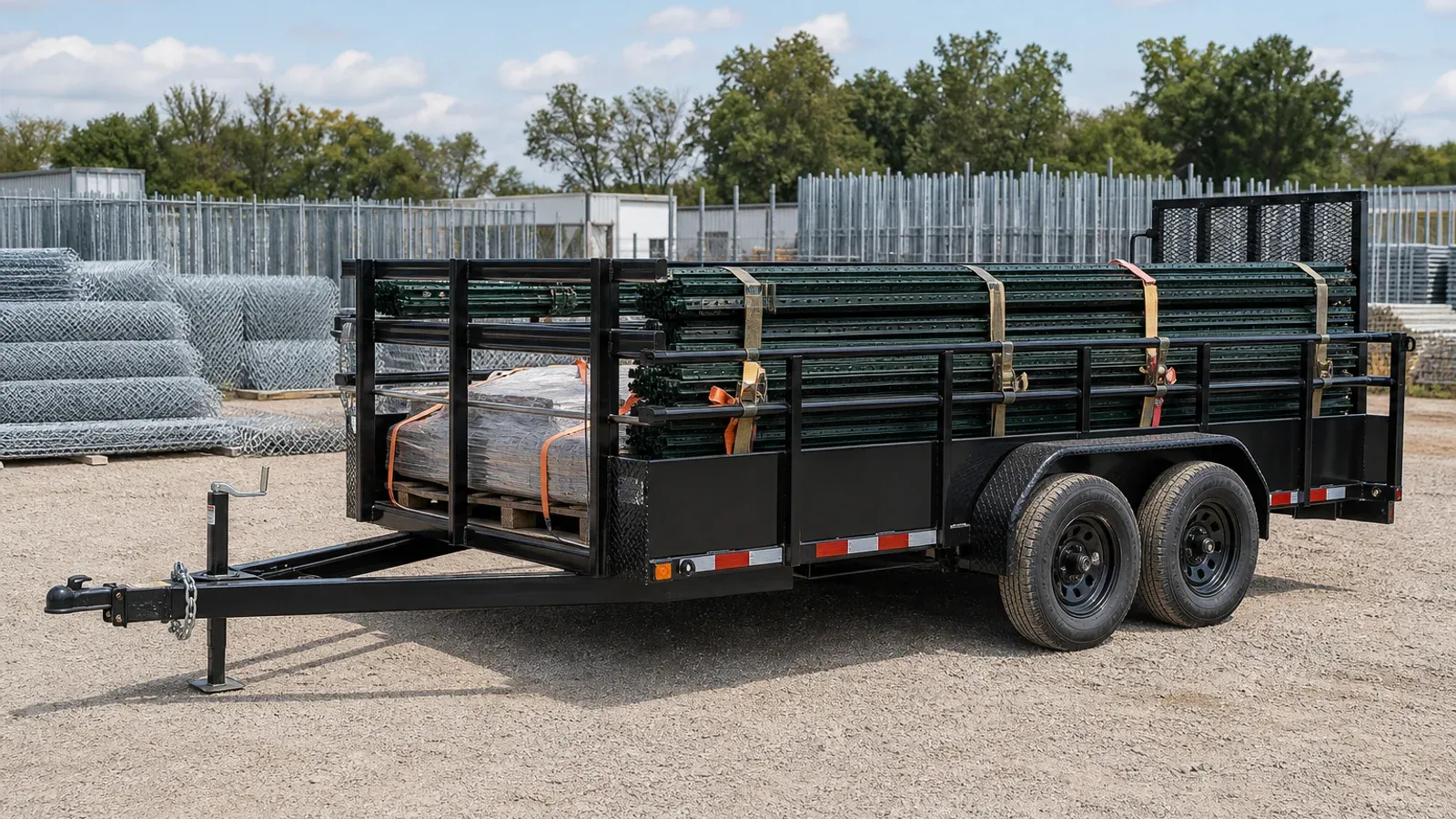
Heavy-duty utility is the class 7K owners graduate into. You get the same open deck, sides, and rear gate as the standard utility, rebuilt underneath with paired 5,200 or 7,000-pound axles, heavier frame steel, load range E rubber, and brakes on every axle. The GVWR badges read 9,900, 12,000, and 14,000, and the payloads finally match what a commercial day actually weighs.
The class exists because work grows. A landscaping crew crowds the 7K rating with material loads every month. A fencing outfit hauls posts, wire, and a compact machine all at once. A farm counts a pallet of feed and a water tank as utility work. Each one needs another 2,000 to 5,000 usable pounds without changing what the trailer is, an open box with sides that hauls just about anything.
The trailer to price it against is the equipment trailer, since the two share GVWR badges but diverge on shape. An equipment trailer spends its build on a deck and ramps for machines, with no sides and tie-downs everywhere. The heavy-duty utility keeps its sides and gate for mixed and loose cargo, trading away some machine capability to do it. If you haul machines first, read the equipment guide before you option a utility past 12K. If you haul a bit of everything, you're in the right place.
The 9,900 number deserves a footnote. Like the 2,990 badge in the single-axle world, it's written for the lawbooks. Ratings of 10,000 pounds and up trigger CDL math in commercial combinations and stricter rules in several states, so builders offer 9,900 versions of 10K trailers on purpose. Your state's regulations have the details, and commercial buyers should read them before picking a badge.
Frames, axles, and the specs that carry it
The frame is the foundation of the class. Standard utilities run angle or light channel mains, while the heavy-duty class steps up to 5 and 6-inch channel or tube, with wrapped tongues and crossmembers on 16-inch centers. Once you know the look, you can spot the difference from across the lot. Under a pallet fork or a machine's wheels, crossmember spacing is the spec doing the real work, and these builds treat it that way.
Axles come in two recipes. Tandem 5,200-pound axles build the 9,900 to 10,400 GVWR tier, and tandem 7,000s build the 14K. Both carry electric brakes on every axle as standard, and at these weights the brake system and the truck's controller do real stopping work. Demand name-brand axles with greaseable guides. This class works too hard for mystery running gear.
Tires and wheels step up with everything else. Load range E on 15 or 16-inch wheels is the floor for the class, date codes matter on lot stock, and a spare goes from nice-to-have to standard equipment, because a loaded 12K trailer won't wait around for roadside assistance. The gate and sides scale up too. Expect reinforced full-width gates rated for machine loading, taller side options on trade builds, and D-rings alongside the stake pockets, because loads at this weight get chained down, not hoped in place.
Tongue hardware finishes the picture. A 2-5/16 coupler replaces the 2-inch ball, and rated jacks with drop legs replace the flimsy top-wind kind. At 10 to 15 percent of loaded weight, tongue weight now means 1,200 to 2,000 pounds pressing on the truck. That's the number that quietly pushes the class into three-quarter-ton territory, whatever the tow rating claims.
Heavy-duty utility sizes and payload
| Class | Typical GVWR | Typical Payload | Common Fit |
|---|---|---|---|
| 7x14, tandem 5.2K | 9,900 lb | 7,300 to 7,700 lb | Trade daily driver |
| 7x16, tandem 5.2K | 9,900 to 10,400 lb | 7,200 to 7,800 lb | Long mixed loads |
| 7x16, tandem 7K | 14,000 lb | 10,200 to 10,800 lb | Material volume, compact machines |
| 7x18 to 8x20, tandem 7K | 14,000 lb | 9,800 to 10,600 lb | The class ceiling, equipment crossover |
Payload is the usual subtraction, and the class's heavier frames add 2,200 to 3,400 empty pounds. That's worth comparing between builds, because the spread is real money in daily capacity. The 14,000-pound capacity page covers the math this tier shares with the equipment class.
The truck conversation changes at this class. A loaded 9,900 trailer sits at the honest edge of half-ton capability, held back by tongue weight on payload before the tow rating ever matters. The 14K tier loaded is three-quarter-ton work, no debate. Run the payload versus towing math on your actual truck before you buy the badge.
Commercial ratings math comes with the class. A three-quarter-ton and a 14K trailer stack combined ratings near the 26,000-pound line, and commercial use across it raises CDL questions. The 9,900 badge is the industry's polite answer to that. Know your state, know your use, and spec the GVWR with the rules open.
Where the heavy-duty wins and loses
Here's the buying rule. Buy the class for loads that outgrew 7,000 pounds but still need sides. Then pick the badge, 9,900 or 14,000, against your truck and your state's rules, not against optimism.
Heavy-duty utility FAQ
What makes a utility trailer heavy-duty?
A 9,900 to 14,000-pound GVWR, tandem 5,200 or 7,000-pound axles, brakes all around, load range E tires, and frame steel to match. It's the same utility shape, rebuilt underneath.
Why 9,900 pounds instead of 10,000?
Ratings of 10,000 and up trigger CDL math in commercial combinations and stricter rules in several states. The 9,900 badge is the industry deliberately ducking under the line.
Heavy-duty utility or equipment trailer?
If machines come first, the equipment trailer's deck, ramps, and tie-downs win. If it's mixed and loose cargo with the occasional compact machine, the utility's sides and gate win. Same weights, different shapes.
What truck does the class need?
Loaded, the 9,900 tier sits at the honest edge of a half-ton's payload. The 14K tier is three-quarter-ton work, and tongue weight decides that before the tow rating does.
Can it haul a skid steer?
Compact machines, yes, on the 14K tier and within payload, with rated tie-downs. Full-size skid steers belong on an equipment trailer's deck, where the gate and sides won't fight the loading.
Do I need a CDL?
Possibly. For commercial use, once combined ratings pass 26,000 pounds, which the 14K tier behind a big truck gets close to. Check the rules against your combination and use.