Trailer Brake Controllers Explained.

A brake controller is the truck-side box that commands the trailer's electric brakes, and a proportional unit matches the trailer's braking to the truck's in real time. Most states require trailer brakes from 3,000 pounds, factory-integrated controllers come with modern tow packages, and learning to set the gain for each load is most of the skill. Electric-over-hydraulic systems on heavy trailers use the same controller. This is non-negotiable equipment, so set it correctly.
The box that brakes the trailer
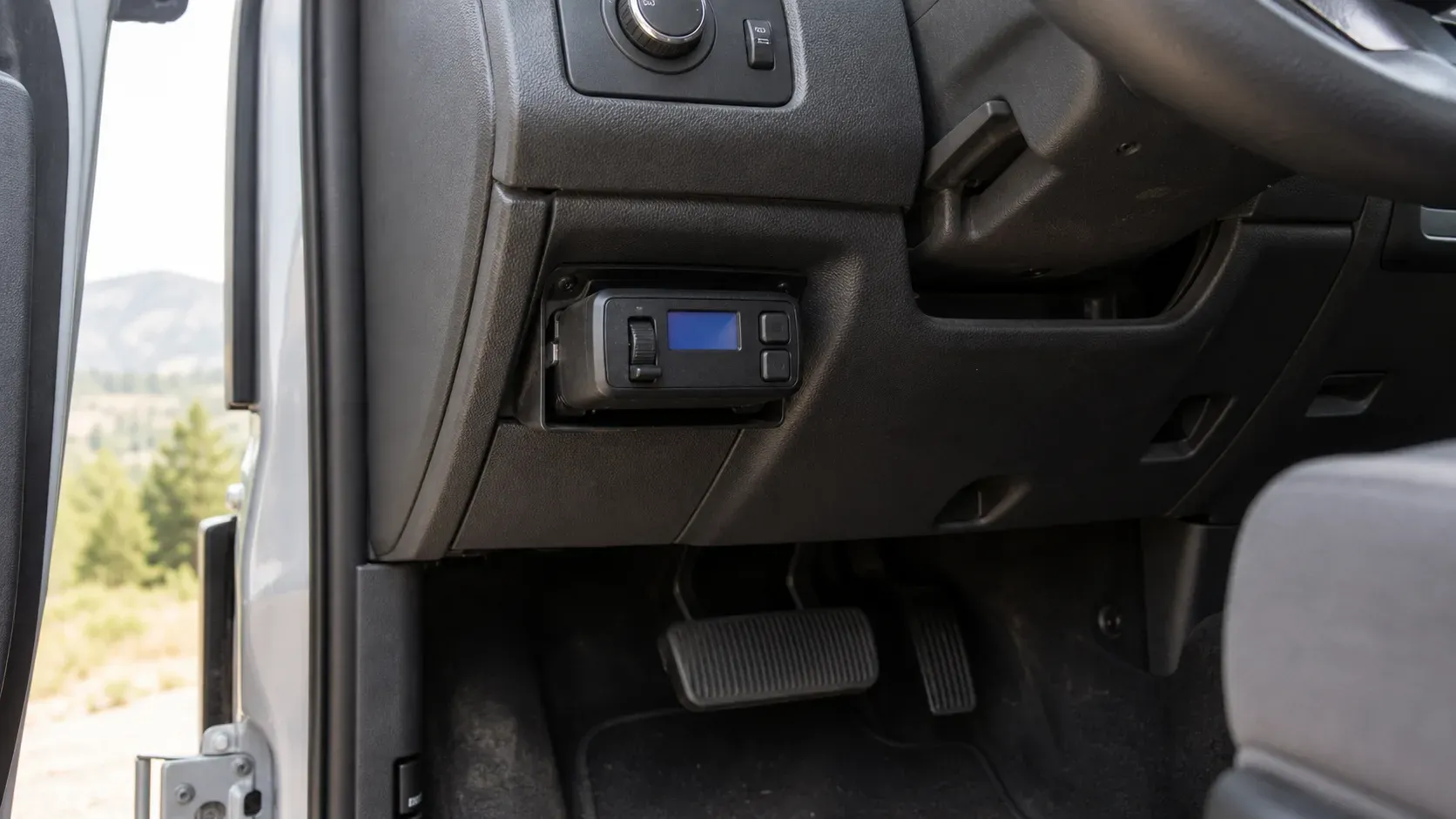
Electric trailer brakes do nothing without a command, and the brake controller gives it. It reads the truck's braking and sends proportional voltage down the 7-pin connector's brake circuit to the magnets at each braked wheel. The trailer's share of the stopping arrives in sync with the truck's, and that's the whole difference between a rig that stops as one vehicle and a trailer that shows up at the bumper with opinions.
Proportional versus time-delay is the one technology fork, and it's largely settled. Proportional controllers sense the truck's actual deceleration and scale the trailer's braking to match, so the response is smooth, immediate, and correct at every intensity from a creep to a panic stop. Time-delay units apply a preset ramp no matter how hard the truck brakes, which is cheaper, cruder, and fading from the market. Factory-integrated controllers are proportional, dash-adjustable, standard in modern tow packages, and the right answer wherever they're offered. Aftermarket proportional units cover the trucks that came before them.
The heavy tiers run the same system. Electric-over-hydraulic trailers, common on dumps and heavy goosenecks, carry a pump that turns the controller's signal into hydraulic disc braking. Same controller, same wiring, more stopping, just confirm the controller is EOH-compatible at purchase.
Gain, the test pull, and the breakaway
Gain is the one setting, and it's most of the skill. The controller's output scales by the gain number, and the right value changes with every load. An empty trailer at loaded gain locks its wheels, and a loaded trailer at empty gain pushes the truck through intersections. Set it like this: in an empty parking lot at 25 mph, brake moderately and feel for the trailer, then raise the gain until the trailer's tires approach lockup and back off one step. That's today's number, and you redo it whenever the load changes much. The manual-override lever applies the trailer brakes alone, which makes it both a sway-correction tool and a diagnostic. If a fishtailing rig straightens under manual trailer braking, the problem was tail-light, per the tongue-weight page.
The law draws the floor. Most states require brakes on trailers past 3,000 pounds GVWR, some at 1,500, and several require brakes on all axles at the higher tiers, per the rules. Every braked trailer also needs a breakaway system, the battery-powered switch that slams the trailer's brakes on if it separates from the truck. Test it at every hookup by pulling the pin and feeling for engagement, and keep its battery on the maintenance calendar, because a dead breakaway is a legal fiction with a plug.
A few habits close the system. Watch the controller's display for the disconnect and short warnings it throws, keep the connector pins bright per the wiring page, and judge braking honestly. A trailer that stopped better last month is due for the magnet and adjustment service its axles are asking for.
Brake controller FAQ
Do I need a brake controller?
If the trailer has electric brakes, yes, they're inert without one. Most states require brakes from 3,000 pounds GVWR, and the controller is the truck's half of the system.
Proportional or time-delay?
Proportional, since it matches the truck's actual braking in real time. Factory-integrated units are proportional and the default answer wherever the truck offers one.
What gain should I set?
Whatever the 25-mph test pull gives you for today's load, near lockup then back one step. It changes with the load, which is why it's a knob and not a screw.
What's the manual override lever for?
Applying the trailer brakes alone. It straightens sway and doubles as a diagnostic, so practice reaching for it before you need it.
What's a breakaway system?
The pin-switch and battery that lock the trailer's brakes if it separates. It's legally required wherever brakes are, tested at hookup, and its battery maintained. Nobody checks it until the day it matters.
Does electric-over-hydraulic need a special controller?
An EOH-compatible one, and most modern proportional units qualify. Confirm it at purchase. Same wiring, same gain routine, hydraulic stopping.