Gooseneck vs. Bumper Pull. Which Hitch to Buy.

The bumper pull is cheaper, universal, and honest through 14,000 pounds. The gooseneck moves the hitch into the truck bed, over the axle, and buys capacity past 20,000, better stability, and tighter turning, at the cost of a bed hitch, a bigger truck, and gooseneck money. The threshold is real. Loads that regularly run past 14K loaded buy the neck. Under it, the neck is capacity you paid for and can't use.
Gooseneck vs. bumper pull at a glance
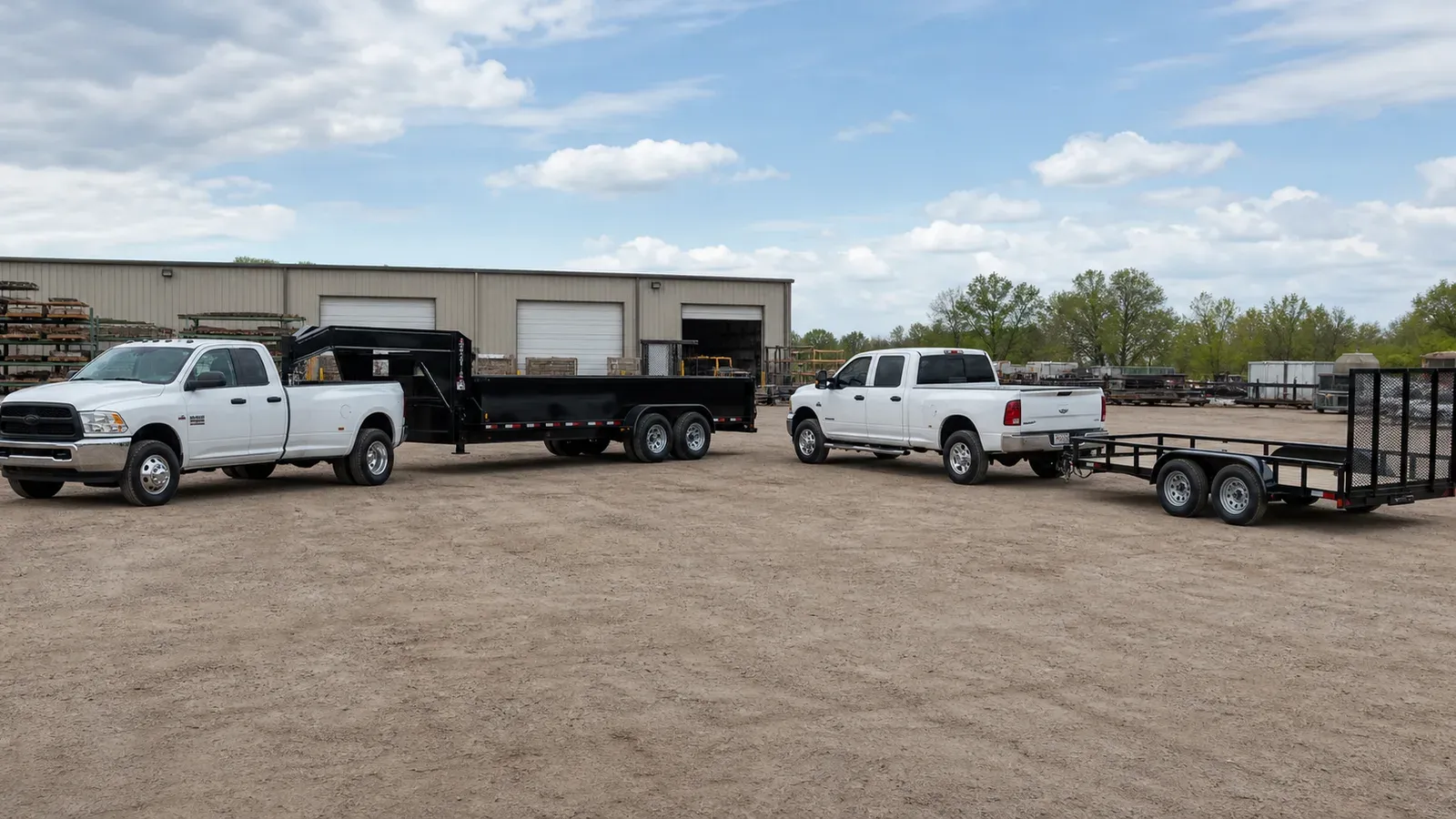
| Bumper Pull | Gooseneck | |
|---|---|---|
| Capacity ceiling | ~14,000 to 16,000 lb | 30,000+ lb |
| Hitch weight carried | Behind the rear axle | Over the rear axle |
| Stability at weight | Sway management | Sway resistance |
| Turning | Wide arcs, long tail swing | Cuts inside the truck |
| Truck requirement | Any properly rated | One-ton territory |
| Bed impact | None | Ball plus the neck's swing space |
| Price, same deck | The baseline | A real premium plus hitch install |
| Hookup | Drop on the ball | Climb in the bed or hit the mark |
The hitch question runs under every heavy purchase on this site, and both connections are honest machines inside their envelopes. The mistake, in either direction, is buying the envelope your loads don't live in.
Universal through 14K
The bumper pull wins on sufficiency plus simplicity. Through the 14,000-pound class, where most equipment, dump, and utility work actually lives, the receiver hitch does the job at the lowest cost in the argument, no bed hitch install, no dedicated truck, and a trailer any properly rated vehicle in the fleet grabs on ten minutes' notice.
Truck flexibility is the quiet dividend. The bed stays a bed, the truck stays a truck, and the trailer's resale pool includes everyone with a receiver, the widest market in towing. Tongue weight at 10 to 15 percent stays manageable through the class, a weight-distribution hitch civilizes the top of it, and the payload math that governs everything governs here at numbers three-quarter-tons handle.
The ceiling is physics, not marketing. Hitch weight rides behind the rear axle as leverage, working the truck's rear suspension and unloading its steering as weights climb. Somewhere around 14 to 16K loaded the geometry starts voting no, sway margins thin, receivers max out, and the combination that was honest at 12K is negotiating at 16. The bumper pull doesn't fail past its envelope, it just stops being the right answer.
The envelope past the ceiling
The gooseneck's argument starts where the bumper's ends. Pin weight rides over the rear axle, the truck's strongest point, so the same physics that capped the receiver now carries 15 to 25 percent of loads past 20,000 pounds, and the capacity classes climb to 30K-plus. For the machines, freight, and material volumes that live up there, the neck isn't an upgrade, it's the admission ticket.
Stability and maneuvering come with the geometry. The pivot over the axle resists sway by architecture rather than management, dense loads tow calm at weights that keep bumper-pull owners' hands at ten and two, and the trailer cuts inside the truck's arc, backing 30 loaded feet into sites the receiver combination circles twice and surrenders. Every gooseneck convert tells the same two stories, the crosswind that didn't matter and the gate they finally made.
The costs are the entry fee. The hitch install in the bed runs several hundred to a thousand-plus, once per truck. The truck itself climbs into one-ton territory as pin weights rise, because the pin counts against payload harder than any tongue ever did. Then there's the trailer premium over the same deck bumper-pulled, plus the commitments, the bed's front feet under the neck's swing, the CDL math working combinations assemble, and a rig nothing about which is casual.
The threshold and the exceptions
The threshold does the deciding. Loads regularly past 14,000 pounds loaded, machine math past 9,500 real pounds, or freight ambitions in the hotshot direction, buy the neck once instead of outgrowing the receiver twice. Loads living under 12K forever, keep the bumper pull and the thousands, the neck's virtues are capacity you'd tow around empty.
The band between 12 and 15K is the honest gray zone, and two questions sort it. Trajectory first, fleets and machines grow, and a load history trending up buys the neck early. Frequency second, weekly heavy towing rewards the neck's stability at weights occasional towing tolerates on the receiver, the daily operator feels the geometry difference the weekender never meets.
The exceptions run both directions. A dedicated one-ton already in the yard shrinks the neck's entry cost to the hitch install, tilting marginal cases gooseneck. A fleet of mixed tow vehicles with receivers tilts the same case bumper-pull, universality is worth real money to operations where any truck grabs any trailer. And the fifth-wheel question belongs to the RV world, work trailers settled on the neck long ago.
Gooseneck vs. bumper pull FAQ
At what weight should I switch to a gooseneck?
Loads regularly past 14,000 pounds loaded, or machines past roughly 9,500 real pounds. Under that, the bumper pull does the job for less. The threshold is physics, not preference.
Why is the gooseneck more stable?
The pin rides over the truck's rear axle instead of levering behind it, resisting sway by geometry and keeping steering weight planted. Dense loads amplify the difference.
How much does switching cost?
The hitch install, several hundred to a thousand-plus per truck, the trailer's premium over the bumper-pull equivalent, and usually the one-ton the pin weight requires. The combination is the purchase.
Can my three-quarter-ton tow a gooseneck?
The lightest classes, with the payload math run against 15 to 25 percent pin weight. Working goosenecks want one-tons, the pin runs out of payload before the tow rating blinks.
Does the gooseneck ball ruin the truck bed?
Rail and puck systems pull or flip flush, so the bed returns to flat with the ball out. The under-bed frame mount stays, invisible until the next hookup.
Gooseneck or fifth wheel?
Gooseneck for work trailers, simpler, stronger, bed-friendly. Fifth wheel for RVs, where articulation and ride comfort rule. The comparison covers the crossover.