Fifth Wheel vs. Gooseneck. Which Bed Hitch to Buy.

Both hitches put the load in the truck bed over the axle, then part ways by world. The gooseneck's ball-and-coupler is simpler, stronger for its size, and leaves the bed nearly flat, which made it the work-trailer standard. The fifth wheel's plate-and-kingpin articulates and cushions, the RV standard, at the cost of more bed space and money. Buy the hitch your trailer world already decided on, and treat adapters as a compromise, not a plan.
Fifth wheel vs. gooseneck at a glance
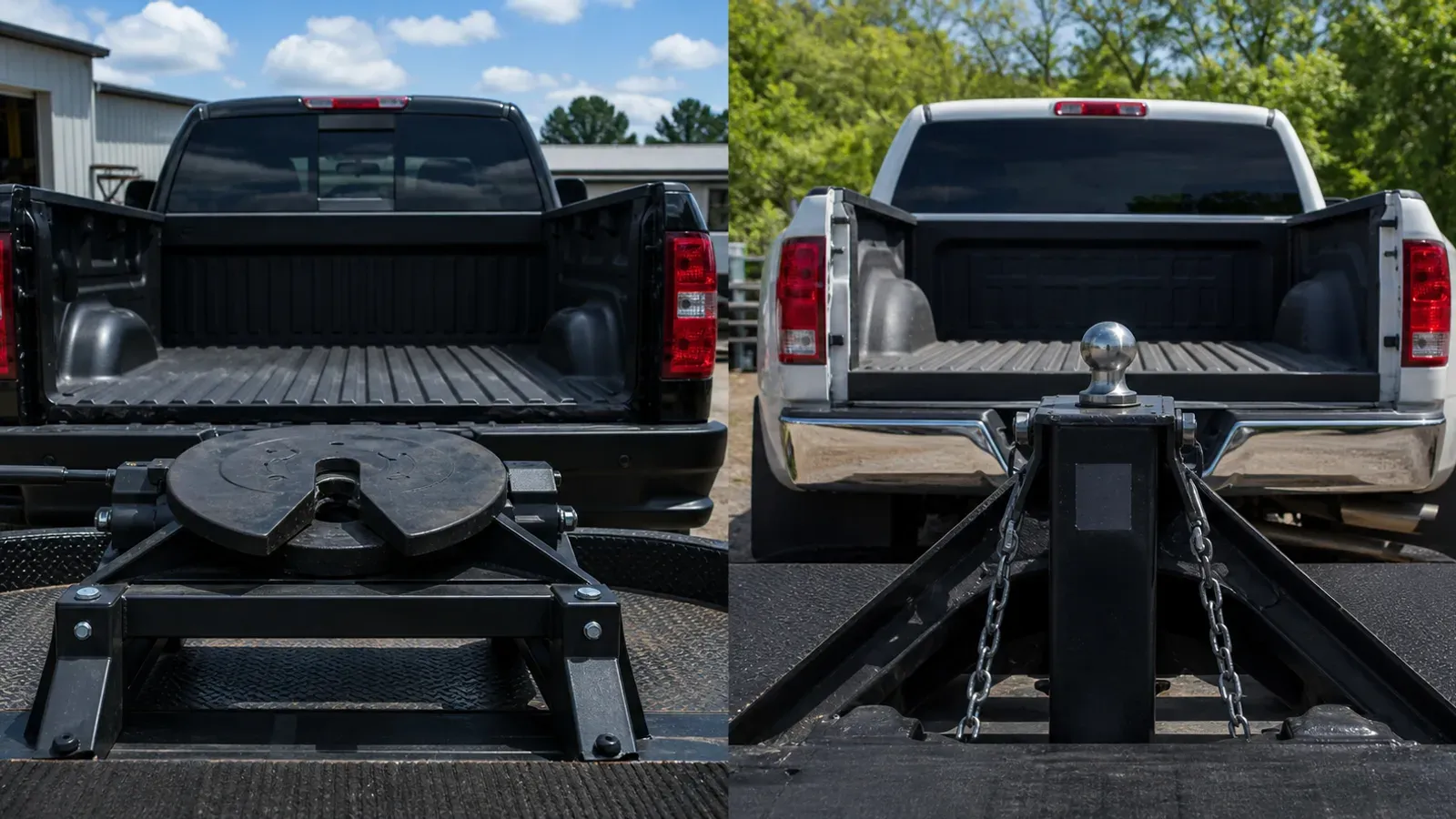
| Gooseneck | Fifth Wheel | |
|---|---|---|
| Connection | Ball and coupler | Kingpin and plate |
| World | Work trailers | RVs |
| Bed impact | Ball flips flush | Rails or plate stay mounted |
| Ride and articulation | Firm, simple | Cushioned, articulating |
| Typical capacity | 25 to 30K balls common | 16 to 27K hitch ratings |
| Hitch cost | Lower | Higher |
| Hookup | Drop the coupler on the mark | Back the plate onto the pin |
Both connections exist for the same physics, hitch weight over the rear axle instead of levering behind the bumper. The gooseneck-versus-bumper-pull page covers that half of the story. This page settles the in-bed question, and the honest headline is that the two worlds settled it decades ago. Mostly we're just explaining why.
The work standard
The gooseneck wins on simplicity at strength. A ball in the bed, a coupler on the neck, a latch over the ball, and you're done. There's no plate assembly and no pin alignment, and the 25-to-30K ratings come from forged simplicity rather than mechanism. Work trailers standardized here because job sites reward exactly this, fewer parts, more rating, and a hookup one person does by eye.
The bed argument seals the work case. Puck and rail systems mount under the bed, the ball pulls or flips flush, and the truck hauls plywood Monday and the equipment trailer Tuesday with nothing in the way. A fifth-wheel hitch, by contrast, is furniture, 150-plus pounds of plate and frame parked in the bed's center until someone wrestles it out, and work trucks don't volunteer for that.
The trade-off is the ride. The ball connection transmits what the road offers, firm and simple, which cargo never mentions and passengers would. Chucking, the fore-aft surge trailers send through rigid connections, reaches the cab unfiltered. That's the exact thing the fifth wheel's cushioning exists to absorb, and the reason the RV world went the other way.
The RV standard
The fifth wheel wins on ride and articulation. The kingpin sits in a plate that pivots and, on better hitches, cushions, absorbing chucking and smoothing the surge a ball transmits. Across ten thousand RV miles, that difference is the difference between traveling and enduring. Multi-axis heads handle uneven campground approaches without binding, air-ride versions pamper further, and the whole system exists because people ride near this connection in a way no skid steer ever does.
The capacity story is sufficient rather than superior. Hitch ratings run 16 to 27K, matched to the RV classes they serve, and the semi-truck ancestry matters. The fifth wheel is literally the tractor-trailer coupling scaled down, so the engineering is proven at weights no pickup will ever reach. For the trailers built with kingpins, which is to say RVs, the hitch is simply the other half of the design.
The trade-offs are the bed and the bill. The hitch occupies the bed while mounted, removable designs notwithstanding, it costs meaningfully more than a ball setup, and hookup wants the plate backed square onto the pin, a skill the gooseneck's drop-on never asks for. None of it matters to the RV owner whose bed hauls camp chairs. All of it matters to the contractor whose bed works.
The trailer already chose
The trailer type decides, almost every time. Work trailers, equipment, dump, deckover freight, and livestock, come with gooseneck couplers. RVs come with kingpins. So the hitch question is really just matching the truck to the trailer already in the driveway or the plan, and buying the hitch before the trailer world is backwards.
The both-worlds owner has options, ranked. Best is dedicated hardware, puck systems accept both a gooseneck ball and a fifth-wheel hitch's rail adapters, letting one truck serve both trailers properly. Acceptable is a gooseneck-to-fifth-wheel adapter for occasional RV towing on a gooseneck-equipped truck, minding the RV frame stress some adapters introduce and the ratings stack every adapter adds. Avoid chronic adapter use in either direction, because the compromise hardware serves the trip, not the decade.
And the pin-weight math rules both worlds identically, 15 to 25 percent of loaded weight into the bed against the truck's payload, which lands you in one-ton territory as weights climb, whichever plate or ball carries it.
Fifth wheel vs. gooseneck FAQ
Are fifth wheel and gooseneck the same thing?
Same physics, different hardware. Both carry hitch weight over the rear axle, the gooseneck via ball and coupler, the fifth wheel via kingpin and plate. Work trailers use the first, RVs the second.
Can I tow a fifth wheel RV with a gooseneck hitch?
With an adapter, within its ratings, and minding RV frame-stress cautions on some designs. It's fine occasionally, wrong as a permanent plan. Dedicated hardware serves regular towing.
Which connection is stronger?
Gooseneck balls commonly rate 25 to 30K, above most fifth-wheel hitches, though both exceed anything a pickup legally tows. It's sufficiency, not supremacy, either way.
Why do RVs use fifth wheels at all?
Ride quality. The plate's articulation and cushioning absorb the chucking a ball transmits, and people live behind that connection for thousands of miles. Cargo never voted, passengers did.
Which costs more?
The fifth wheel, hitch for hitch, plus its bed presence. The gooseneck's ball-and-puck setup runs cheaper and disappears when unused.
What truck do both need?
Size it by payload against pin weight, 15 to 25 percent of loaded weight, which lands working setups in one-ton territory regardless of the plate-or-ball choice.