Gooseneck Hitches Explained.

The gooseneck hitch puts a ball in the truck bed over the rear axle, rated 25,000 to 30,000 pounds, installed either as under-bed rails or through the factory puck systems modern HD trucks offer. The ball flips or pulls flush when it's not in use, so the bed stays a bed, and hookup is just dropping the coupler on the mark. The install runs several hundred to a thousand-plus, once per truck, and payload still governs everything.
The ball in the bed
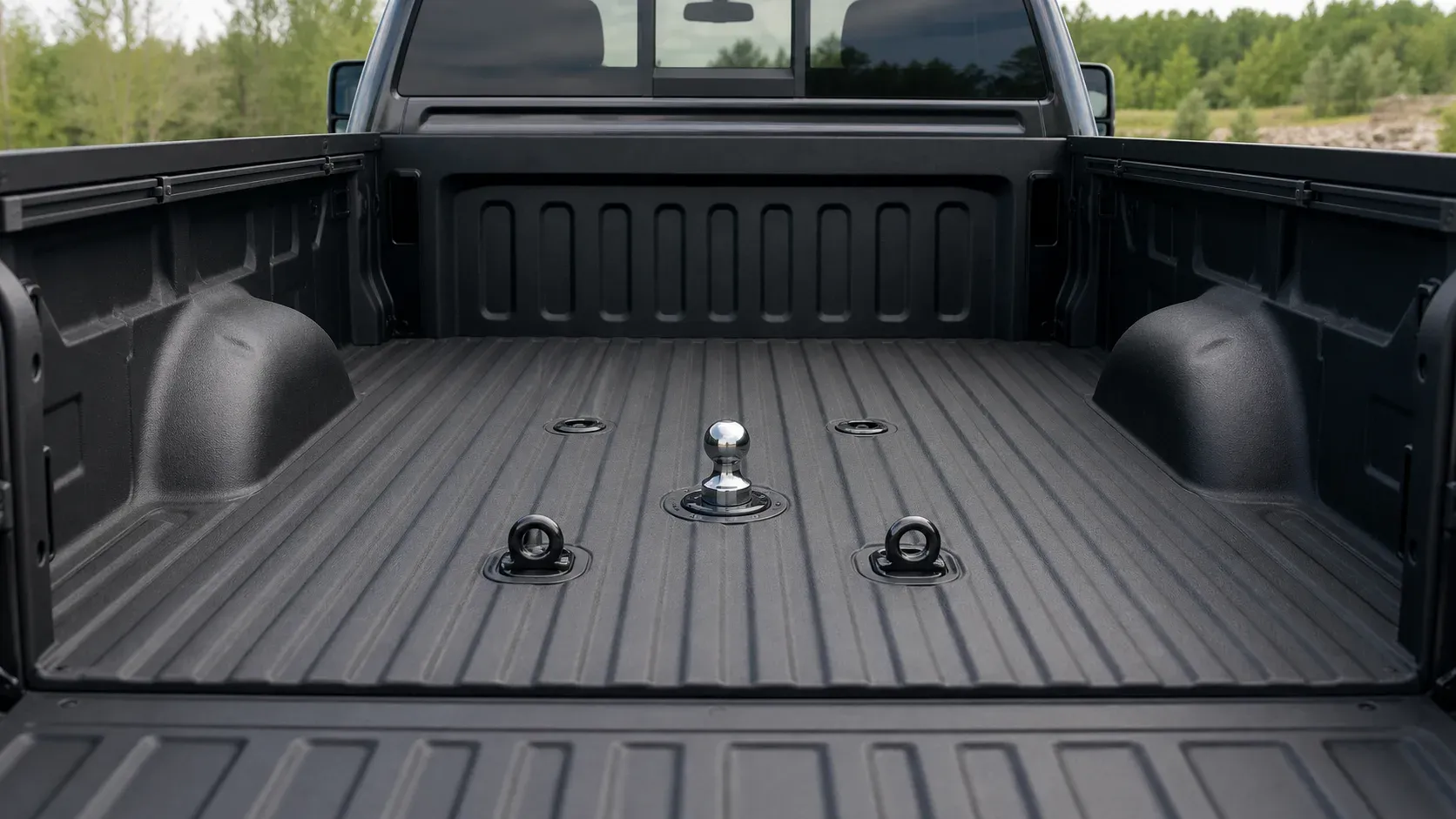
The gooseneck hitch is towing's simplest heavy connection. A ball mounts through the bed floor into a frame-attached crossmember, set at or slightly ahead of the rear axle's centerline so pin weight lands where the truck is strongest. The trailer's neck coupler drops over it and latches, and the joint out-rates every receiver made. A 25,000-to-30,000-pound ball is the commodity standard, which is the physics the comparison runs on.
The install choice is factory versus aftermarket. Modern HD trucks offer factory puck systems, five sockets sitting flush in the bed that accept a drop-in ball and safety-chain anchors, and a prep-package truck needs only the ball kit. Aftermarket rail and under-bed systems bolt a crossmember to the frame beneath any bed, which is several hours of labor and several hundred to a thousand-plus installed, done once per truck. Both leave the bed flat when it's not in use, the ball flipping into its socket or pulling out entirely. That's the design courtesy that separates gooseneck life from living with fifth-wheel furniture.
A few compatibility notes finish the map. Puck patterns vary by manufacturer, ball kits match trucks and not trailers, and the fifth-wheel adapter world attaches to the same anchors for the owner who wants both.
Hookup, chains, and the payload truth
Hookup is a marksmanship exercise that turns into muscle memory. Drop the tailgate or use the camera, set the coupler above the ball with the trailer's jacks, and back up until the coupler shadows the ball. Drop it, latch it, and verify by raising the jacks until the truck takes the weight. An unlatched coupler lifts off the ball at exactly that moment, in the driveway where it costs nothing. Run the safety chains to the bed anchors, crossed by convention, rig the breakaway to the truck, plug the wiring, crank the jacks all the way up, and do the walk-around every heavy page on this site prescribes.
The clearance checks are specific to goosenecks. Measure neck-to-bed-rail clearance through a full turn at the first hookup, watch cab clearance on short beds where the trailer's nose arcs in, and reach for an extended or offset coupler where the geometry crowds. The tailgate's survival depends on all of it. Bed rails and the neck meet exactly once per careless owner.
Payload caps everything, per the class pages. The hitch rates 30,000 pounds, the truck's placard rates what it rates, and pin weight at 15-to-25 percent spends it. The payload arithmetic governs the combination no matter what the ball's stamp promises. The hitch is a connection, the placard is the capacity.
Gooseneck hitch FAQ
How much does a gooseneck hitch cost installed?
A factory-prepped truck takes a ball kit for a couple hundred dollars. Aftermarket under-bed systems run several hundred to a thousand-plus with labor. Either way, once per truck.
Can any truck get a gooseneck hitch?
Structurally, any full-size pickup can, with the honest caveat that the hitch's ratings outrun a light truck's payload instantly. The install makes sense where the one-ton math already does.
Does the ball stay in the bed?
It flips flush or pulls out entirely by design, so the bed goes back to flat cargo duty. The under-bed frame stays, invisible until the next hookup.
How do I know the coupler is latched?
Close and pin the latch, then raise the trailer's jacks until the truck squats. An unlatched coupler lifts off the ball right there instead of on the highway.
What about safety chains on a gooseneck?
Required, run to the bed's rated anchors with slack for full articulation. The puck systems include the anchors, and aftermarket installs have to add them.
Gooseneck hitch or fifth wheel?
Work trailers run the ball, RVs run the plate, per the comparison. Adapters bridge the occasional crossover, but dedicated hardware serves regular use.