What Can a One-Ton Truck Tow?

The one-ton is the gooseneck world's floor, 4,000 to 6,000-plus pounds of payload built to carry pin weight, tow ratings from 18,000 into the 30s, and a single-rear-wheel versus dually fork that decides the ceiling. Every working gooseneck, hotshot rig, and heavy equipment combination on this site assumes this class. Buy it for pin weight, which is what it was built to carry.
Built for the pin
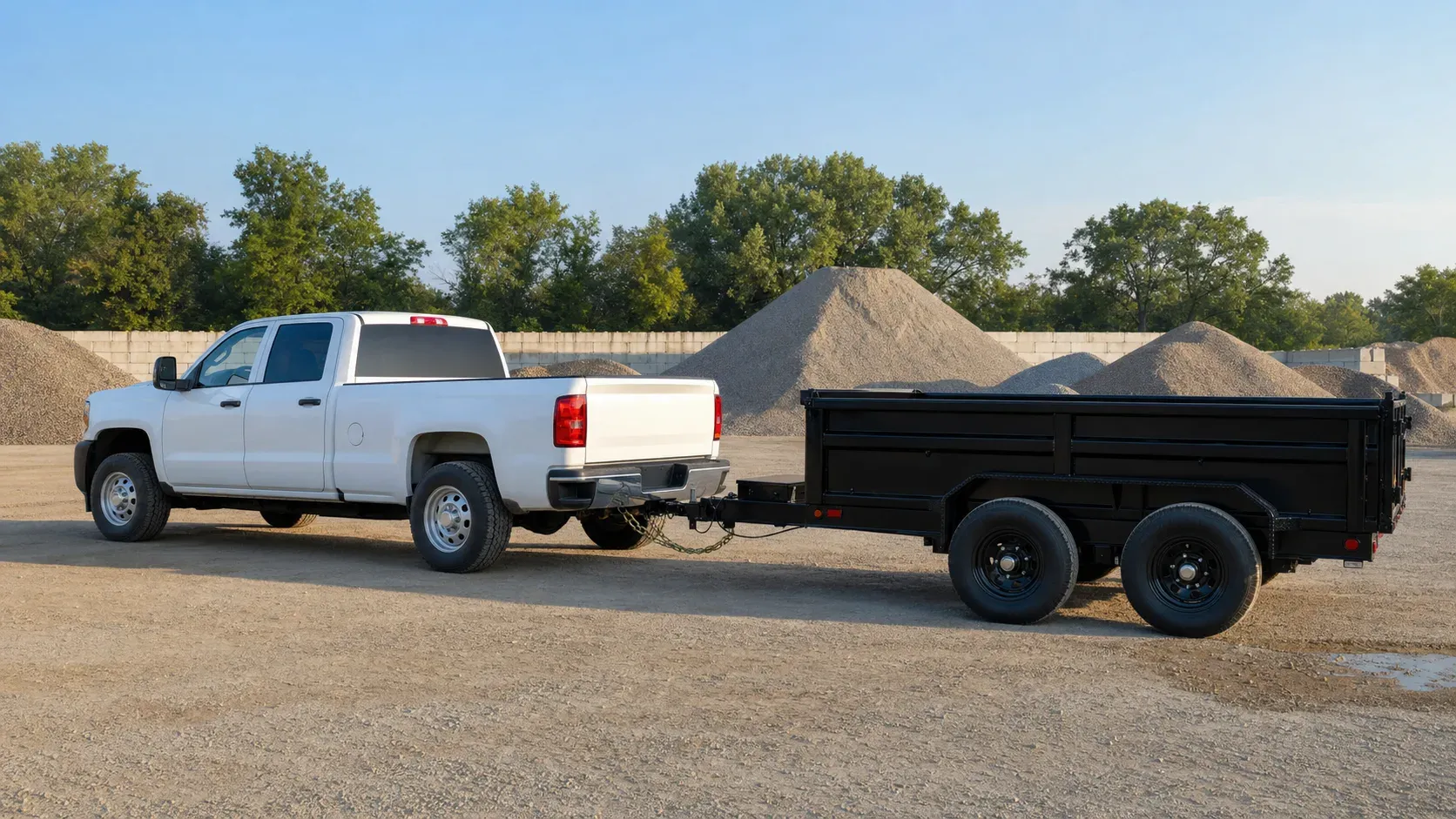
The one-ton, F-350, Ram 3500, Silverado and Sierra 3500HD, exists because pin weight is a payload problem, and this class answers it structurally. Heavier springs, frames, and rear axles put placards at 4,000 to 6,000-plus pounds where the three-quarter-ton offers 3,000. The payload math at gooseneck percentages explains everything: a 22,000-pound trailer's pin runs 3,300 to 5,500 pounds, and only this class's placards absorb it with the crew still aboard.
The fork inside the class is single rear wheel versus dually. The SRW one-ton carries 4,000 to 4,800-pound placards and serves the gooseneck market's entry and middle. The dually stretches past 6,000 and owns everything heavy, per its own page. Diesel dominates the class for the same reasons it splits the three-quarter market, torque and exhaust braking at weights where both stop being options.
Trailers the class honestly serves
| Trailer | Loaded Reality | The Verdict |
|---|---|---|
| Gooseneck flatbed | 14,000 to 22,000 lb | The class's home game |
| Gooseneck equipment | 16,000 to 25,900 lb | SRW light, dually heavy |
| Gooseneck dump | 15,900 to 22,000 lb | The material fleet standard |
| Hotshot deckover | 22,000 to 25,900 lb | Dually, by industry rule |
| Hydraulic dovetail | 22,000 to 25,900 lb | The heavy-iron pairing |
| Every 14K bumper-pull | 12,000 to 14,000 lb | Without noticing |
| Wedge and multi-car | 20,000 to 25,900 lb | Dually territory |
The class tows the entire bumper-pull world incidentally, but its purpose lives at the neck. The SRW-versus-dually line runs roughly at 20,000 to 22,000 loaded pounds, where pin weights cross 4,000 and the dual rear axle's placard becomes the admission ticket. The working rigs on the heavy rows all run duals for exactly that arithmetic.
Heavy-class habits
The class operates commercially by physics, whatever the paperwork says. Mount the gooseneck hitch to the frame and rate it past the trailer, verify pin weight against the placard on every load, run electric-over-hydraulic brakes on the heavy trailers and tune them, and track combined ratings, because a one-ton and a working gooseneck cross the 26,000-pound CDL line by design in commercial use. The rules are part of the class's operating manual.
The habits scale with the weights. Scale tickets become routine, tongue and pin discipline is loading law, maintenance runs on the fleet calendar, and speeds and following distances respect 30,000-plus combined pounds of physics. The class forgives less than the half-ton world and announces it sooner, which the operators who live here consider a feature.
One-ton FAQ
What can a one-ton tow?
Tow ratings run 18,000 to 30-plus thousand by configuration, and payload governs as always, with SRW placards carrying goosenecks through roughly 22,000 loaded pounds and duallys past it.
SRW or dually?
Pin weight decides. Under 4,000 pounds the SRW serves with a civilian footprint, past it the dually's placard is the ticket. The heavy working world runs duals.
Does a one-ton need a CDL?
The truck alone, no. Commercial combinations past 26,000 combined pounds, yes, and working goosenecks assemble that math by design. The rules carry the details.
Is diesel mandatory?
Practically, at the class's working weights. Torque and exhaust braking stop being preferences on grades with 25,000 pounds combined. Gas serves the light-duty minority.
Can a one-ton be a daily driver?
Millions are, at fuel, ride, and parking costs the lighter classes don't charge. Buy it for the pin weight, and tolerate the rest.
What payload does a one-ton have?
SRW commonly 4,000 to 4,800 pounds, dually 5,200 to 6,500-plus, per the actual door jamb, which varies by cab, bed, and engine like every class.