Gooseneck Dump Trailers Explained.

A gooseneck dump moves the hitch into the truck bed, over the rear axle, and that raises the safe capacity ceiling past anything a bumper-pull dump can carry. The working classes run 15,900 to 22,000-plus pounds GVWR with 14 to 16-foot boxes. Buy one when your loads regularly pass what a 14K bumper-pull hauls. It costs you a one-ton truck, a bed hitch, and the gooseneck premium.
What a gooseneck dump is
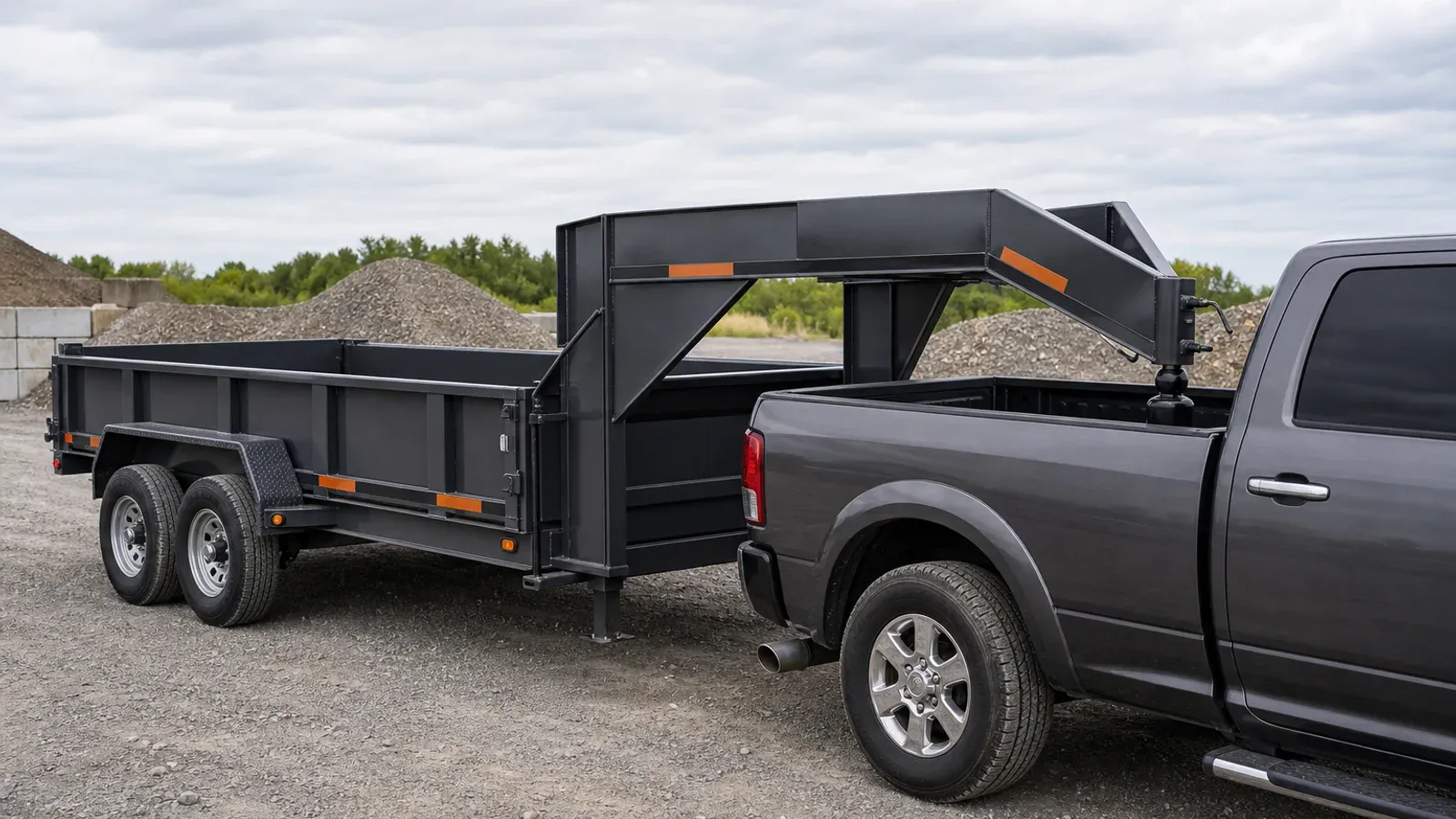
The gooseneck dump is the heavyweight of the dump family. It's the same hydraulic box you'd find on a bumper-pull, but it mounts behind a gooseneck connection instead of a bumper coupler. The neck rises over the tailgate and drops its pin onto a ball in the truck bed, right over the rear axle. That change in geometry rewrites the capacity rules the bumper-pull classes have to live under.
So why does the neck matter on a dump in particular? Dump loads are the densest cargo in towing. Wet soil, gravel, and demolition debris fill a box fast and heavy, and hitch physics cap the bumper-pull dump classes at around 14,000 to 16,000 pounds GVWR. A gooseneck shifts 15 to 25 percent of the loaded weight onto the truck's strongest point, so the classes step up to 22,000-plus with boxes stretching to 16 feet. If your material has outgrown the 7x14, this is the next rung up, and the only one.
Better stability comes along for free. The main dump trailer guide walks through how a loaded dump behaves, and the neck improves nearly all of it. You get sway resistance from the geometry, calmer manners under dense shifting loads, and tighter turning that lets a long heavy box back into spots bumper-pulls struggle with. Operators who move up rarely move back.
Who buys one? Excavation and grading contractors, demolition crews, ag operations moving real volume, and anyone whose gravel, dirt, and debris workload outgrew two trips in a 14K. The buyer here is commercial almost by definition, and that shapes everything below, including the license math.
Pin weight, trucks, and heavy hydraulics
Pin weight is the number that runs the show. A gooseneck carries 15 to 25 percent of the loaded weight on its pin. On a 22,000-pound loaded dump, that's 3,300 to 5,500 pounds pressing into the truck bed, and it counts against the truck's payload rating, not its tow rating. That's why the category assumes a one-ton, often a dually, and why the gooseneck hitch is part of the purchase rather than an accessory. Installing it means bolting rails or pucks to the frame and fitting a rated ball.
The hydraulics scale up with the class. Scissor lifts dominate here, sized up in both cylinder and structure, and some heavy models use dual-cylinder or telescopic-plus-scissor setups to move boxes that weigh as much as an entire light trailer. Pumps, batteries, and plumbing all run heavier, the charge line from the truck is mandatory, and the power system basics matter more here than anywhere else, since this system cycles more weight per lift than anything else on the site.
The box follows the usual dump conventions, just bigger. Lengths run 14 to 16 feet, sides are commonly 2 feet with high-side options, barn-and-spreader gate combinations are sized to the width, and the floor gauge shrugs off a loader bucket. Frame and neck construction carry the heaviest loads, so look for heavy I-beam mains and a gusseted neck transition, which is the highest-stress joint on the trailer. Expect dual 12K drop-leg jacks too, because a loaded gooseneck dump nose is no place for a single jack.
The license question runs right through this category. A one-ton and a 22K trailer easily stack combined ratings past 26,000 pounds, and commercial use of that combination generally lands you in CDL territory. That turns on the ratings, not the day's load. Your state's regulations have the details, and every buyer here should read them before the dealer visit, because the answer shapes the spec. Some buyers deliberately cap the trailer's GVWR to stay under the line, which is a legitimate strategy the dealer can paper correctly.
Gooseneck dump sizes and payload
| Class | Typical GVWR | Typical Payload | Common Fit |
|---|---|---|---|
| 7x14 gooseneck | 15,900 lb | 10,800 to 11,600 lb | The step past bumper-pull |
| 7x16 tandem 8K | 15,900 to 17,500 lb | 11,000 to 12,600 lb | Contractor daily volume |
| 8x16 tandem 10K | 20,000 to 22,000 lb | 13,800 to 15,800 lb | The working heavyweight |
| Tandem dual / triple | 22,000 to 25,900 lb | 15,000 to 18,500 lb | Max material per trip |
Payload comes down to the usual equation, GVWR minus the real empty weight. Gooseneck dump frames are the heaviest in the family, and 6,000 to 7,400 pounds empty is normal in the working classes. The payload math matters double here, because the numbers are big enough that brochure optimism costs you real yards per trip.
The material math finally gets comfortable at this scale. Take wet topsoil at a ton per yard: a 15,800-pound payload carries 7-plus yards legally, roughly double a 14K bumper-pull's honest capacity, and that trips-per-job arithmetic is the whole reason to buy. You still need density discipline. A 16-foot box will tempt you past the axles with the wrong material, so keep weighing your loads.
The axle and brake specs are commercial-grade. You get tandem 8K or 10K axles, brakes on every axle without exception, and load range G rubber, plus a maintenance schedule you should treat as the business expense it is. At these weights, the running gear is infrastructure.
Where the gooseneck dump wins and loses
The buying rule is simple. Count your trips. If jobs regularly need two or three bumper-pull loads, the gooseneck's per-trip economics justify the whole combination. If a 14K handles the work with occasional strain, that strain is cheaper than the neck.
Gooseneck dump FAQ
Why buy a gooseneck dump over a bumper-pull?
Capacity past the bumper-pull ceiling, roughly double the payload of a 14K, plus the neck's added stability and easier turning. Once your material volume outgrows the 7x14, this is the next rung up.
What truck does a gooseneck dump need?
A one-ton in practice, often a dually at the heavy end, since pin weight of 15 to 25 percent counts against the truck's payload. A three-quarter-ton handles only the lightest classes, and barely at that.
How much dirt can one haul?
The working classes carry 11,000 to 16,000 pounds of payload, which is 5.5 to 8 yards of wet soil legally, roughly double a bumper-pull 14K's honest number. Density still decides how full you fill it.
Do I need a CDL?
For commercial use with combined ratings past 26,000 pounds, generally yes, and most working gooseneck dump combinations sit right there. Some buyers cap the trailer's rated GVWR to stay under the line, so read the rules first.
What does the hitch install involve?
You bolt rails or a puck system to the truck frame and fit a rated ball. It runs several hundred to over a thousand installed, but you do it once and it serves every gooseneck after. Pull the ball and the bed stays flat.
Scissor or ram lift at this size?
Scissor, almost universally, sized to the class, with heavy models running upsized or dual-cylinder setups. The mid-lift demands of a 16-foot loaded box settled this one across the industry.