Best Trailers for Hauling Gravel, Dirt and Debris.

Gravel, dirt, and debris are the heaviest common loads in towing. Wet soil passes 2,000 pounds a cubic yard, and the dump trailer is the purpose-built answer. Size by weight, not by how full the box looks. A 14K dump legally hauls about 5 yards of soil. Occasional light loads work in a utility trailer if you've got a shovel and some patience. The rest of this page is the detail that keeps you legal.
What this stuff actually weighs
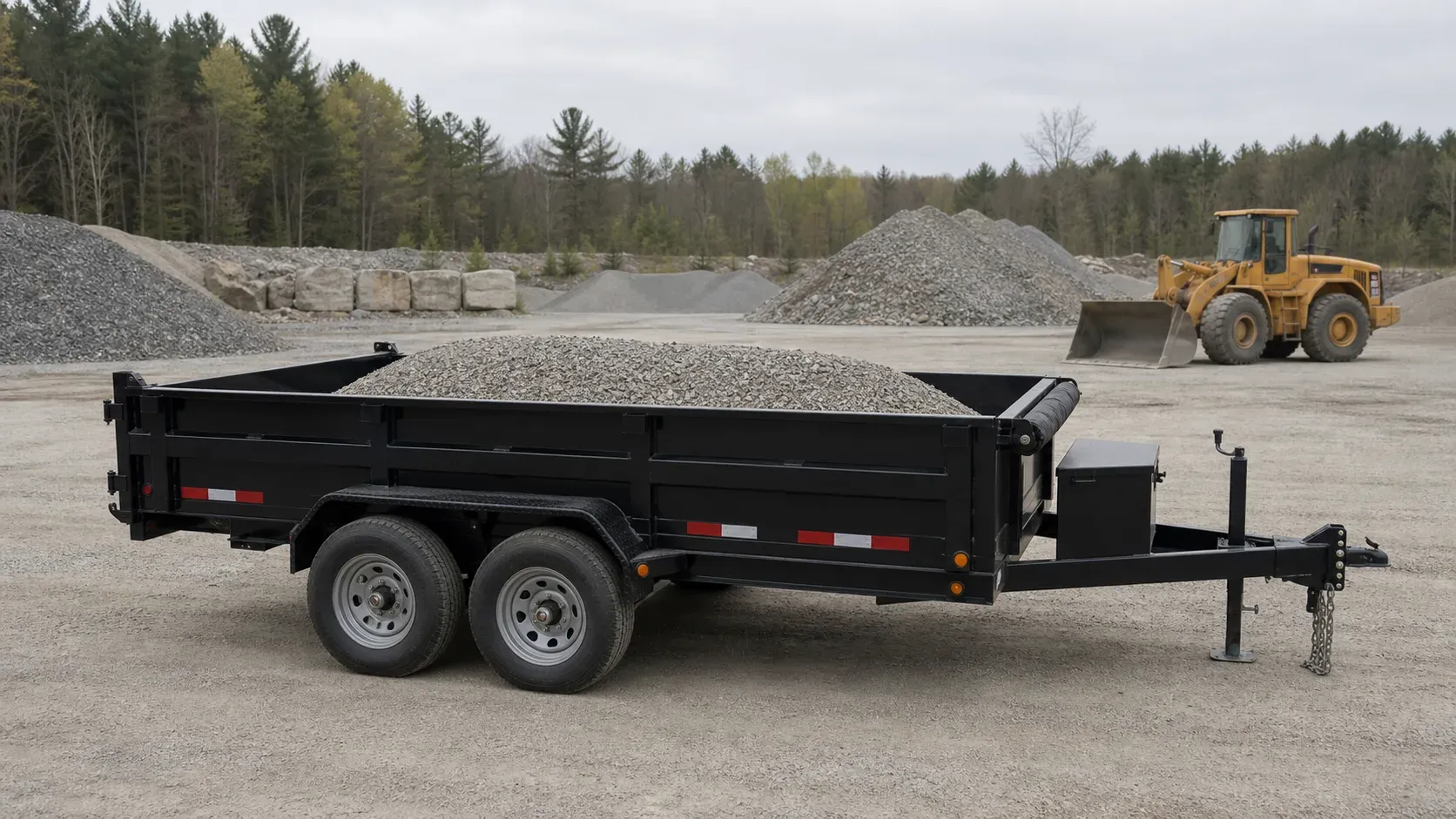
This job is a physics problem in work gloves. Loose material fills a box by volume but overloads a trailer by weight, and the gap between the two is where the mistakes happen. Commit the densities to memory, or keep a card in the truck.
| Material | Pounds per Cubic Yard | Yards to Fill a 10,000-lb Payload |
|---|---|---|
| Dry leaves, brush | 150 to 400 | Volume runs out first |
| Mulch | 400 to 800 | 12 to 25, volume runs out first |
| Dry topsoil | 1,600 to 2,000 | 5 to 6 |
| Wet topsoil, fill dirt | 2,000 to 2,400 | 4 to 5 |
| Gravel, crushed stone | 2,400 to 2,900 | 3.5 to 4 |
| Wet sand, packed clay | 2,700 to 3,200 | 3 to 3.5 |
| Concrete rubble, demo debris | 2,000 to 4,000 | 2.5 to 5, watch point loads |
Here's the lesson in the table. A 7x14 dump box with 2-foot sides holds about 7 cubic yards struck level, but only the top two rows of material can fill it legally. Gravel maxes out a 14K trailer's payload at roughly half the box's volume, so a box that looks half empty is exactly what legal looks like. Every scale-house horror story in this trade starts with someone loading to the rim.
Best trailers for the job, ranked
The dump trailer is the category's answer, and the configuration follows the work. The 14K tandem with a scissor lift is the working standard. It carries 8,500 to 10,300 pounds of honest payload, its solid sides shrug off demolition edges, and it unloads in half a minute. Wet, heavy, loader-filled material is exactly what the scissor is built for.
Below that, the 7,000 to 9,900-pound mid-size dumps suit property owners and light trades, 2 to 3 yards of soil per trip, and the compact classes bring hydraulic unloading to half-ton and SUV budgets. Just watch the density, twice. Above it, the gooseneck dump roughly doubles the working payload for excavation and grading, 7-plus yards of soil legally, behind a one-ton.
The alternates have their lanes. A utility trailer handles occasional light loads of any of it, at the cost of shoveling. Bulky demolition debris, cabinets and framing rather than just rubble, leans toward the high-side dump for containment. If you're genuinely torn, the dump versus utility comparison runs the buy-or-shovel math.
Loading, hauling, and staying legal
Load by weight and spread by habit. Know your material's density, count buckets, and spread each load level and slightly forward. Tongue weight at 10 to 15 percent keeps the tow planted, and dense loads make it easy to get wrong in both directions. See tongue weight for the target. A loader operator who piles the back of the box has unloaded the truck's hitch at highway speed, and the cheapest fix is a word before the first bucket.
Cover anything that can leave the box. Most states require covering loads that can blow or bounce out, and gravel on the interstate is both a citation and a windshield claim. A mesh or solid tarp kit is cheap next to either one. The state regulations carry the specifics, and demolition loads with protruding material bring securement rules along too.
Respect the combination. A loaded 14K class is three-quarter-ton work, with brakes on both axles and a controller pulling its weight. Dense loads stop like they weigh, because they do. Dump on level ground in every configuration, every time, and keep the battery-and-pump system maintained. A dead pump with five yards of wet dirt aboard is a very specific kind of bad afternoon.
Commercial operators, mind the ratings math. A one-ton and a heavy gooseneck dump clear the 26,000-pound combined line easily, and commercial use up there is CDL territory by ratings, not by the day's load. Read the rules before your business plan assumes otherwise.
Gravel, dirt and debris FAQ
What size dump trailer for gravel?
Size by payload against gravel's 2,400 to 2,900 pounds a yard. A 14K dump hauls 3.5 to 4 yards legally, and a 7K class hauls 1.5 to 2. Box volume barely matters, because gravel weighs out long before it cubes out.
How many yards of dirt fit in a 7x14 dump trailer?
Legally, about 4 to 5 yards of typical soil against a 14K trailer's real payload, even though the box holds 7 by volume. The gap between those two numbers is the overload zone.
Can I haul gravel in a utility trailer?
Within its rating, yes, a yard or so at a time with hand unloading. If you're moving it regularly, the dump trailer pays for itself in saved shoveling.
Do I have to tarp gravel and debris loads?
In most states, yes. Anything that can blow or bounce out needs covering, and fines plus liability sit behind the rule. Check your state's rules.
What truck do I need for a loaded 14K dump?
A properly equipped three-quarter-ton at a minimum, with tongue weight counted against the truck's payload and a brake controller wired and tuned.
Single ram or scissor lift for dirt work?
Go scissor for the working classes and wet, heavy loads. Its force curve handles what stalls a ram. The comparison runs it in full.