High-Side Dump Trailers Explained.

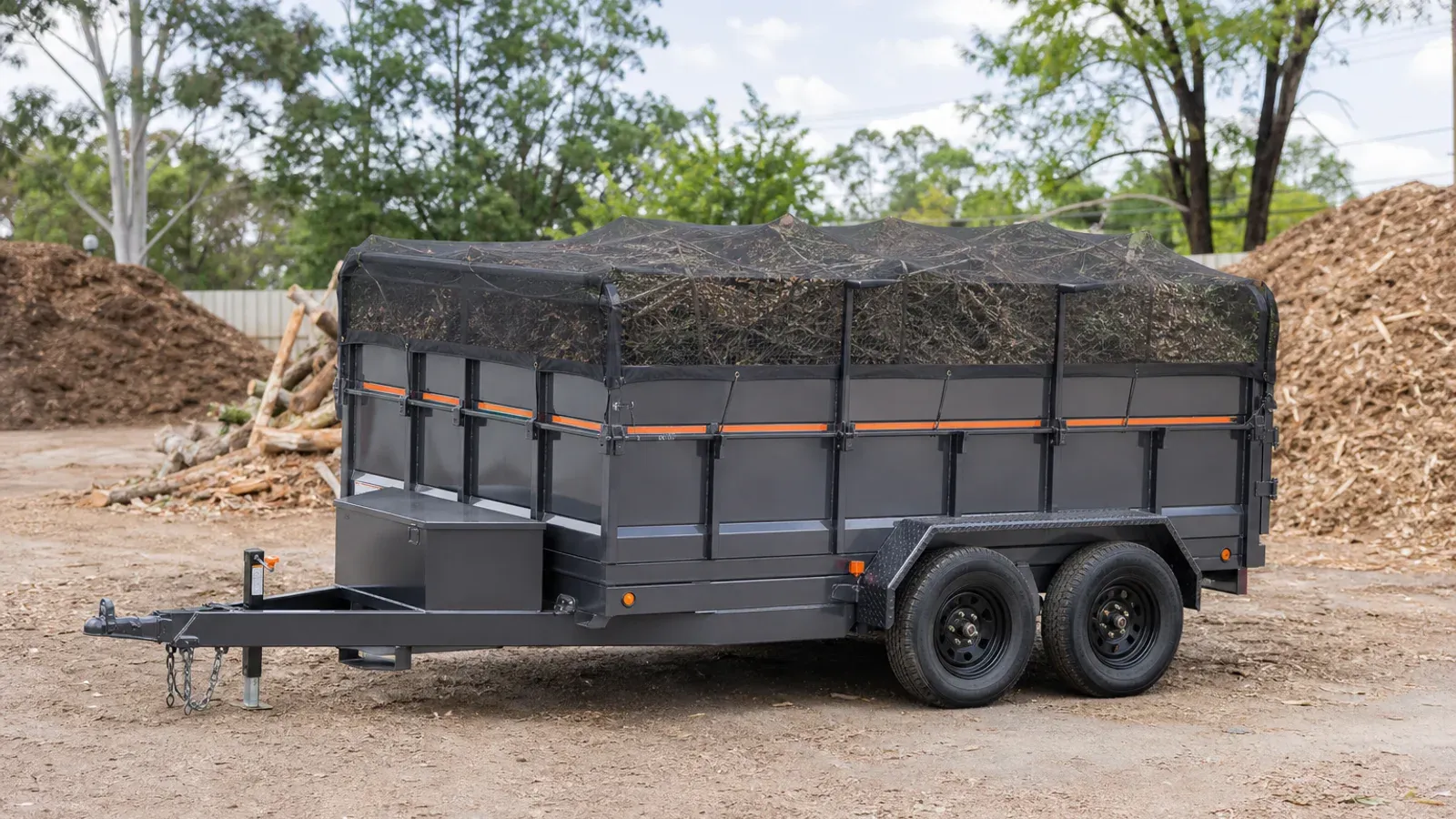
A high-side dump trailer runs 3 to 4-foot walls instead of the standard 2 feet, which doubles the box volume for light, bulky material like mulch, brush, junk, and leaves. The axles don't grow with the walls, so the tall box that swallows 12 yards of mulch will overload on 4 yards of wet dirt. Buy high-side if you run a volume business, and learn what your material weighs before the scale house teaches you the hard way.
What a high-side dump is
High-side is a volume play on a standard dump chassis. Same frame, same axles, same hydraulic lift, just with the box walls raised from the usual 24 inches to 36 or 48. The math is immediate. A 7x14 with 2-foot sides holds about 7 cubic yards struck level, and the same box at 4 feet holds 14. For material sold and moved by the yard, that's twice the load per trip.
The whole category rests on one lesson. Volume and weight are separate limits. Mulch runs 400 to 800 pounds a cubic yard, dry leaves and brush less, household junk somewhere in between. Fill 14 yards of the tall box with any of them and the GVWR still has room to spare. Load wet topsoil at 2,000-plus pounds a yard, though, and the same box overloads before the walls are a third full. Those tall sides tempt you to load more than the axles can carry, and every high-side owner either knows that cold or is about to learn it.
So who's it for? Junk removal businesses first and most famously, since the tall box is the industry's rolling signature. Landscapers haul mulch and material by volume. Tree crews haul chips and brush. Storm-cleanup and leaf-season crews run them hard. The common thread is material that's bulky, light, and paid for by the trip, where wall height is literally revenue.
The mirror image is the low-profile dump, built for dense material and machine loading. Between them, they frame the first question every dump buyer should answer before touching an option sheet. What does your material actually weigh per yard?
Walls, doors, and managing a tall load
Tall walls change how the box has to be built. Four feet of side catches leverage from wind outside and shifting loads inside, so wall construction matters more here than on any other dump variant. Look for full-height vertical stiffeners on sensible spacing, a reinforced top rail that survives loader bumps and shovel leans, and corner construction that doesn't lean on the sheet metal alone. Solid sides are the standard, but some builders offer mesh upper sections that cut wind load and let the material breathe, a smart trade for brush and leaves.
The rear gate works harder too. The standard barn-door and spreader-gate combination now carries twice the height, and junk operations lean hard on full-swing barn doors for walk-in loading. Ramp-gate options exist but are less common at full height, since a 4-foot gate makes for a heavy ramp. Check latch quality at height. A tall gate that racks out of alignment stops latching, and a gate that won't latch is a trailer that won't work.
Loading and unloading pick up a few quirks at height. Hand-loading over a 4-foot wall is a workout, which is why junk crews load through the doors and volume operations load by machine or conveyor. Dumping goes better than you'd expect, since light material slides out willingly, though bulky junk sometimes bridges across the tall box and needs a pull. And tarping stops being optional. Most states require covering exactly the materials this trailer hauls, so a roll-off style tarp kit sized to the wall height belongs in the purchase, not on the someday list. Load-cover rules vary by state, so check yours.
The hydraulic lift is stock dump equipment, scissor or ram, sized to the class. Light loads are easy on both, and this is the one dump variant where the lift rarely breaks a sweat. The usual power system basics still apply, because a dead battery doesn't care how light the mulch is.
High-side sizes and the weight-volume math
| Class | Typical GVWR | Volume at 4 ft Sides | The Weight Reality |
|---|---|---|---|
| 6x10, 7,000 lb | 7,000 lb | ~9 cu yd | Full box of mulch OK, soil overloads fast |
| 6x12, 9,900 lb | 9,900 lb | ~10.5 cu yd | Volume work with margin |
| 7x14, 14,000 lb | 14,000 lb | ~14 cu yd | The junk and mulch standard |
| 7x16, 14,000 to 16,000 lb | 14,000 to 16,000 lb | ~16 cu yd | Max volume, watch the math |
Run your material through the table before you buy. Payload is GVWR minus empty weight, tall walls add a few hundred pounds of steel to that empty number, and your yards times density has to fit under what's left. Mulch at 600 pounds a yard fills the 7x14's volume at roughly 8,400 pounds, which is comfortable. Wet chips run about double that density, and the box stops being fillable. Dirt was never a candidate.
Truck math follows the class, not the silhouette. A loaded 14K high-side is three-quarter-ton work like any 14K dump, with one addition. The tall box is a sail. Empty or lightly loaded, the crosswind behavior of 4-foot walls is the liveliest in the dump family, so tongue weight discipline and a habit of watching the mirrors in gusts come with the trailer.
Where high-side wins and loses
Here's the buying rule. Price the trailer against yards-per-trip in your actual business, and write your material densities on a card you keep in the truck. A high-side pays for itself fast in the right operation and overloads itself just as fast in the wrong one. Same walls, different owner.
High-side dump FAQ
What counts as a high-side dump trailer?
Wall height of 36 to 48 inches against the standard 24, on an otherwise standard dump chassis. At 4 feet the volume roughly doubles, but the weight rating doesn't budge.
How much mulch fits in a high-side dump?
A 7x14 with 4-foot walls holds about 14 cubic yards struck level. At typical mulch densities that's 6,000 to 8,500 pounds, which sits inside a 14K trailer's payload with room to spare.
Can I haul dirt or gravel in one?
Small amounts, and watch them carefully. Wet soil passes 2,000 pounds a yard, so a 14K high-side overloads around 4 to 5 yards, with the box barely looking started. This is the one rule you don't break with a high-side.
Do I need to tarp the load?
Almost certainly. Most states require covering exactly the loose material this trailer hauls. Buy the tarp kit sized to the wall height along with the trailer. The state rules have the specifics.
Barn doors or ramp gate at full height?
Barn doors for junk and walk-in loading, which is the industry standard. Full-height ramp gates exist but carry real weight. Match the gate to how you actually load.
Why do junk removal companies all run high-sides?
Volume per trip is the business model, bulky light loads are the cargo, and the walk-in tall box loads faster than anything else out there. The trailer is the industry uniform for good reason.