Best Trailers for Mulch and Landscaping Material.

Landscape materials span a tenfold density range, from mulch at 400 to 800 pounds a yard to topsoil past 2,000, and the right trailer follows the density, not the size of the pile. High-side trailers haul mulch by volume, any open trailer hauls soil in small honest loads, and a dump trailer takes the shoveling out of a material-business schedule. Learn the per-yard weights cold, because everything here rests on them.
The density table that runs everything
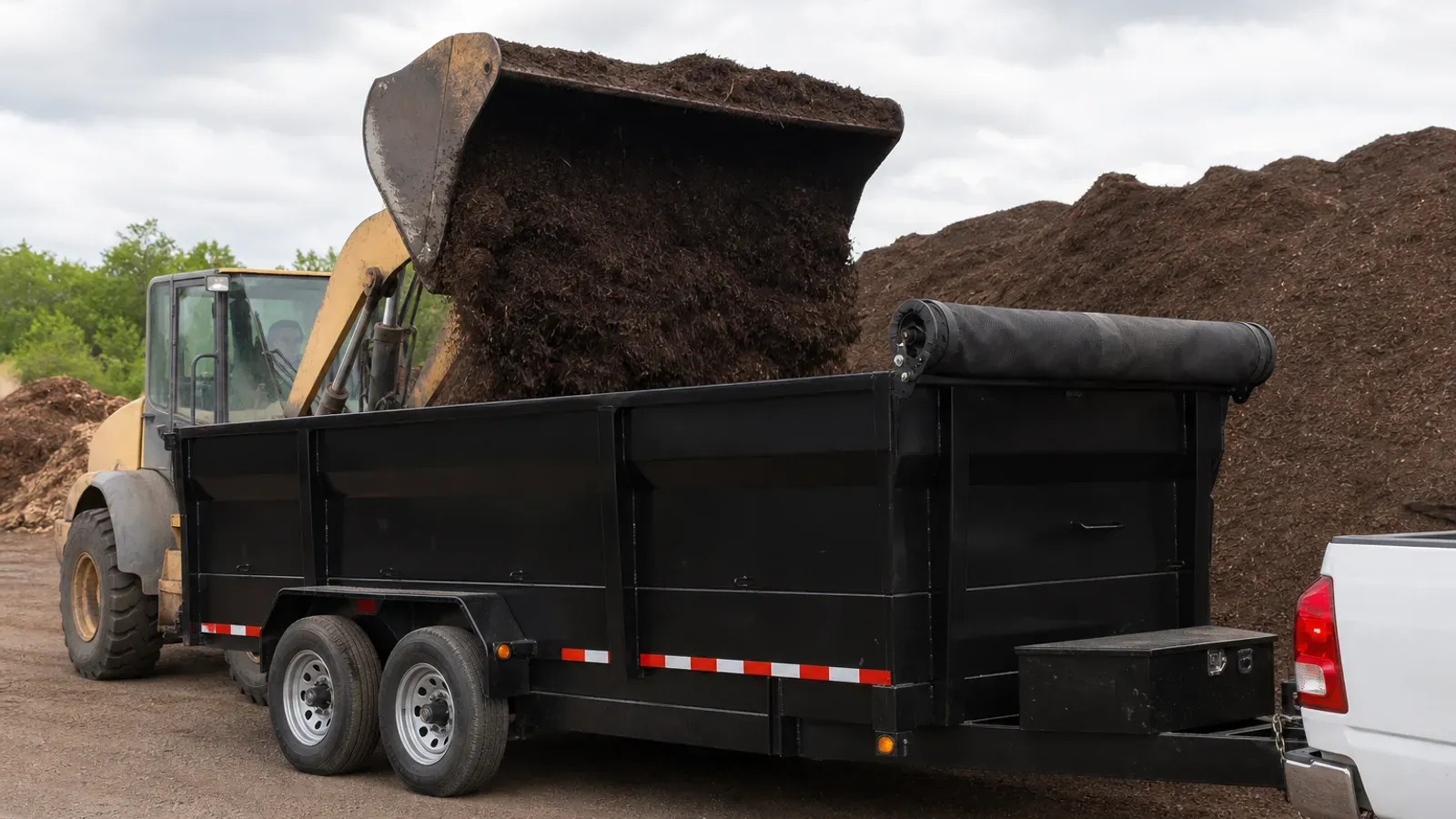
Landscape material hauling comes down to one table you'll use over and over, because these products share a pile shape and nothing else. The volume business runs on the light rows, the overload citations come from the heavy ones, and every trailer decision starts at the pounds-per-yard column.
| Material | Pounds per Cubic Yard | The Trailer Reality |
|---|---|---|
| Bark mulch, dry | 400 to 600 | Volume cargo, walls are revenue |
| Hardwood mulch | 500 to 800 | Still volume, weigh the wet spring load |
| Compost | 800 to 1,200 | The middle, watch the count |
| Topsoil, dry | 1,600 to 2,000 | Weight cargo, 2 to 3 yards per 7K |
| Topsoil, wet | 2,000 to 2,400 | The classic overload |
| Gravel and stone | 2,400 to 2,900 | The gravel page's whole subject |
The lesson from the table is simple: tall walls help the light materials and hurt the heavy ones. A 4-foot-sided 7x14 holds 14 yards by volume. Mulch fills it within the 7K class's math, compost crowds that limit, and soil buries the axles at a quarter-full box. That's the density trap, and it catches new haulers every season.
Moisture bumps every number up a tier, pushing spring mulch past 800 and wet soil past 2,400. The honest habit is to weigh a bucket from this delivery, not to trust last month's.
Best trailers by material and volume
For mulch volume, the answer is walls: a high-side landscape build or high-side utility at 4 feet. That gets you 8 to 14 billable yards a trip within the tandem classes' math, loaded by machine at the yard and shoveled out at the job. It's the trade's standard until frequency justifies hydraulics.
When you're hauling often, the answer is the dump trailer, a high-side dump for mulch volume or a standard box for mixed materials. It unloads in thirty seconds what a wall trailer costs you an hour of shoveling. Run the dump-versus-utility math and it pays off at a monthly-or-better pace. Material businesses live here, and the gravel page covers the dense-material side of the same fleet.
For soil, the answer is honesty behind any trailer: 2 to 3 yards per 7K class no matter how tall the walls are. A tandem utility or a standard dump hauls it in loads the axles survive. Once a project reaches driveway scale, the math prices it out of DIY and a delivery service takes over.
Loading, tarping, and the yard discipline
Load by weight and level by habit. The yard's loader counts buckets, so you need to know each bucket's yardage and the material's density. Stop the load at your payload number, not the top of the walls, and level the pile front-biased for tongue weight before you reach for the straps.
Tarp anything that can blow away. Mulch, compost, and clippings leave an uncovered trailer at highway speed just as reliably as gravel, and most states require you to cover exactly this cargo. Keep a fitted tarp or net sized to the walls on the trailer, and check the rules for your state. A citation and a cracked windshield are both cheaper to prevent.
The rest is road discipline. Tune your brakes for loads that weigh more than they look, and hold moderate speeds behind tall walls, which catch plenty of wind. Stage the unload downhill of the pile when you're shoveling, and follow the dump trailer's level-ground rule whenever hydraulics do the work. The material leg is the heaviest part of the landscape day, so run it like the payload it is.
Material hauling FAQ
How much mulch can I haul at once?
By volume, whatever the walls hold. By weight, 6 to 10 yards inside the 7K class at typical densities. A 4-foot-sided 7x14 fills legally on dry mulch and weighs out on wet.
How much topsoil fits in a 7K trailer?
Two to 3 yards, and the walls don't change that. The pile will look insultingly small while the axles say otherwise. Soil is weight cargo, and that's the whole warning.
High-side trailer or dump trailer for mulch?
Walls plus a shovel if you haul occasionally, hydraulics once you're at monthly-or-better. The dump-versus-utility comparison runs the labor math. Material businesses buy the dump and stop debating it.
Do I have to tarp mulch?
In most states, yes. Anything that can blow out needs covering, and mulch blows. A net sized to your walls is cheap next to the citation.
What's a yard of material actually look like?
A 3x3x3 cube, roughly a level full-size pickup bed. The loader's bucket usually holds a half to a full yard, so ask, then count.
Why does wet material matter so much?
Moisture adds 20 to 40 percent to the yard weight, so the same trailer of spring material outweighs the fall one. Weigh this load, not your memory of the last.