High-Side Utility Trailers Explained.

A high-side utility trailer swaps the standard 12 to 15-inch rails for 2 to 4-foot solid or mesh sides, so it contains the loose, bulky loads, mulch, brush, firewood, and debris, that would blow or bounce off a rail trailer. Volume grows, the axles don't, so density discipline still rules. Think of it as the shovel-powered cousin of the high-side dump, at a fraction of the price.
What a high-side utility is
A high-side takes the standard utility trailer and builds walls. The usual short rails give way to 24, 36, or 48-inch sides in solid sheet, mesh, or a mix, and the open platform becomes a box, one that holds loose loads a rail trailer can only pile up and hope. The gate stays, usually full-width and often doubling as a ramp, and everything else, axles, frame, running gear, carries over from the base trailer.
The job is loose and light. Mulch and landscape material, brush and prunings, leaves by the season, firewood, feed bags, recycling runs, and the general category of cargo that's bulky, low-density, and inclined to leave without walls. The tall sides multiply usable volume. A 6x12 with 2-foot sides holds about 5.3 cubic yards struck level, 4-foot sides double that, and a mesh top edge keeps the springy stuff aboard at highway speed.
The physics warning is the same one that applies to any tall-sided trailer. Sides create volume, GVWR creates the limit, and the two disagree hard on dense material. That 6x12 at 2,990 or 7,000 GVWR overloads on a single yard-and-change of wet soil while looking nearly empty. High sides are for material that's light per yard. The wall height is a containment feature, never a capacity claim.
The natural comparison is the high-side dump, same walls plus hydraulics, at multiples of the price. The utility version wins when volume loads are occasional enough that shoveling out beats paying out, and our dump versus utility math sorts that line out.
Walls, gates, and keeping loads aboard
Wall construction decides whether the sides are structure or suggestion. Solid sheet sides on tube uprights contain everything including wind, at the cost of catching crosswinds and trapping moisture against the steel. Mesh sides shed wind and water, breathe around green loads, and give branches something to snag, the trade every brush hauler knows. The common best-of-both build runs solid lower panels with mesh uppers, containment where the load presses and airflow where it doesn't. Whatever the material, upright spacing and top-rail stiffness are the quality tells. Push hard on the wall's midpoint at the dealer, because flex you can cause by hand becomes flex the load causes at speed.
The gate does double duty at height. Full-height rear gates contain the load and get heavy fast. Split designs, a fold-down lower ramp gate with a mesh upper panel, keep loading practical, and spring assists earn their cost on any gate past 3 feet. Side-tipping and removable panels show up on some builds for shovel access, worth real money to anyone unloading mulch by hand, which is this trailer's whole customer base.
Loading and securing follow the same height habits. Hand-loading over a 4-foot wall is a lifestyle choice, so most owners load through the gate or pitch over the low panels. Tarping is still the law's expectation for anything that can blow out, and most states require covering loose loads regardless of wall height. Put a tarp kit or cargo net sized to the box in the purchase, and your state's rules set the specifics.
Wind is the tax on walls. Tall solid sides on a light utility trailer make a kite, and the empty behavior in gusts and passing trucks is livelier than any rail trailer's. That's exactly where the mesh option earns its keep. Loaded, the light cargo this trailer carries barely settles it, so tongue weight discipline and moderate speeds in crosswinds are part of ownership.
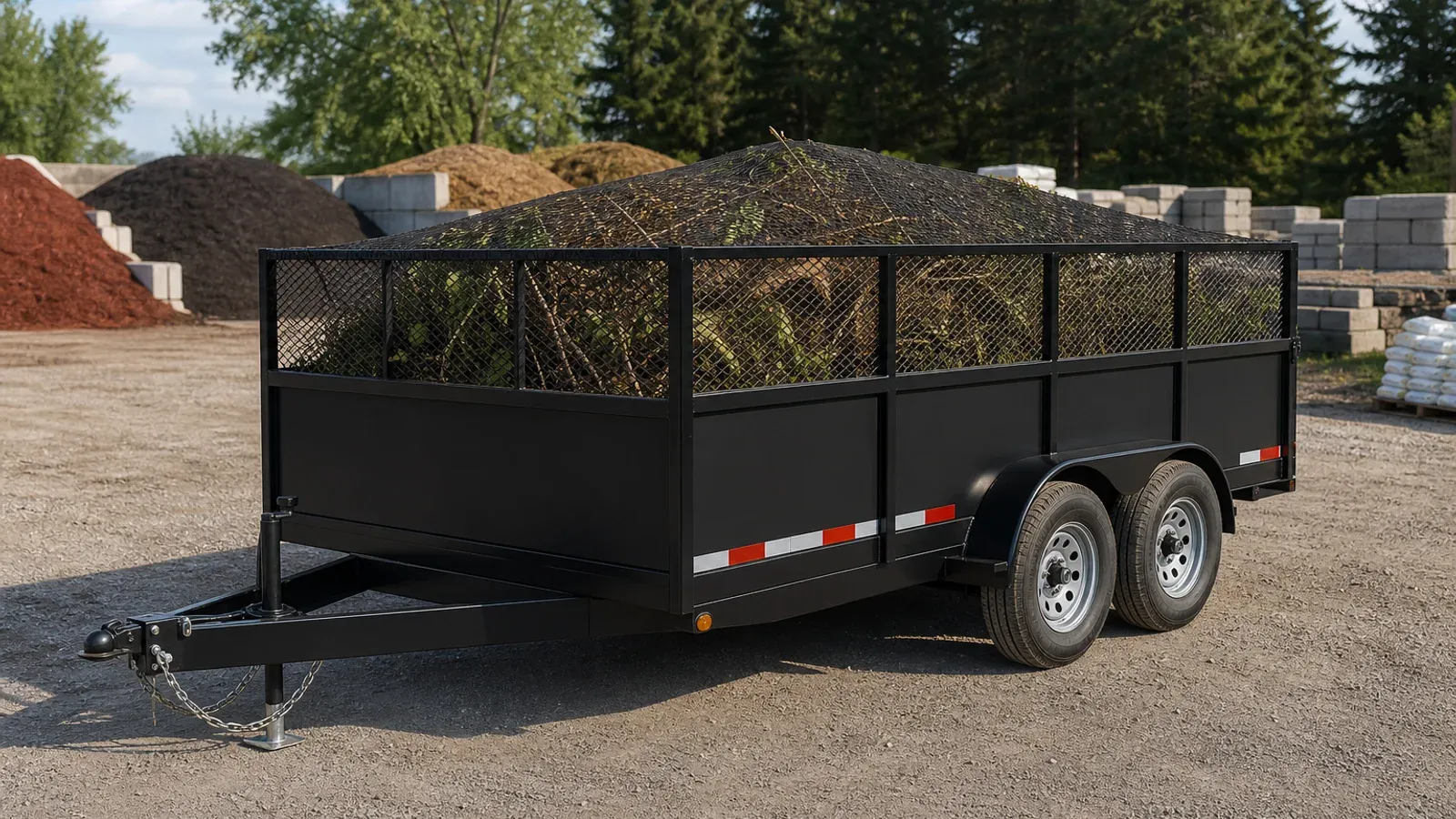
High-side utility sizes and volume math
| Class | Typical GVWR | Volume at 2-ft Sides | Volume at 4-ft Sides |
|---|---|---|---|
| 5x8 single axle | 2,990 lb | ~3 cu yd | ~6 cu yd |
| 6x10 single axle | 2,990 to 3,500 lb | ~4.4 cu yd | ~8.9 cu yd |
| 6x12 tandem | 7,000 lb | ~5.3 cu yd | ~10.7 cu yd |
| 7x14 tandem | 7,000 lb | ~7.3 cu yd | ~14.5 cu yd |
Run the two-limit check on your material. Mulch at 400 to 800 pounds a yard fills a 7x14's 4-foot walls at 5,800 to 11,600 pounds, which means the 7,000-pound class weighs out somewhere past 8 yards, before the box is full. Leaves and brush cube out first every time. Soil at a ton a yard makes the walls decorative, because two yards and the axles are done. The payload math is the same everywhere, and walls just make it easier to ignore.
Axle choice follows the base trailer's rules. Single-axle high-sides serve the homeowner leaf-and-mulch cycle honestly, and the tandem classes take the trade volumes with brakes and stability included. Tow vehicles clear the class easily by weight, since the loads are light. It's the wall wind that asks for attention, especially behind smaller SUVs.
Where the high-side wins and loses
Here's the rule. Count your loose-load trips per month. If they're occasional, the high-side utility plus a shovel is unbeatable value. If you're moving volume weekly, price the high-side dump honestly, because your back is part of that decision.
High-side utility FAQ
What side height should I get?
Two feet covers firewood, feed, and general loads. Four feet is the mulch, leaf, and brush spec. Taller sides are containment for lighter material, not permission for heavier.
How much mulch fits in a high-side utility?
A 7x14 with 4-foot walls holds about 14 yards by volume, and the 7,000-pound class weighs out past 8 yards of typical mulch. Lighter mulch cubes out, heavier weighs out, so know yours.
Mesh sides or solid?
Mesh sheds wind and breathes around green loads, solid contains fines and small debris. The solid-lower, mesh-upper combination is the working compromise most builds land on.
Can I haul dirt in one?
A yard or so, watched carefully, the same as any utility trailer. The walls change nothing about the axles, and soil buries a 7K rating at two yards.
Do I still need a tarp with high sides?
For anything that can blow out, most states say yes regardless of wall height. A fitted tarp or net sized to the box is cheap against the citation. See your state's rules.
High-side utility or high-side dump?
The dump deletes the shoveling for multiples of the price. Monthly-or-better loose volume justifies it, occasional loads keep the utility's math. The comparison runs it.