Dump Trailer vs. Utility Trailer. Which One to Buy.

A dump trailer unloads itself and costs two to four times what a comparable utility trailer does. A utility trailer hauls more variety per dollar and makes you shovel. The decision is how often you move loose material. Haul dirt, gravel, mulch, or debris more than once a month and the dump earns its premium in labor. Haul everything else and the utility wins on price, weight, and versatility.
Dump vs. utility at a glance
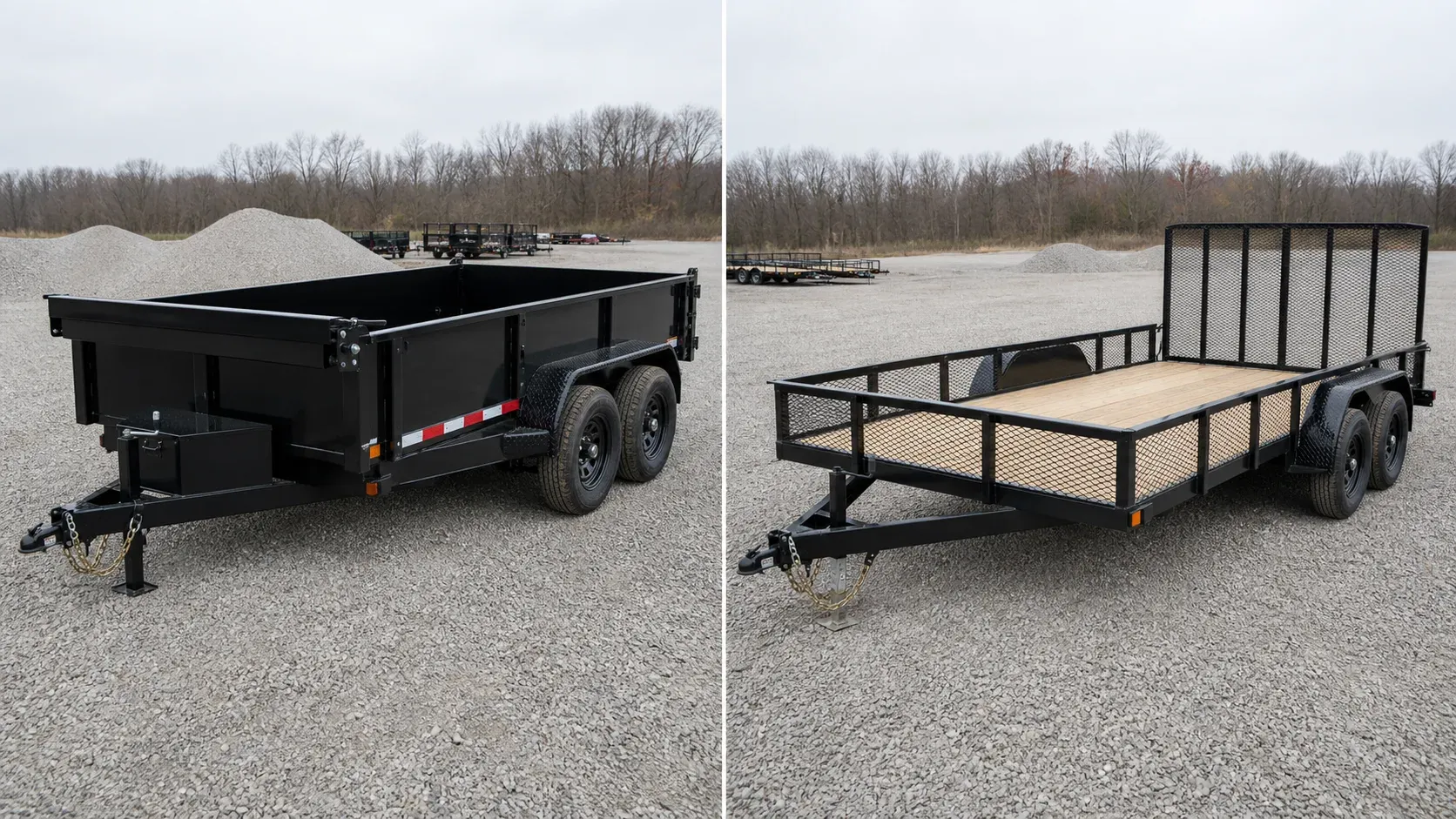
| Dump Trailer | Utility Trailer | |
|---|---|---|
| Unloading | Hydraulic, 30 seconds | By hand, by the hour |
| Price, comparable size | 2 to 4x the utility | The baseline |
| Empty weight | Heavy, box and hydraulics | Light, more payload per GVWR |
| Cargo variety | Loose material specialist | Everything within the rails |
| Maintenance | Pump, battery, cylinder, pins | Bearings, tires, lights |
| Equipment hauling | With ramp gate, limited | With gate, routine |
| Resale demand | Strong, commercial buyers | Strong, everyone |
The dump trailer and the utility trailer overlap on paper, similar footprints, similar axle classes, similar tow requirements class for class. The overlap ends at the hydraulics. One is a self-unloading box for loose material, the other an open platform for whatever fits, and buyers comparing them are usually asking one question, is the shoveling worth thousands of dollars to delete.
When hydraulics pay
The dump's argument is arithmetic on labor. A yard of wet topsoil weighs a ton, a 14K dump carries five yards, and hydraulic unloading takes half a minute against an hour-plus of hard shoveling. Anyone moving gravel, dirt, and debris on a schedule, contractors, landscapers on cleanup-heavy routes, and property owners with ongoing projects, converts that labor into money and the money into a trailer payment fast.
The dump also owns containment. Solid steel sides hold wet, heavy, sloppy loads a utility's rails and mesh were never meant to see, demolition debris with nails, saturated soil, and concrete chunks. And the high-side versions extend the argument to volume businesses, junk and brush by the box-full with barn-door loading.
The costs are real. Price comes first, since the hydraulic system and reinforced box command a multiple of the comparable utility. Empty weight comes second, because the same equipment eats payload, a 7x14 dump can weigh double the 7x14 utility, and payload is GVWR minus that number. Maintenance comes third, with batteries, pumps, cylinders, and hinge pins added to the bearing-and-tire routine every trailer carries. The dump is a machine, and you price and maintain it like one.
When simple wins
The utility's argument is everything else. Mowers, ATVs and side-by-sides, furniture, appliances, building materials, and the dump-run miscellany of ownership all load over low rails or up the ramp gate and ride for a fraction of the dump's price. The utility guide covers the breadth, and breadth is the product.
Weight works in the utility's favor twice. Lower empty weight means more payload per GVWR and an easier tow behind half-tons and SUVs, and the simpler trailer is easier on the wallet, no battery to tend and no hydraulics to service, just bearings, lights, and rubber.
The utility hauls loose material too. It just charges you in labor instead of money. Mulch by the tarp-and-shovel method, gravel in manageable loads, debris with a helper, the occasional loose load is entirely livable. The break-even is frequency. Occasional shovelers keep thousands of dollars, and weekly shovelers buy that money back one sore weekend at a time.
Which one you actually need
Buy the dump if loose, heavy material is a monthly-or-better reality. Contractors and landscape crews hauling soil, gravel, and debris on routes. Property owners mid-renovation or managing acreage with ongoing material movement. Junk and cleanout operations where the box is the business. The labor math pays the premium, and the trailer holds its value with commercial buyers waiting.
Buy the utility if variety rules. Equipment, toys, household loads, and materials that stack and strap, with loose loads as the exception. You keep thousands at purchase, tow lighter, maintain less, and give up nothing but the hydraulics you would rarely cycle.
Both directions have their wrong buys. A dump bought for twice-a-year mulch runs is expensive shoveling insurance with a battery that dies of boredom. A utility bought for a grading business is a labor bill on wheels. And if you are genuinely split, one tiebreaker settles it, a dump with a ramp-gate option hauls light equipment passably while a utility will never dump, so the crossover runs only one direction.
Dump vs. utility FAQ
How much more does a dump trailer cost than a utility?
Commonly two to four times the comparable footprint, and the hydraulics, battery system, and reinforced box are the difference. The premium buys unloading, so price it against your shoveling hours.
Can a dump trailer do everything a utility does?
Most of it, with penalties. Higher sides complicate side-loading, empty weight steals payload, and equipment needs the ramp-gate option. It is a specialist that moonlights, not a replacement.
Can a utility trailer haul dirt and gravel?
Within its rating, yes, loading and unloading by hand. A yard or two is a workout, not a problem. Weekly volume is a problem, and the dump exists because of it.
Which is easier to tow?
The utility, class for class, with less empty weight and a lower profile. Both follow the same tongue weight and brake rules loaded.
Which holds value better?
Both resell well. Dumps carry strong commercial demand, utilities sell to everyone, and condition and honest specs decide more than category.
Is there a middle option?
The ramp-gate dump is the closest thing, dumping plus credible light-equipment hauling in one trailer. The dump guide covers the configuration.