Best Trailers for Hauling a Side-by-Side.

A side-by-side needs deck width first. Most full-size machines run 60 to 64 inches wide, and many two-seat sport models run 64 to 74, which rules out narrow decks before weight even comes up. The standard answer is a 7x14 tandem utility with a reinforced ramp gate, about 5,000 usable pounds for a 1,500 to 2,300-pound machine plus gear. Measure the machine first, then the deck between the fenders.
UTV weights, widths, and the measuring order
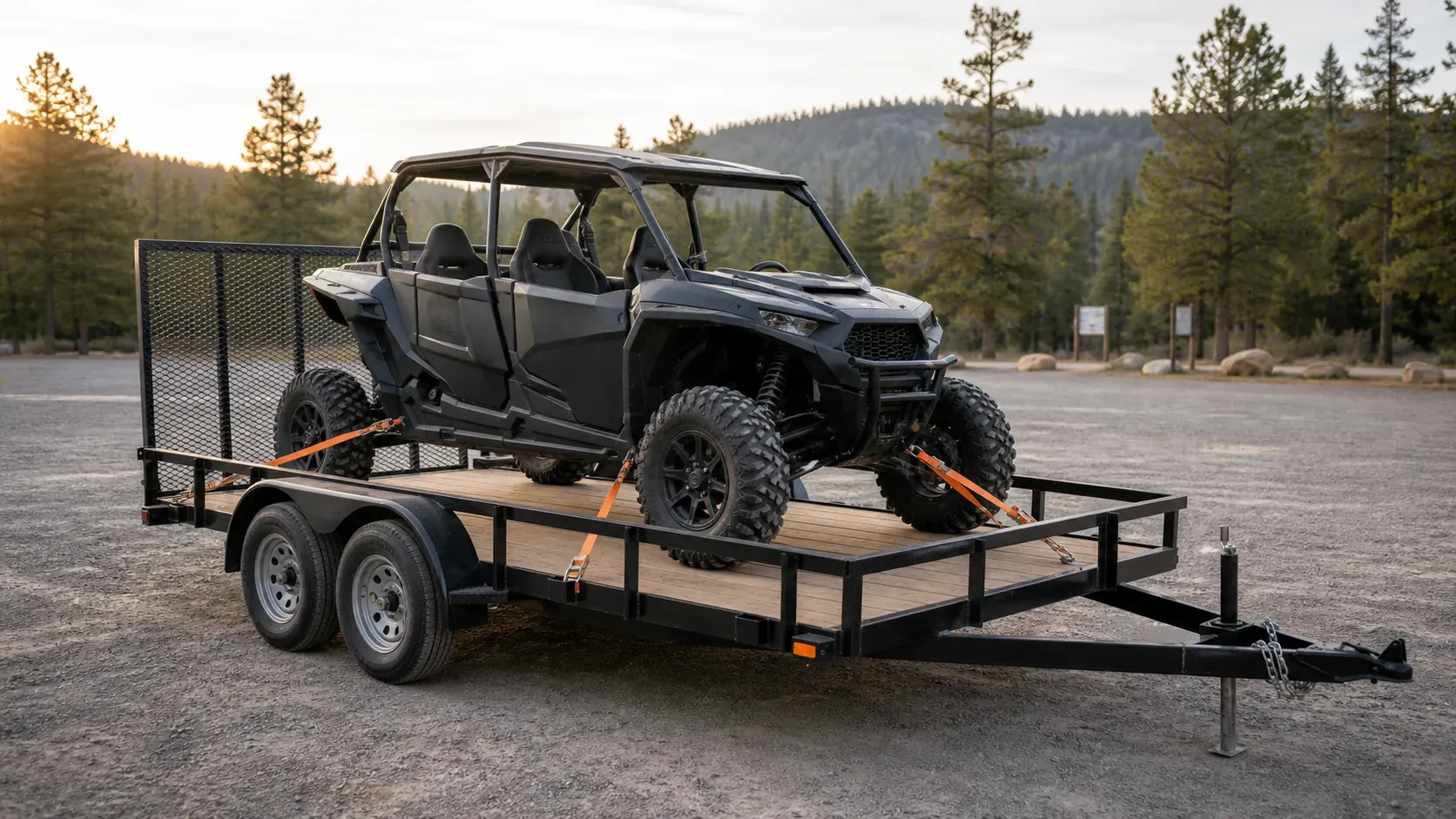
The side-by-side outgrew its trailer math a decade ago, and buyers are still catching up. Trail models run 50 inches wide on purpose, sport machines run 64 to 74, and utility UTVs with dump beds split the middle. Curb weights span 1,100 to 2,400 pounds before you add fuel, accessories, and the spare parts bin every owner bolts on.
| Machine Class | Typical Width | Typical Wet Weight | Trailer Implication |
|---|---|---|---|
| Trail, 50-inch | 50 in | 1,100 to 1,500 lb | Fits most decks, even 5-wide |
| Utility UTV | 58 to 64 in | 1,500 to 2,100 lb | Needs 6.5 to 7-ft deck |
| Sport, 2-seat | 64 to 74 in | 1,700 to 2,100 lb | Needs 7-ft deck, check fenders |
| Sport, 4-seat | 64 to 74 in | 1,900 to 2,400 lb | 7-ft deck, 14-ft-plus length |
Width decides before weight does. A standard utility deck runs 60 to 83 inches between the fenders, and a 64-inch machine on a 76-inch deck clears by inches, not feet. Some decks carry the width over the fenders instead, which only works if the machine's track straddles them cleanly. Measure the machine's true width, mirrors and fender flares included, then measure the deck where the tires actually land. The tape costs nothing. The wrong trailer costs a restocking fee and an embarrassing drive home.
Length comes second. Four-seat machines stretch past 12 feet, and deck length has to cover the wheelbase plus strap angles plus room to walk the tie-down corners. Fourteen feet handles most single-machine setups, and sixteen adds margin for a four-seater or room for a trail bike alongside.
Best trailers for a side-by-side, ranked
The standard answer is the 7x14 tandem utility with a reinforced ramp gate. Seven feet of deck width clears every production machine, and roughly 5,000 usable pounds carries the heaviest four-seater with camp gear aboard. Tandem stability suits the highway miles trail heads put on, and the 7,000-pound class tows behind the half-ton already in the driveway. Gate rating matters. A 2,000-pound machine climbing a flimsy gate is the classic failure, so spec the reinforced gate and the spring assist.
The budget lane is the 6x12 single-axle for trail-width and lighter utility machines. It's honest within its 2,000 to 2,600-pound payload and its width limit, so measure twice here. The step up is the 7x16 tandem, which carries a four-seater with margin or two small machines nose-to-tail.
The weather-and-security lane is the enclosed cargo trailer, a 7x14 or 7x16 box that keeps the machine dry, hidden, and locked. It costs more money and weight, and the interior height is worth checking against a roof or light bar, since most machines want at least 6.5 feet of clearance. The enclosed versus open math runs the tradeoffs, and for machines that sleep at race sites, it usually lands on enclosed.
Loading, strapping, and the trail-head routine
Load in gear, at idle, in a straight line. The machine climbs the gate under its own power and parks with its axle weight slightly forward of the trailer's axle center for honest tongue weight. Set the parking brake before you dismount. A winch earns its keep for dead machines and steep gates, and the mount and wiring cost little at purchase.
Strap the suspension's bounce out of it. Run four points, one per corner, with rated ratchet straps to the frame or the manufacturer's tie-down points, pulled until the suspension compresses slightly so the machine can't pogo against the straps at highway speed. Soft loops save painted frames, and wrapping the axle beats hooking suspension arms that were built to move. Wheel chocks or a wheel basket up front add a belt to the suspenders on long hauls.
A few trail-head habits round it out. Latch and pin the gate, re-check the straps after the first ten miles, confirm the lights, and tune the brake controller for the loaded weight. Run the fuel down and shut the cooler for anything enclosed. And mind the state rules on trailer brakes and machine securement when you cross lines on the way to ride country, because the fine finds the driver, not the dealer.
Side-by-side hauling FAQ
What size trailer do I need for a UTV?
Width first. A 7-foot deck clears every production machine. Then 14 feet of length for most, and 16 for four-seaters or a second small machine. The 7x14 tandem utility is the standard answer.
Will a side-by-side fit on a 5x8 or 6x10?
Trail-width 50-inch machines fit a 5-wide deck, and nothing else does. Full-size and sport machines need the 6.5 to 7-foot decks, measured between the fenders where the tires land.
Can a half-ton tow a UTV and trailer?
Easily, in the standard class. A 7x14 tandem plus a 2,000-pound machine grosses around 4,000 pounds, well inside half-ton ratings once tongue weight is honest.
How do I strap down a side-by-side?
Four rated points to the frame or factory tie-down loops, suspension slightly compressed, and soft loops on painted surfaces. Never strap to suspension arms alone, because they're built to move and they will.
Open or enclosed for a side-by-side?
Open for price, weight, and easy loading. Enclosed for weather, security, and machines that sleep away from home, and check interior height against the roll cage. The comparison runs it.
Do I need trailer brakes?
The tandem classes carry them standard, and most states require them at these ratings. Behind anything smaller than a full-size truck, treat them as mandatory regardless. See the rules.