Best Trailers for Hauling ATVs.

ATVs are the friendliest haul in powersports, 400 to 900 pounds each and narrow enough that deck layout matters more than weight. One quad rides a 5x8 single-axle, two ride a 6x12 nose-to-tail or a 6.5-wide side-by-side pair, and four want a 7x16 tandem or an open deck with side-load ramps. Count the machines, pick the layout, then confirm the payload, in that order.
ATV weights, footprints, and fleet math
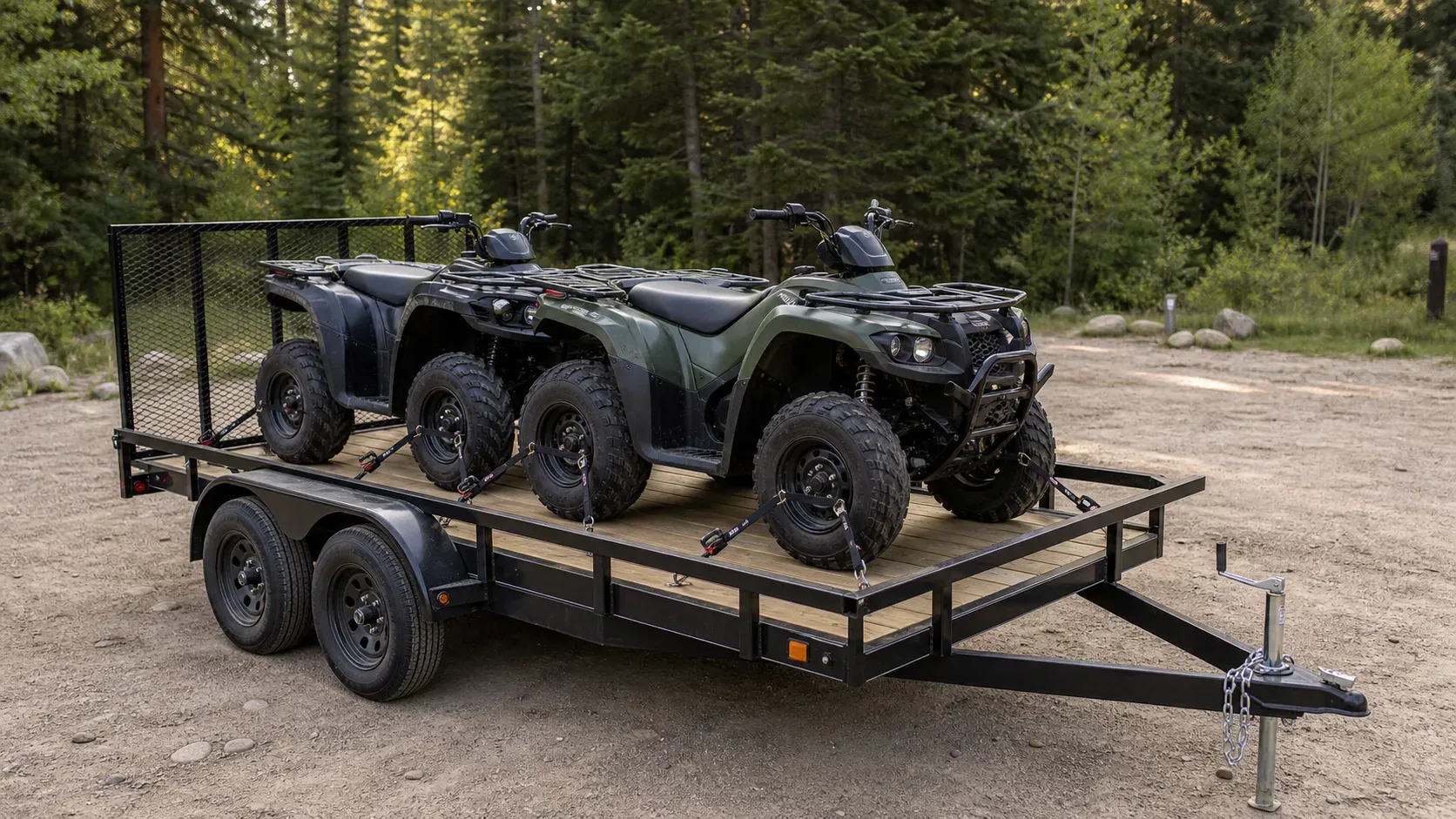
ATV trailer math is generous. Sport quads run 350 to 500 pounds, utility four-wheelers 600 to 900 with racks and winches, and footprints sit around 4 feet wide by 7 feet long, numbers that leave most trailer classes loafing. The real challenge is geometry, fitting the fleet, because families and riding groups rarely stop at one machine.
| Fleet | Layout | Minimum Deck | Combined Weight |
|---|---|---|---|
| One ATV | Straight on | 5x8 | 400 to 900 lb |
| Two ATVs | Nose-to-tail | 6x12 | 900 to 1,800 lb |
| Two ATVs | Side-by-side pair | 6.5x10 | 900 to 1,800 lb |
| Three to four | Mixed, angled | 7x14 to 7x16 | 1,800 to 3,600 lb |
Each layout has its trade-offs. Nose-to-tail is the narrow-deck answer and loads through one gate in sequence. The side-by-side pair wants 78-plus inches of usable width, handlebar to handlebar with mirrors folded, and loads faster at the trailhead. Bigger fleets mix and angle the machines, and side-load ramp options on wider decks turn a four-quad load-in from choreography into parking.
Weight rarely rules, but it always audits. Four utility quads plus fuel cans, coolers, and the gear tote crowd 4,000 pounds, past a single-axle's whole rating and comfortable in the tandem class. Count the real fleet you'll haul on a real weekend, then run the payload subtraction like you would for any load on this site.
Best trailers for ATVs, ranked
For one machine, the 5x8 or 6x10 single-axle utility is the honest answer, light enough for an SUV, cheap enough to own casually, with the ramp gate doing the loading. For two, the 6x12 handles nose-to-tail on a single axle at the class ceiling, and the 6.5x12 tandem adds the side-by-side layout plus brakes and margin, the better buy for regular trips.
The fleet answer is the 7x14 to 7x16 tandem, with room for four machines, gear, and the 7,000-pound class's stability for the highway leg to ride country. Side-load ramps and a front-mounted rail for cans and coolers turn the deck into a system, and the reinforced gate spec carries over from every machine-hauling page on this site.
The alternates serve their niches. The enclosed cargo trailer locks the fleet away from weather and light fingers, worth it for machines that sleep at motels, and the enclosed versus open page runs that math. And if your garage already holds a side-by-side, size once for the widest machine, because a UTV-capable 7-footer hauls any quad ever made and the reverse is not true.
Loading order, strapping, and the group-ride routine
Load heavy forward and balance the pairs. Nose-to-tail layouts put the heavier machine ahead of the axle for honest tongue weight, and side-by-side pairs balance left to right so the trailer doesn't lean into every corner. Ride machines up in low gear at idle, and never load a running quad on a wet mesh gate in street shoes. The emergency room has heard that one.
Strap each machine independently. Four points per quad is the gold standard, two front and two rear pulled to slight suspension compression. Two-point strapping, front rack and rear rack crossed, is the trailhead custom that works for short hauls at moderate speeds. Use rated straps and soft loops on racks, and re-check ten miles out, because machines settle and straps relax every time.
The group-ride habits finish it. Keep fuel caps tight and vents managed, keys pocketed, and coolers and cans strapped like the cargo they are. Check the lights and brake controller against the loaded weight, and seat the gate pins. When you cross state lines to ride, the brake and securement rules travel with you, and the checkpoint outside popular ride areas on holiday weekends is not a rumor.
ATV hauling FAQ
What size trailer for one ATV?
A 5x8 single-axle utility handles any single quad with room for gear. The 6x10 adds margin and resale flexibility for a small premium.
Can I haul two ATVs on a 6x12?
Nose-to-tail, yes, that's the layout the size exists for. Side-by-side pairs need 78-plus usable inches of width, the 6.5-wide decks.
What trailer for four ATVs?
A 7x14 to 7x16 tandem utility. Four machines plus gear lands 2,500 to 4,000 pounds, tandem-class work with brakes and stability for the highway leg.
Can an SUV tow an ATV trailer?
A single quad on a small single-axle sits comfortably within most SUV ratings. Multi-machine tandem loads want the half-ton math run honestly.
How do I strap down an ATV?
Four rated points to racks or frame with soft loops, suspension slightly compressed, each machine strapped independently. Two-point crossed strapping serves short moderate hauls, four points serve everything.
Open or enclosed for ATVs?
Open for price and easy loading, enclosed for weather, security, and overnight trips. The value of the fleet aboard usually decides, and the comparison runs the numbers.