Best Trailers for Landscapers.

A landscaper's trailer is the crew's rolling shop, and the standard answer is a 6.5x14 or 7x16 tandem landscape build with the gate, racks, and sides matched to the route. Solo operators start honest on a 6x12, material-heavy operations add a dump, and the two-trailer pattern shows up with the second crew. Buy the gate first, the racks second, and the walls for whatever material you actually move.
What a landscape day actually hauls
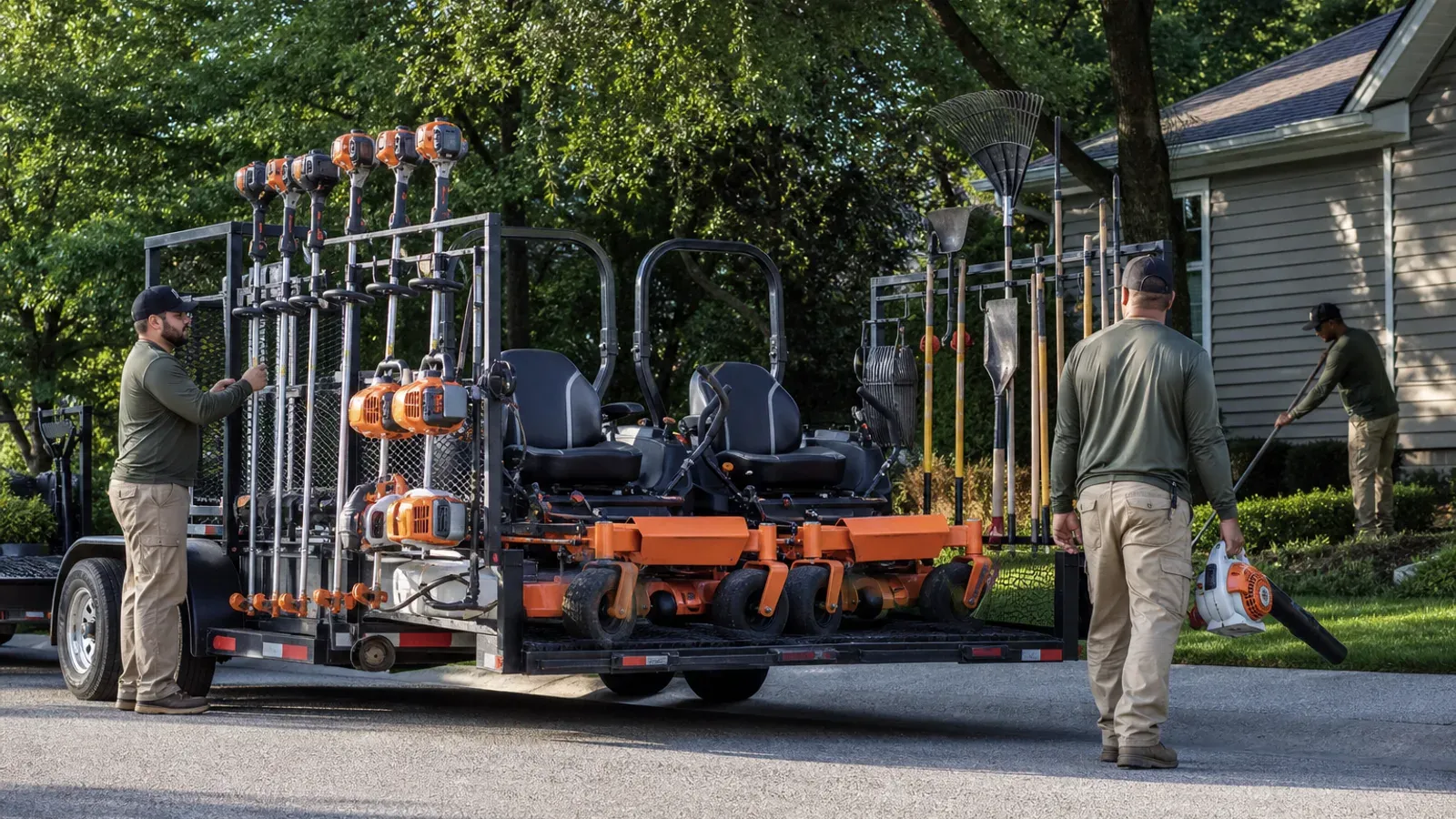
A landscape trailer hauls the same manifest every day, and that repetition is exactly why specialization pays. There are two mowers, usually 800 to 1,500 pounds of zero-turn each, crossing the gate at every property. There is the handheld fleet, trimmers, edgers, and blowers worth as much as a used truck and just as easy to steal. There is the material leg, mulch, soil, and the debris every job generates. And there is the crew's own gear: fuel, water, spools, and the cooler that outranks all of it by July.
The weight stacks up quietly. Two machines plus handhelds plus fuel plus a debris load will crowd the 7,000-pound class by afternoon, and the payload subtraction has to account for the racks' and walls' own steel too. The landscape guide works through the full build logic. This page is about the business's buying ladder.
The spec nobody prices until year two is the cycle count. Twenty-plus gate drops a day and a rack grabbed at every stop means the trailer ages by route-days, not by the calendar. That is the whole trade-package argument in a sentence: you buy the duty cycle up front or you pay for it mid-season.
The landscaper's buying ladder
The route standard is a landscape-configured tandem, 6.5x14 for a two-machine crew and 7x16 where big decks and material share the deck. Spec the rated gate first, lay out the rack package curb-side, and size the wall heights to your material mix. It rides behind the half-ton the business already runs.
The solo rung is honest: a 6x12 single-axle or light tandem with the gate rated for one machine and a starter rack. You cross the utility-versus-landscape line when the cycles turn daily. The growth rungs stack from there, a heavy-duty utility crossover when a skid steer joins the fleet, a dump trailer when material volume turns the shovel into payroll, and the two-trailer pattern (two standard tandems rather than one heavy build) arriving with the second crew.
The enclosed option serves the theft-and-weather tier. A contractor-build box carries the handheld fleet locked and dry for operations whose equipment value or climate demands walls. You pay for it in the box's weight and the open deck's loss.
The route's disciplines
The daily rhythm writes the rules. Strap the machines at every property, so the insurance adjuster's favorite question is already answered yes. Lock the racks at every stop, per the gas-station statistics. Tarp debris per the rules, because clippings on the highway cite as reliably as gravel. And mind the tongue weight as the material leg loads the back half of the day heavier than the front.
The soil rule repeats from every wall page: the box's volume is mulch's invitation and soil's trap. A yard and change of wet dirt hits the 7K class's limit while the walls still look empty, and the crew that weighs once loads legal all season.
Run the maintenance calendar by route-days, not the calendar. Grease the gate hinges monthly in season, check rack fasteners against vibration, service bearings and brakes in the off-season rather than the busy one, and rotate the tires against the scrub a tandem picks up in tight corners. Park it for winter nose-high, covered, and battery-tended where the lights and breakaway live. The trailer that starts the season serviced is the one still earning at the end of it.
Landscaper trailer FAQ
What size trailer does a landscaping crew need?
A 6.5x14 tandem for two machines and gear, or a 7x16 where material shares the deck. Solo operators start honest at 6x12. Do the math on mower deck width plus walking room.
Open landscape trailer or enclosed?
Open for the route's speed and the material leg, enclosed where equipment value and climate argue for walls. Most routes run open with locked racks, and the comparison prices out the rest.
When does a landscaper need a dump trailer?
When material and debris volume turns shoveling into payroll, monthly or more per the dump-versus-utility math. The route trailer keeps the route, the dump takes the material.
What's the first spec to pay up for?
The gate, rated past your heaviest machine plus room to grow, per the gate page. It cycles twenty times a day and parks the route when it fails.
Can a half-ton run a landscape route?
With the standard 7K tandems loaded, yes, as long as the brake controller is tuned and the tongue weight is honest. The skid-steer crossover builds are where the bigger-truck math starts.
Two trailers or one big one?
Two standard tandems beat one heavy build once you run a second crew. You get redundancy when one is down and routes that can split. It's the pattern the industry settled on.