Contractor Enclosed Trailers Explained.

A contractor build turns an enclosed cargo trailer into a rolling shop, with shelving and cabinets on reinforced walls, lighting and power, ladder racks, and locks that mean it. The 7x14 and 7x16 tandems are the trade standards. Spec the shell for the buildout, which means wall backing, extra height, and a side door that works, then buy the interior smart. Factory packages beat dealer markup, and DIY beats both.
What a contractor build actually is
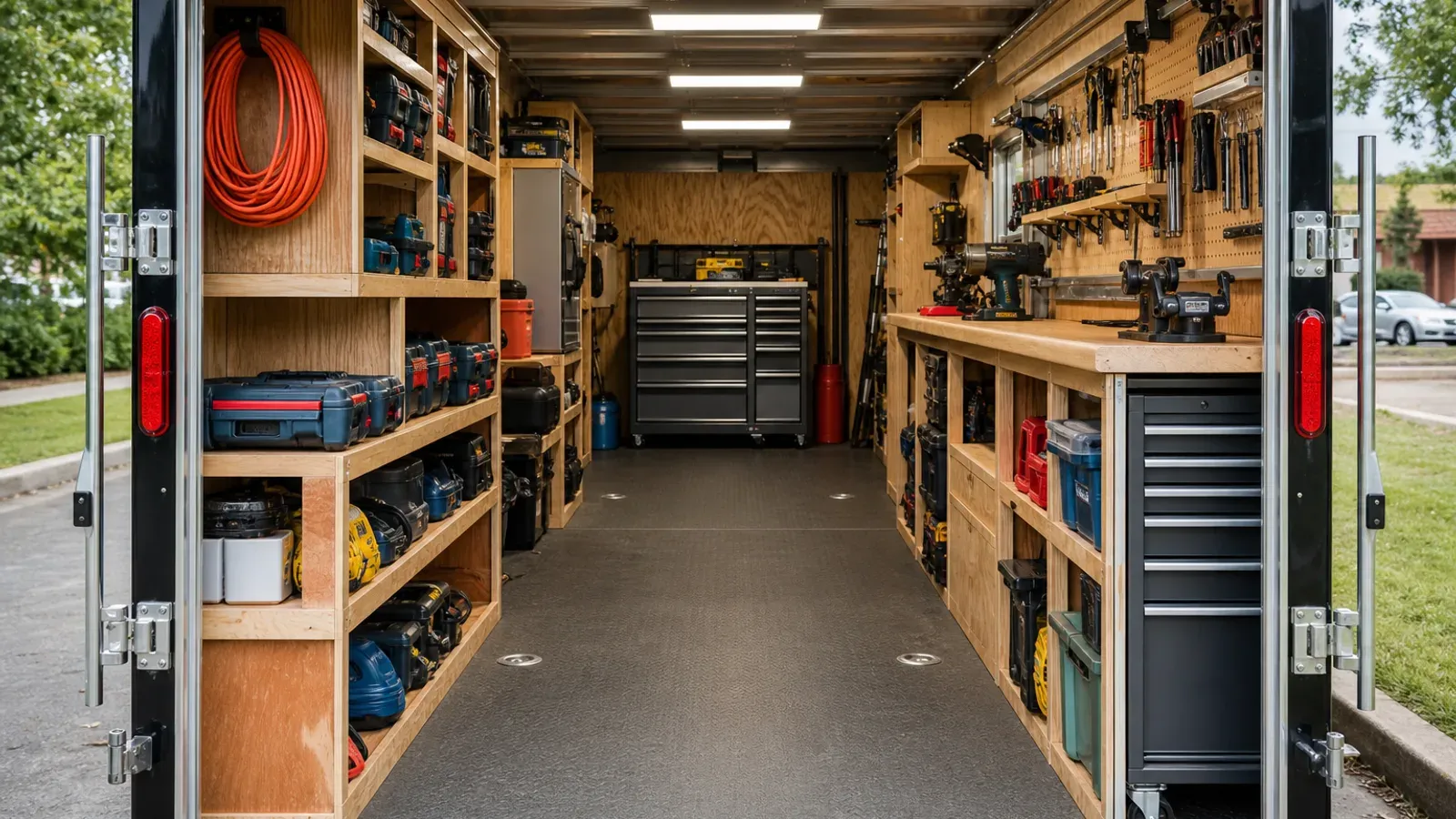
The contractor build is what happens when a trade stops loading a trailer and starts working out of one. The enclosed cargo shell stays, and the inside becomes infrastructure. You get shelving runs, cabinet banks, tool mounts, cord reels, lighting, and a floor plan that puts the day's work at the door. Electricians, plumbers, finish carpenters, HVAC crews, and remodelers run these as standard equipment, because the trailer is the shop that commutes.
The economics are the pitch. A trades van costs new-truck money and carries one trade's worth of gear. A 7x16 contractor build carries more, costs a fraction, unhitches at the site while the truck runs errands, and survives the trade's abuse better than any van interior. Security comes along for the ride. Tools sleep locked in steel and plywood instead of sitting visible in a truck bed, and tool theft is the trade's most reliable tax.
What separates a contractor build from a cargo box with shelves is intent at the shell stage. The wall framing has to take fastener loads, which means 16-inch post centers and plywood liner thick enough to hold a loaded shelf bracket. The interior needs enough height to let a person work standing, 6.5 feet at a minimum and 7 as the trade spec. The side door has to sit where you'll use it daily, not just where code puts it. And the electrical rough-in, or at least the plan for it, belongs in before the walls close. The guide's construction rules apply, and this page adds the trade layer.
Frame material follows the usual math with a trade thumb on the scale. These trailers work daily and live for years, which tilts salt-state crews toward aluminum's longevity, while the steel build's price keeps most fleets honest. Let the comparison settle it, because the buildout doesn't care which skeleton it hangs on.
Walls, power, and a floor plan that earns
Wall backing is the buildout's foundation. Standard 3/8 luan liner holds nothing heavier than a calendar, so contractor builds spec 3/4 plywood liner, or backing strips at shelf heights, so brackets bite structure instead of veneer. Order it from the factory, because retrofitting liner behind installed walls is the job everyone regrets. E-track courses at bed and shoulder height add adjustable anchoring you can reconfigure as the work changes.
The floor plan is trip math. What you use at every stop lives at the side door, so daily tools, fasteners, and cords. What you use weekly lives mid-trailer on shelves. Bulk stock and the rarely-touched stuff ride forward in the nose, over the tongue weight, where their mass does ballast duty. Heavy machines, compressors, and stock steel stay low and get strapped down. A loaded shelf unit letting go in a panic stop is the buildout's classic failure, so anchor the racks to the frame, not the liner.
Power turns the box into a shop. The standard recipe runs a shore-power inlet feeding a small panel, interior LED lighting on a wall switch, outlets at the bench, and a cord reel by the door, plus an inverter or generator pass-through for site power. Roof vents come standard, and powered ventilation joins the list when glues, paints, or fuel ride inside. Insulation and a white liner turn the summer box from an oven into a workspace. None of it is exotic, and all of it is cheaper roughed in at the factory than fished through finished walls.
Security finishes the spec. The factory cam latch is a formality, so contractor builds run deadbolt-grade side door hardware, a real hasp and disc lock or a bar across the rear, hitch and coupler locks for the parked nights, and more and more often a battery GPS tracker hidden in the walls, cheap insurance against the morning the whole shop is gone. Lighting on the lot, lettering on the box, and an insurance rider on the contents round out the program. The trailer is worth less than what it carries, so protect it accordingly.
Contractor build sizes and payload
| Class | Typical GVWR | Typical Payload | Trade Fit |
|---|---|---|---|
| 6x12 tandem | 7,000 lb | 4,500 to 5,100 lb | Solo trades, service work |
| 7x14 tandem | 7,000 lb | 4,400 to 5,000 lb | The trade standard |
| 7x16 tandem | 7,000 to 9,900 lb | 4,300 to 7,100 lb | Crew builds, full shops |
| 8.5x20 tandem | 9,900 lb | 6,200 to 6,900 lb | Multi-trade, big remodel outfits |
Payload deserves the buildout asterisk. Shelving, cabinets, liner, and power add 400 to 900 pounds before the first tool boards, and it comes out of the payload column like the permanent cargo it is. A 7x16 with a heavy buildout and full stock rides closer to its 7,000-pound rating than owners expect, and the 9,900 GVWR option earns its price on serious builds.
The truck math runs the enclosed standard. Half-tons handle the 7-wides loaded honestly, and the 8.5-wide crew builds move into three-quarter-ton territory. The buildout adds one towing habit, everything anchored before every departure. A rolling shop that packs itself into the nose under braking unpacks expensively.
Where the contractor build wins and loses
Here's the buying rule. Spec the shell for the buildout you'll have in year two, not the shelves you'll install week one, and price the interior three ways, a factory package, a dealer install, and a weekend of DIY with catalog parts. The spread between those numbers funds real tools.
Contractor build FAQ
What size contractor trailer do most trades run?
The 7x14 and 7x16 tandems dominate, with standing height, a full shelving run on each side, and payload for a trade's stock. Solo service work does fine in a 6x12.
What should I order from the factory versus add myself?
Order the structural stuff from the factory, so wall backing, height, side door placement, electrical rough-in, and roof vents. Leave shelving, E-track, and cabinets for DIY, where catalog parts at retail beat dealer install pricing by half.
How much weight does a buildout add?
Typically 400 to 900 pounds for liner, shelving, cabinets, and power, before tools and stock. Count it against payload like permanent cargo, because it is.
What interior height do I need?
Six and a half feet lets most people work standing, and 7 feet is the trade spec worth its small premium. Nobody has ever ordered the shorter box twice.
How do I keep the tools from being stolen?
Deadbolt-grade door hardware, disc locks on hasps, hitch and coupler locks when parked, a hidden GPS tracker, and the contents on your insurance rider. It's layered, boring, and effective.
Steel or aluminum for a contractor build?
Steel for budget fleets and dry climates, aluminum for salt states and decade-plus service. The comparison runs the math, and the buildout works on either.