Best Trailers for Contractors.

The contractor's fleet is a pair. The enclosed contractor build carries the tools as a rolling shop, and the open deck, flatbed or equipment, hauls the materials and machines. The 7x16 tandem cargo is the trades' standard shop, the 16-to-20-foot flatbed is the material horse, and a dump trailer joins the fleet where demo and dirt work show up. Tool value rides the walls and weight rides the deck, so the pair beats any single compromise.
What contracting actually hauls
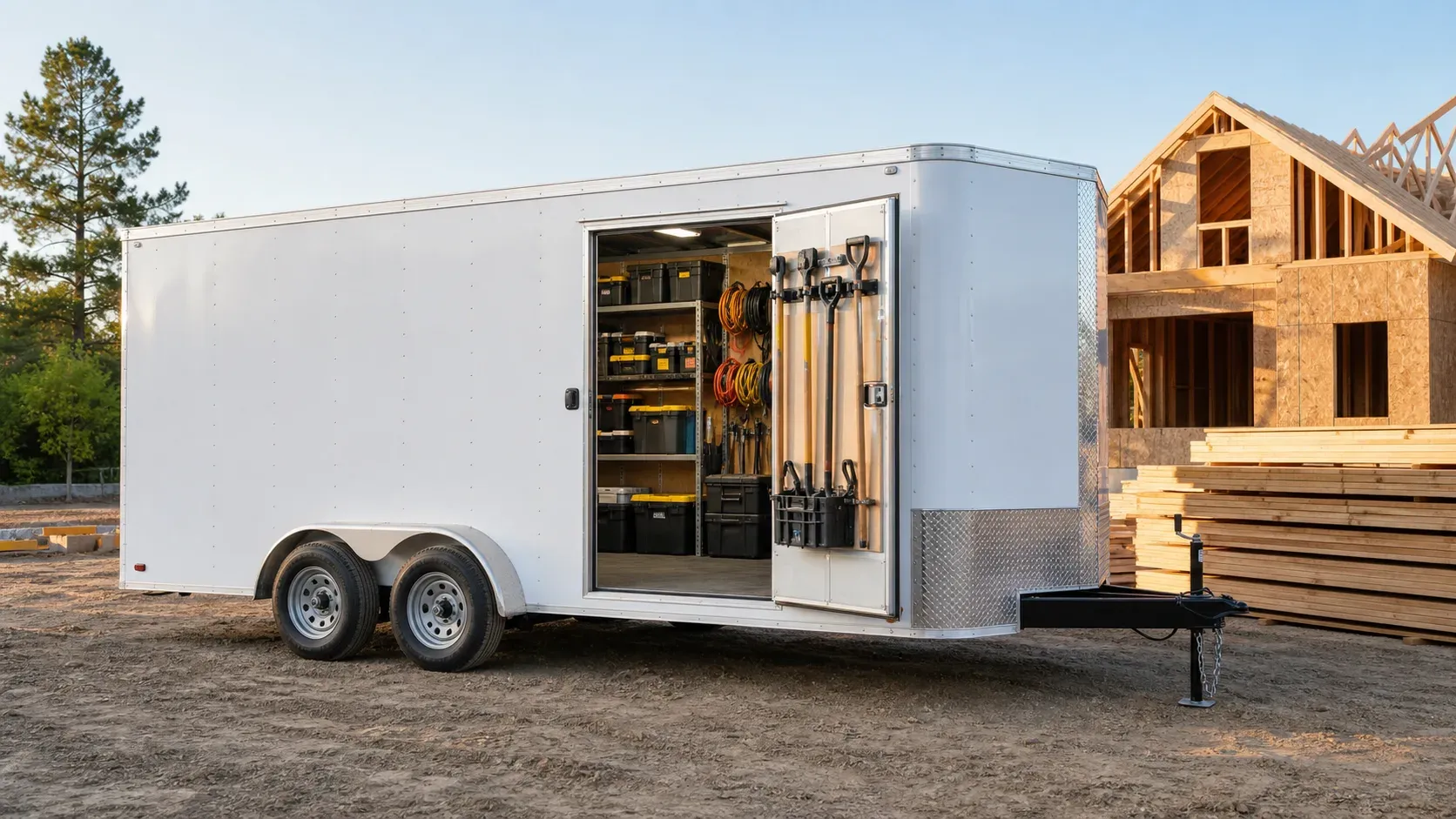
The contractor's manifest splits into three very different loads. First come the tools, a five-figure inventory of power tools, fasteners, and the thousand-item stock any service call assumes, all of which needs walls, locks, and organization. Then the materials, lumber packages, sheet goods, and the weather-soluble finish tier, which want open decks and dry boxes respectively. Last are the machines and debris, the equipment and demo output bigger jobs generate, which need their own purpose-built decks.
The weights add up fast. A stocked shop trailer grosses 5,000 to 7,000 pounds before the first material board goes on, and the payload math shows what's left. Theft is just as brutal. Job-site and gas-stop losses make the premium on a locked box the cheapest insurance in the trade, which is the whole argument the contractor-build page makes.
The contractor fleet, ranked
The shop is the contractor-build cargo trailer, a 7x16 tandem as the trades' standard, with shelving and tool walls covered on that page, extra height where the trade works standing up, barn doors for the daily rhythm, and the 7K-to-10K classes under the stocked weight. Service trades live out of it, and the finish trades keep their weather-soluble materials, doors, trim, and cabinets, on its dry walls.
The material horse is the tandem flatbed, 16 to 20 feet at 7K-to-10K, running the lumberyard-to-site pipeline the materials page covers, with the heavy-duty tier for daily-package operations. The specialists join by trade. A dump shows up where demo and dirt work does, an equipment deck arrives with the first skid steer, and the 14K classes are the working commercial standard across all of them.
The ladder climbs predictably. A starting trade runs either one enclosed trailer or one open deck and compromises every day, an established trade runs the pair, and a growing operation adds specialists as the machine list grows.
The trade's disciplines
The shop trailer runs on organization and locks. Everything goes in its labeled place following the contractor-build page's shelving logic, heavy stock rides low and forward for tongue weight, and you respect the walls' weight capacity. The lock discipline is absolute, coupler locks when hitched, hitch and wheel locks when parked, because the theft math funds the whole category. Keep the inventory on your insurance schedule, photographed and serialized, so the adjuster's first question is answered before you ever file.
The material and machine legs follow the usual rules. Strap lumber the way the materials page shows, chain machines the way the equipment guide does, tarp debris to meet the rules, and run the combination math at stocked and loaded weights. That puts a half-ton under the shop trailer and a three-quarter-ton under the working decks.
The commercial layer sits on top. DOT numbers and markings apply where your GVWRs and interstate work trigger them, so watch the 10,001- and 26,001-pound thresholds as the fleet grows, and run the maintenance calendar the way you would for any business asset.
Contractor trailer FAQ
What trailer should a contractor buy first?
The trade decides. Service and finish trades start with the enclosed shop, framing and site trades start with the open deck. The pair is the destination either way.
What size shop trailer do the trades run?
The 7x16 tandem is standard, taller where the trade works standing up, 8.5-wide where the shelving plan demands it. The contractor-build page has the details.
How do contractors stop trailer theft?
Locked builds, coupler and wheel locks when parked, integrated rack and door locks, and inventory scheduled on insurance. That premium is the cheapest coverage in the trade.
When does a contractor need a dump trailer?
When demo and material volume turn shoveling into payroll. The dump-versus-utility math works it out, and renovation trades hit that point fast.
What truck runs a contractor fleet?
Half-tons under the shop trailers, three-quarter-tons under the 10-to-14K working decks. Each class page runs the placard math.
Do contractor trailers need DOT numbers?
Interstate commercial work and GVWR thresholds trigger marking and registration requirements that vary by state, laid out in the rules. Read them once as the fleet grows.