Flatbed Trailers. The Complete Guide.

A flatbed trailer is an open deck with no sides, built for loads that are too long, wide, or awkward for anything with walls. Lumber, steel, pallets, vehicles, machines. Buy by deck length, payload, and tie-down layout. The open deck is the feature, and everything you'd normally lean against a wall now has to be strapped like you mean it.
What a flatbed trailer actually is
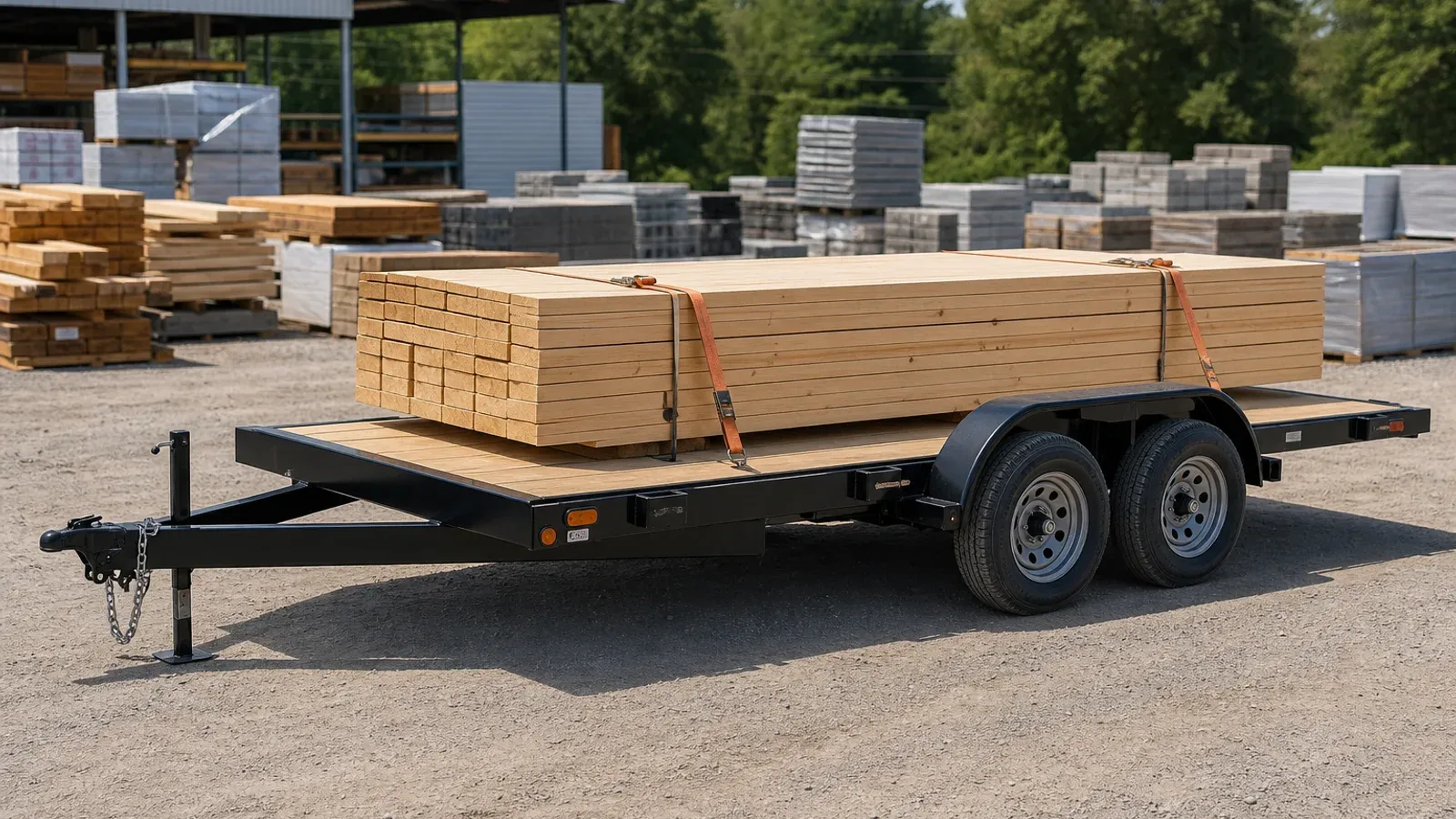
A flatbed is the most honest trailer made, just a deck, a frame, axles, and lights. No sides to work around, no roof to clear, no gate to swing. You load it from any direction with a forklift, a crane, or six friends and a bad plan. The flatbed's whole argument is access, and for long or bulky loads that argument wins every time.
The family tree splits on deck height. A standard flatbed runs its deck between the fenders, lower to the ground and easier to load by hand, with wheel wells interrupting the deck edges. A deckover raises the deck above the tires for a full-width, uninterrupted surface, and its own guide covers that branch. This page covers the standard flatbed, and the flatbed versus deckover comparison referees the choice.
The neighbors are close relatives. Add rated ramps and tighter crossmembers and you've built an equipment trailer. Add sides and a gate and it's a utility trailer. Add a neck and it's a gooseneck flatbed. The flatbed is the base genome of the open-trailer world, which is why the term gets used loosely on every dealer lot in America.
What actually rides on them is building materials and lumber, steel, pipe, pallets, hay, fencing supplies, vehicles in a pinch, and machines when ramps come along. If it's long, flat-bottomed, or forklift-friendly, the flatbed is its natural habitat.
Frames, dovetails, and tie-down systems
The frame does the carrying. Channel-steel mains are the standard through the middle classes, and I-beam takes over on heavy builds. Crossmembers on 16-inch centers support point loads, and 24-inch spacing is a light-duty tell. The tongue matters as much as the mains, since a full-wrap tongue that runs under the deck beats a stub welded to the front rail, and you can see the difference from ten feet away once you know to look.
Deck surface is a working choice. Treated pine is the standard, cheap to re-plank, grippy, and forgiving. Oak and tropical hardwoods upcharge for longevity. Steel decks resist forks and fire but add weight, cost, and a skating rink when wet. The wood versus steel deck call follows the cargo, wood for general work, steel for severe duty.
The dovetail question follows the loads. A dovetail, the last few feet of deck sloped down, cuts the loading angle for anything that drives aboard, paired with slide-in or stand-up ramps. The cost is rear overhang that drags on grade breaks and a deck section that isn't flat for freight. Haul machines or vehicles regularly, take the tail. Haul materials, keep it flat.
Tie-downs are the flatbed's whole securement story, because there are no walls to help. Stake pockets and rub rails take side straps along the full deck length. Weld-on D-rings carry chain loads for machines. Count the points and check their ratings before buying, because a deck with four thin loops and a prayer is a freight claim in progress. The loading and securing fundamentals apply double here, since everything on a flatbed is one failed strap from being a road hazard.
Flatbed sizes and real payload
Flatbeds are quoted by deck length and GVWR, and the honest number is payload, GVWR minus real empty weight. Standard widths run 76 to 83 inches between the fenders, and width options matter more here than most types because wide loads are the flatbed's business.
| Class | Typical GVWR | Typical Payload | Common Fit |
|---|---|---|---|
| 14 to 16 ft, 7,000 lb | 7,000 lb | 4,900 to 5,400 lb | Materials, ATVs, light vehicles |
| 16 to 20 ft, 10,000 lb | 9,900 to 10,400 lb | 7,200 to 8,000 lb | Lumber packages, small machines |
| 18 to 22 ft, 14,000 lb | 14,000 lb | 10,000 to 10,800 lb | Vehicles, equipment, heavy freight |
| 20 to 24 ft heavy | 15,000 to 16,000 lb | 10,800 to 12,000 lb | Commercial daily hauling |
Length serves the load, not the ego. Lumber packages want 16 to 20 feet. A vehicle wants 18 to 20 with the dovetail. Pipe and steel stock stretch to whatever's legal. Every added foot costs empty weight, turning radius, and parking, so buy the length the cargo list demands and stop there.
The 7,000-pound class tows behind most properly equipped half-tons. The 14,000-pound class loaded is three-quarter-ton work, with tongue weight at 10 to 15 percent of loaded weight counting against the truck's payload. Long decks amplify the load-placement stakes, since weight forward of the axles keeps the tongue planted and weight behind them invites sway, and a flatbed gives you all the rope you need to get that wrong.
Wide and long loads bring legal homework. Most states cap trailer loads at 8.5 feet wide before permits, with overhang rules front and rear. Haul at the edges of legal dimensions and your state's regulations stop being optional reading.
Flatbed sub-types
The sub-types layer rather than compete. A heavy-duty tandem with a dovetail is one trailer. Pick axle count from weight, the dovetail from whether things drive aboard, and the duty tier from how many days a week the trailer earns its keep.
The features that actually matter
The skip list is chrome, paint packages, and decorative fender upgrades on a deck built to be scratched daily. Route the money to the frame tier or the tie-down hardware, the two things the cargo actually notices.
Flatbed brands
Flatbeds are a volume category for every major open-trailer builder, which makes it a spec-sheet shopper's market. Identical-looking decks hide real differences in frame steel, tongue construction, and axle brands.
Big Tex and PJ run the deepest flatbed lines with the parts networks to match. Load Trail competes hard on spec-per-dollar. Diamond C brings its premium engineering to the category. Sure-Trac's tube-frame reputation carries here, and Kaufman ships direct-to-buyer at aggressive prices, so factor freight and local service into that math. Compare matched GVWR and deck length, then let the tongue construction and axle brands break ties.
What flatbed trailers cost
Flatbed pricing tracks the capacity ladder. The 7K class opens in the low-to-mid four figures, the 10K class steps up from there, and the 14K-and-up working classes push toward and past five figures with dovetails and heavy options. Steel prices move this category visibly, since flatbeds are mostly steel by weight, so quotes six months apart can differ without anyone padding anything.
The padding does live in the usual suspects, freight, prep, doc fees, and dealer-installed extras, plus the flatbed special, the wood upgrade. Some quotes include the deck, some price treated boards as a line item. Confirm the deck's included and what it's made of before comparing numbers.
The classic flatbed mistake is buying length instead of capacity. A 20-foot 7K trailer and an 18-foot 14K trailer can price similarly, and the wrong one gets bought weekly by shoppers who measured their lumber but never weighed it. Payload first, length second, always.
Direct-ship builders muddy comparisons with attractive base numbers. Add freight to your zip, the ramps, the spare, and the brake configuration your state requires, then compare out-the-door against the local dealer who'll stock your bearings. Sometimes direct still wins. Know what you're giving up.
Know the fair price before you go
The free Price Guide lists current dealer and MSRP prices for hundreds of new trailer models, brand by brand, with a confidence label on every number.
Get the Price GuideFlatbed trailer FAQ
What's the difference between a flatbed and a deckover?
Deck height. A flatbed runs between the fenders, lower and easier to load by hand. A deckover rides above the tires for full-width, uninterrupted deck. The comparison covers when each wins.
What size flatbed do I need?
Length from the longest regular cargo, capacity from the heaviest. The 16-foot 7K and 20-foot 14K classes cover most buyers. When between sizes, take the capacity, not the length.
Can a half-ton pull a flatbed?
The 7K class loaded, yes, for most properly equipped half-tons. The 14K class loaded is three-quarter-ton territory by the payload math, not just the tow rating.
Do I need a dovetail?
Only if things drive aboard. The tail cuts loading angle for vehicles and machines but drags on steep grades and breaks up the flat deck. Materials haulers should skip it.
How do I secure loads with no sides?
Rated straps and chains to stake pockets, rub rail, and D-rings, with working-load limits matching the cargo. Four points minimum for anything substantial. The securing fundamentals are the whole game on a flatbed.
Wood or steel deck?
Wood for grip, repairability, and price. Steel for forklift abuse and severe duty. The full comparison runs it. Most buyers are best served by wood.
How wide can my load be?
Generally 8.5 feet before permits, varying by state, with overhang rules on length. Check your state's regulations before hauling at the edges.
Flatbed or car hauler for a vehicle?
A car hauler adds vehicle-specific tie-downs, fender clearance, and ramps as standard. A flatbed with a dovetail does the job occasionally. Haul vehicles weekly, buy the purpose-built trailer. The comparison referees it.