Bumper-Pull Flatbed Trailers Explained.

The bumper-pull flatbed is the open-deck market's standard configuration, a receiver-hitch deck that's honest through the 14,000-pound class, towable by any properly rated truck, and priced at the category's entry. The ceiling is hitch physics, so loads that regularly run past 14K move up to the gooseneck flatbed. Below that line, this is the deck most buyers actually need.
The default flatbed configuration
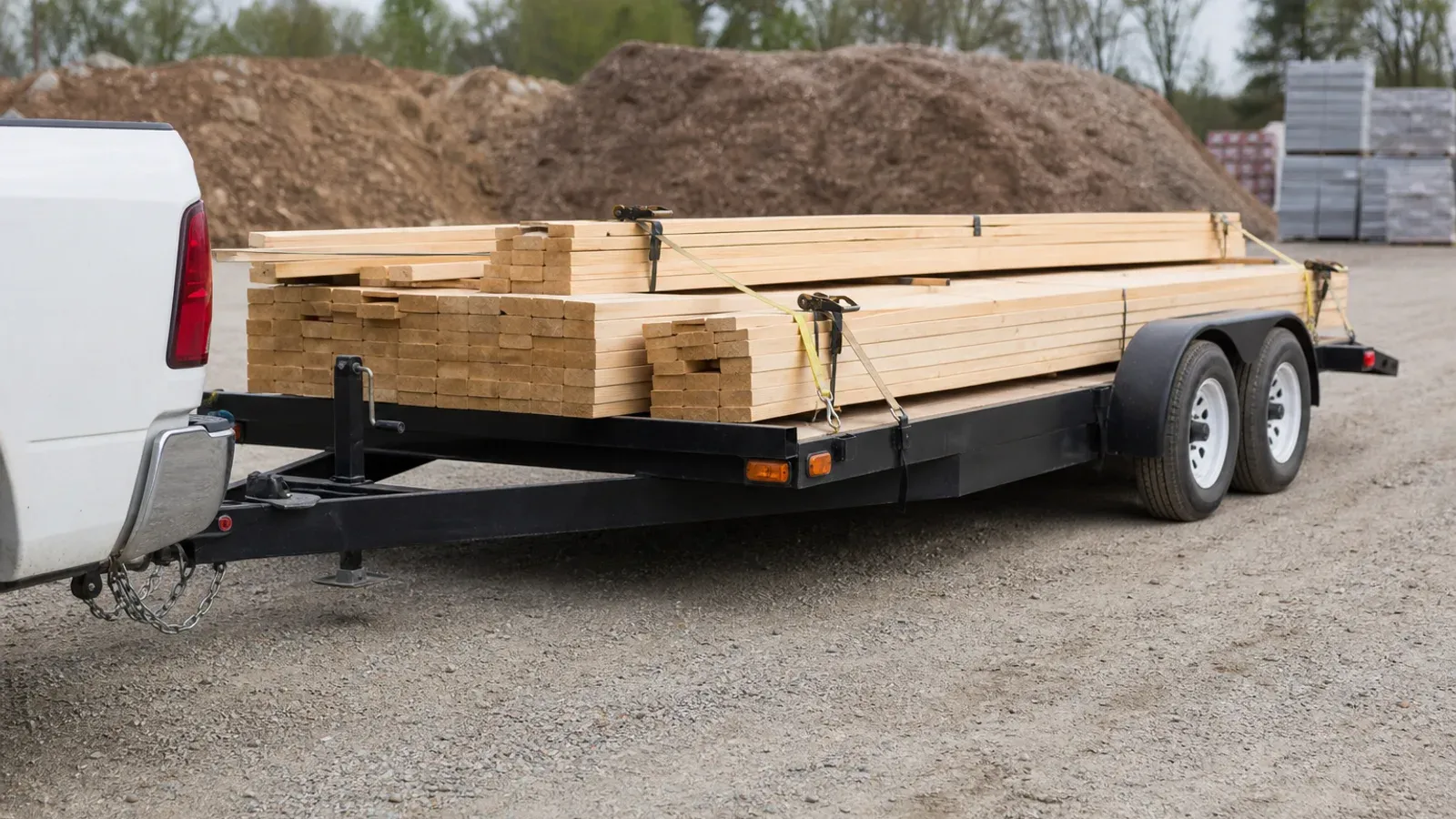
Bumper-pull is the flatbed's default state, coupler over ball and deck behind the truck, and it owns the market from the 7K materials classes through the 14K working decks. Its case is the bumper-pull equipment trailer's case transplanted, universality, price, and a bed that stays a bed, applied to the open deck's general-hauling life.
What rides it is everything the guide catalogs at bumper weights. Think lumber packages, pallets, pipe, hay at moderate counts, machines with ramps, and the mixed loads that define open-deck ownership. The configuration ends where the gooseneck flatbed begins, roughly 14 to 16K loaded, and the hitch comparison draws the line every heavy page on this site eventually cites.
Who's buying. Homeowners and acreage owners at the 7K tier, trades and light-commercial daily users through 10K, and the material-and-machine generalists at the 14K class. All of them are served by whatever properly rated truck already parks in the driveway, and that's the configuration's whole economic case.
Tongue weight on an open deck
The math is the receiver hitch's standard, 10 to 15 percent of loaded weight on the ball, counted against the truck's payload rather than its tow rating, and the flatbed's open deck makes that target both easier to hit and easier to miss. It's easier to hit because load position adjusts freely, so mark the deck and load to it. It's easier to miss because long material overhangs, rear-stacked pallets, and lazy afternoon loading all push weight rearward, the classic sway recipe, and an open deck has no walls to catch the error.
Long loads add a flatbed-specific note. Lumber and pipe cantilevered past the deck's rear shift the balance rearward without showing it. Front-biased loading and the rub-rail strapping covered in the guide's securement section keep the tongue honest, and rear overhang past state thresholds needs flagging under the rules.
A weight-distribution hitch settles the top of the 14K class exactly as it does on equipment decks. The standard kit finishes the spec, with brakes per class and a controller, crossed chains, a tested breakaway, and a jack rated for the real nose.
Bumper-pull flatbed sizes and payload
| Class | Typical GVWR | Typical Payload | Common Fit |
|---|---|---|---|
| 14 to 16 ft, 7K | 7,000 lb | 4,900 to 5,400 lb | Materials, general hauling |
| 16 to 20 ft, 10K | 9,900 to 10,400 lb | 7,200 to 8,000 lb | Lumber packages, light machines |
| 18 to 22 ft, 14K | 14,000 lb | 10,000 to 10,800 lb | The working ceiling |
The classes run the guide's table minus the heavy tiers the gooseneck owns, and the payload subtraction governs as always. Truck math steps with the class. The 7K loads behind honest half-tons, the loaded 14K tier moves into three-quarter-ton territory on the tongue's arithmetic, and the 9,900 badge does its usual duck under the 10K commercial thresholds.
Where the bumper-pull flatbed wins and loses
The buying rule. Weigh your regular loads honestly and buy the class with margin, and if the math already crowds 14K, read the gooseneck flatbed page before you buy this twice.
Bumper-pull flatbed FAQ
How much can a bumper-pull flatbed haul?
The 7K class carries around 5,000 usable pounds, and the 14K working ceiling carries 10,000-plus. Past that, the configuration hands off to the gooseneck.
What truck do I need?
The 7K class tows behind honest half-tons. The loaded 14K tier wants three-quarter-ton payload math against 1,400-to-2,000-pound tongues.
Bumper-pull or gooseneck flatbed?
For loads under 14K, take the bumper-pull for less money and any truck. If you're regularly past it, the gooseneck was always the answer.
How do I keep long loads from swaying the trailer?
Load front-biased, keep the tongue weight honest, and flag the overhang under the rules. Rear-cantilevered lumber is the category's classic mistake.
Do I need a weight-distribution hitch?
At the top of the 14K class behind a three-quarter-ton, it earns its keep in squat and steering. It's recommended equipment, not a substitute for honest loading.
What's the most versatile size?
The 16-to-18-foot 7K and 10K classes cover most general hauling. When you're between sizes, take the length, because capacity by the foot is cheap at purchase.