Best Trailers for Building Materials and Lumber.

Building materials are the flatbed's home game. They're long, stackable, forklift-friendly, and heavier than they look. A lift of framing lumber runs 1,500 to 2,500 pounds, drywall stacks past a ton in a hurry, and the 16-to-20-foot tandem flatbed at 7K to 10K is the standard answer. Weigh your load against the table, bias it forward, flag the overhang, and strap it like the lumberyard is watching.
What building products actually weigh
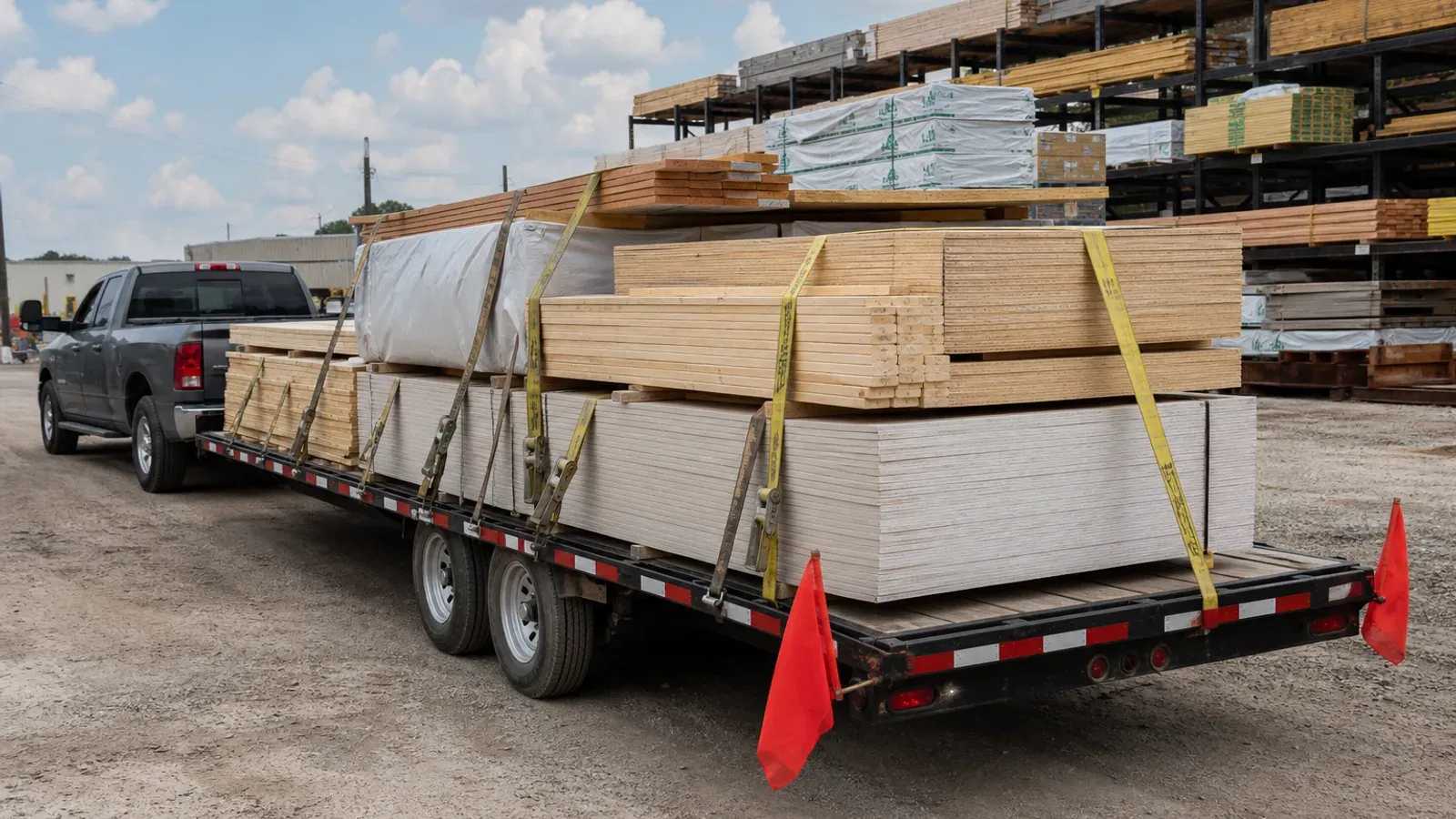
Materials hauling is a weight-literacy test disguised as errands. Building products are dense, and they come in units buyers don't think about. A single board, sheet, or bag reads light. A lift, a stack, or a pallet reads heavy, and the trailer has to handle the second version.
| Material | Unit Weight | The Real Load |
|---|---|---|
| Framing lumber, 2x4x8 | 9 to 11 lb | Lift of 96 to 208 pcs, 1,000 to 2,300 lb |
| Plywood and OSB, sheet | 45 to 75 lb | Unit of 40 to 50, 1,800 to 3,700 lb |
| Drywall, 4x8 half-inch | 51 lb | Stack of 30, 1,530 lb, and nobody hauls 30 |
| Concrete bags, 80 lb | 80 lb | Pallet of 42, 3,360 lb |
| Fence pickets and posts | 5 to 30 lb | Bundles that stack past a ton |
| Roofing shingles, bundle | 60 to 80 lb | Square, 3 bundles, then 20 squares |
The lesson is the same one every trade page lands on. Density hits the payload subtraction long before the deck looks full. A 7K flatbed's 5,000 usable pounds is about one plywood unit plus a lumber lift plus margin. A materials package for a big job wants the 10K tier, and concrete by the pallet settles the argument fast.
Length is the other dimension. Framing stock runs 8 to 20 feet, and trim and specialty stock run longer. Deck length plus legal overhang decides what rides. Once rear overhang passes your state threshold, commonly 4 feet, you need flags and lights. Check the rules.
Best trailers for materials, ranked
The standard is the tandem-axle flatbed, 16 to 20 feet at 7K to 10,400 GVWR. The open deck loads by forklift at the yard and by hand at the site, and the stake pockets and rub rail take the strap pattern long stacks need. The whole build in the flatbed guide is aimed at exactly this cargo. The heavy-duty tier takes over for daily commercial packages. Pure-materials buyers should skip the dovetail, since flat feet stack better.
The alternates each cover a slice. The utility trailer handles a weekend project's materials inside its rails, with sheet goods flat on the deck and lumber over the gate under flags. The deckover comes in where pallets load two abreast and forklifts run the yard, trading height for width at freight-scale volume. The enclosed trailer carries anything the rain ruins: doors, trim, cabinets, and drywall. It's the finish trades' standard, and drywall taught them why.
Stacks, straps, and the overhang rules
Load the stack the way it ships. Put heavy units low and forward for tongue weight, lay sheet goods flat and banded, and build lumber in tiers with the longest stock on the bottom. The goal is a stack you can strap as one body, not a set of loose layers. The forklift's placement at the yard is your load plan, so tell the operator where you want the load to sit. They've heard it before.
Strap to a pattern. Run over-the-top straps every 4 to 6 feet down the length of the stack, and add the working-load limits with the securement math. Use edge protection where straps cross lumber corners. Add a front stop too, whether that's a bulkhead, stake-pocket uprights, or straps pulling the stack against forward shift, because braking is the first direction materials move. Re-tension at ten miles, because banded units settle and everything above them settles with them.
The overhang rules apply to every long load. Flag rear overhang by day and light it by night once you pass your state threshold. Watch front overhang against the truck, and hold width inside the legal 102 inches unless you've read the permit rules. Tune the brake controller for a load that's denser than the deck makes it look. The lumberyard-to-site run is short and familiar, which is exactly why the habits lapse. Run the checklist anyway.
Materials hauling FAQ
What size trailer for hauling lumber?
A 16-to-20-foot tandem flatbed at 7K to 10K covers framing packages and sheet goods. Size the length to your longest regular stock and the payload to the table above, and weigh it honestly.
How much lumber can a 7K trailer carry?
Around 5,000 usable pounds, which is one plywood unit plus a framing lift with margin, or roughly 450 to 500 2x4x8s by weight. The deck runs out of legal payload before it runs out of room.
Can I haul 16-foot lumber on a 14-foot trailer?
Yes, with legal rear overhang, flagged and lit per your state, commonly up to 4 feet. Past that threshold, you needed the longer deck. Check the rules.
How do I keep drywall and plywood dry?
Tarp it tight on the flatbed for a short haul, or run an enclosed trailer if you're moving finish materials regularly. Wet drywall is a write-off, so plan accordingly.
How do I strap a lumber stack?
Over-the-top straps every 4 to 6 feet, edge protection at the corners, a front stop against braking shift, and a re-tension at ten miles. The stack rides as one body or it doesn't ride safely.
What truck do materials runs need?
A loaded 7K trailer sits inside honest half-ton math. The 10K-plus commercial packages push you into the three-quarter-ton conversation.