Heavy-Duty Flatbed Trailers Explained.

Heavy-duty flatbeds sit in the 14,000-to-16,000-pound tier, the commercial ceiling of the bumper-pull category. They get heavier frames, tandem 7K or 8K axles, and brakes on every axle, along with the daily-duty engineering weekend builds skip. Past 16K, the open deck goes gooseneck. Buy this tier if you haul commercially every day and haven't outgrown the receiver hitch. What you're really paying for is the frame.
The bumper-pull category's top shelf
In flatbed terms, heavy-duty means the 14-to-16K tier, where the bumper-pull configuration makes its last stand before gooseneck physics take over the category. The engineering is the whole point. You get 6-inch-plus channel or I-beam mains, wrapped tongues gusseted for daily loads, and tandem 7K and 8K axles braked all around. That running gear is what separates a trailer worked every day from one that only visits a job site now and then.
The buyer here is commercial by rhythm, even if not by paperwork. Think trades hauling materials every morning, fencing and construction crews who treat the deck as their supply chain, light-fleet operations, and acreage owners whose loads outgrew the 10K tier's margins. The premium over standard builds buys duty cycle, and daily users collect it in years of service the economy tier can't match.
The ceiling is real. At 16K loaded, tongue weight, sway margins, and receiver ratings all start pointing toward a gooseneck, and loads that live above that line move to the gooseneck flatbed and never come back. This tier is built for loads that run 10-to-14K every day, which is a big market, and it's exactly the one the spec sheet below serves.
Daily-duty engineering
The frame is what you're buying. Heavy mains, crossmembers at 16-inch centers the full length, a tongue that wraps under the deck with gussets at the junction, and welds that daily loading tests every week. All of it is visible from a crouch at the dealer, which is where this tier's buyers spend their first ten minutes. The build standards in the main guide apply at their strictest here, because the duty cycle never rests and corner-cutting shows up fast.
The running gear is commercial arithmetic scaled to the receiver. Tandem 7Ks build the 14K standard, and 8K pairs push the 16K ceiling. You get brakes on every axle with no one-axle-minimum debate, load range E rubber at a minimum with the date codes checked, and greaseable bearings on the schedule a working trailer keeps. The hardware notes on the tandem-axle page apply here with the margins tightened.
The connection is where the ceiling shows. You run a 2-5/16 coupler on a rated channel, safety chains sized to the class, and tongue weights of 1,400 to 2,400 pounds working against the truck's payload. A weight-distribution hitch becomes near-mandatory at the top of the tier. That math makes a three-quarter-ton the minimum truck, with one-tons common where the work is hardest.
One more layer is commercial. There's the 9,900-versus-14K badge decision against your state's thresholds, and combined ratings that climb toward the 26,000-pound line behind a heavy truck. Read the rules before you pick the badge, since most buyers at this tier operate where the paperwork is real.
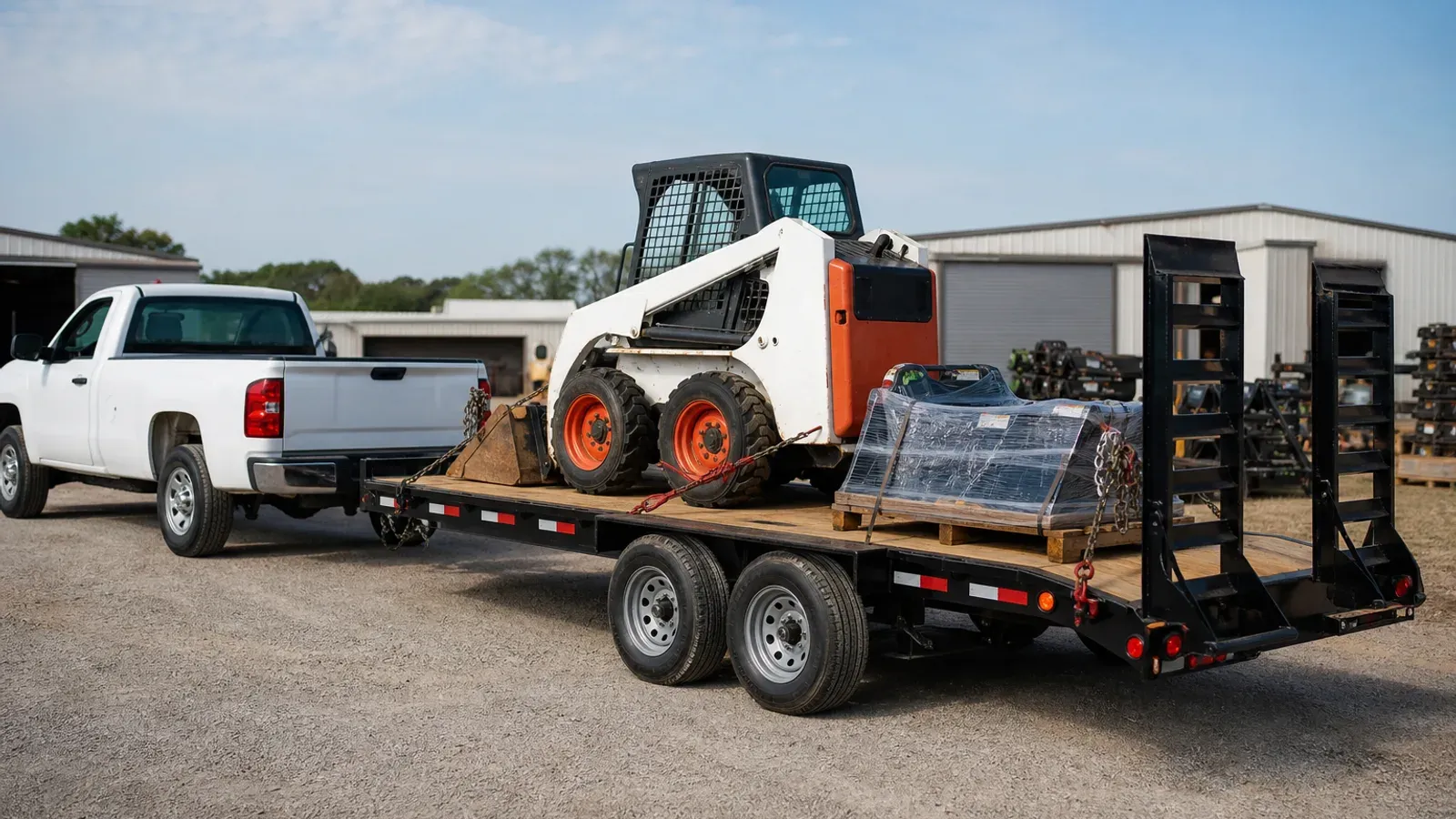
Heavy-duty flatbed sizes and payload
| Class | Typical GVWR | Typical Payload | Common Fit |
|---|---|---|---|
| 18 to 20 ft, tandem 7K | 14,000 lb | 10,000 to 10,800 lb | The commercial standard |
| 20 to 22 ft, tandem 7K | 14,000 lb | 9,800 to 10,600 lb | Long material daily |
| 20 to 24 ft, tandem 8K | 15,000 to 16,000 lb | 10,800 to 12,000 lb | The receiver's ceiling |
The payload subtraction governs here, with one caveat for the tier. Heavy frames cost 3,200 to 4,000 empty pounds, so the scale-ticket spread between builds is daily capacity worth comparing. Dovetail options on the dovetail page cover the tier's machine days, and above the table, the gooseneck classes carry what this tier honestly can't.
The heavy-duty flatbed's ledger
The buying rule. If you haul commercially every day under 16K loaded, this is the tier, and you buy it by checking frame quality from a crouch. Haul occasionally and the standard tiers do the job for less. Grow past it and the gooseneck was always next.
Heavy-duty flatbed FAQ
What makes a flatbed heavy-duty?
The engineering of the 14-to-16K tier. Heavy mains, wrapped and gusseted tongues, tandem 7K-plus axles braked all around, and E-rated rubber. Duty cycle built in.
What can the tier haul daily?
Ten to 12 thousand usable pounds. That covers materials, machines with ramps, and the rest of the commercial catalog, all behind a three-quarter-ton or better.
14K or 9,900 badge?
It depends on your state's commercial thresholds and your combined-ratings math. Federal and state rules spell it out, and buyers at this tier read them first.
When does heavy-duty mean gooseneck instead?
Past 16K loaded, where the receiver's physics give out. If your loads are trending there, buy the gooseneck flatbed once instead of this twice.
Is the premium worth it for weekend use?
Honestly, no. The frame tier pays back in daily service, and the standard classes handle occasional hauling for real savings.
What should I inspect at the dealer?
The tongue wrap and gussets, crossmember spacing, weld quality at the mains, and the axle branding. Check it all from a crouch with a flashlight, because this tier's value lives underneath.