The 14,000-Pound Trailer Class Explained.

The 14,000-pound class is the working world's standard. Tandem 7,000-pound axles carry an honest 9,000 to 10,800 pounds under the contractor dumps, equipment decks, and heavy flatbeds that define commercial bumper-pull hauling. It's the receiver hitch's practical top, the three-quarter-ton's defining partner, and the class where CDL arithmetic starts to matter. This is the market's center of gravity, honestly rated.
The working standard
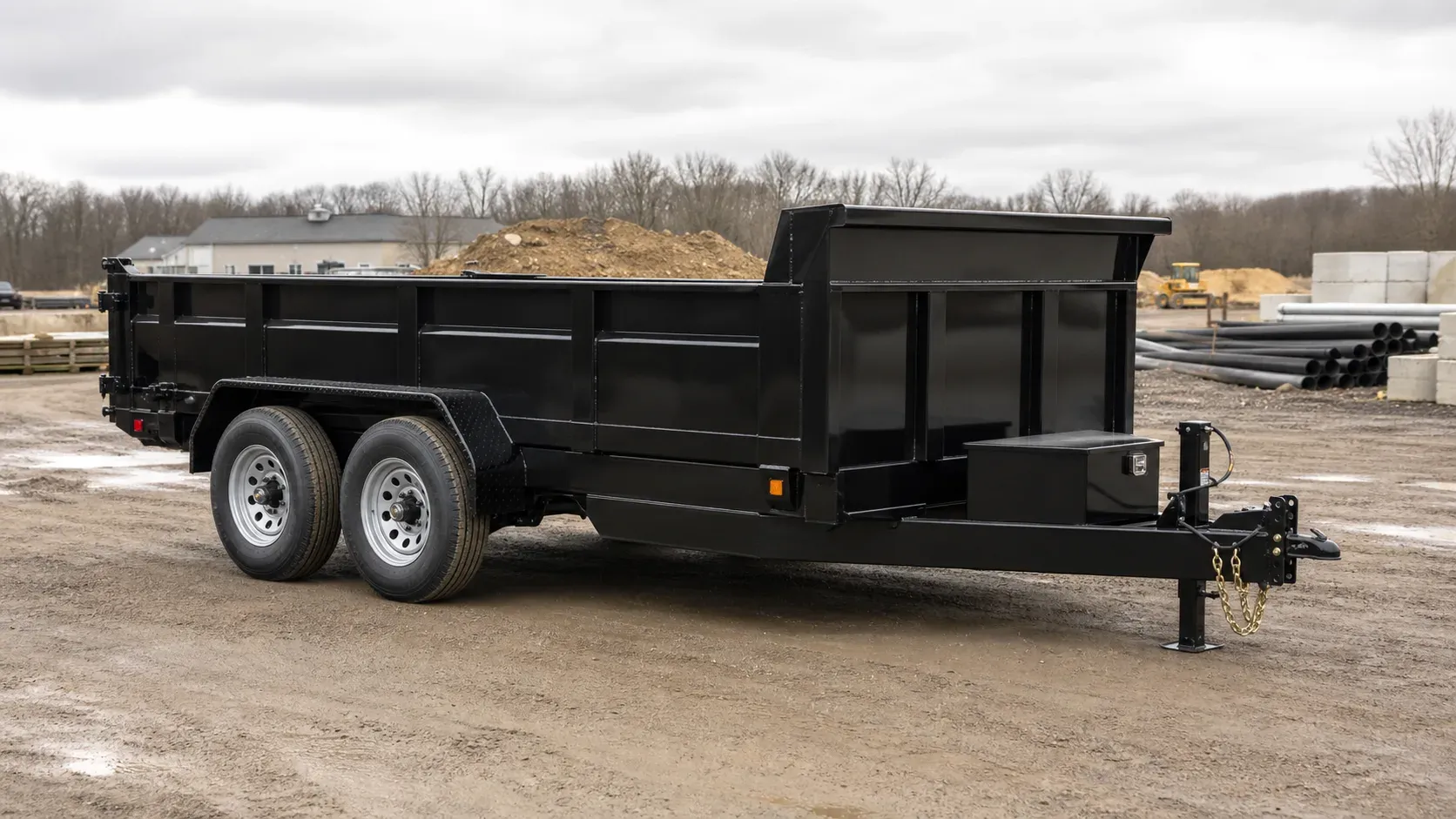
Tandem 7,000-pound axles build the class, and the commercial bumper-pull market grew up around it. The 14K dump defines the contractor tier, the equipment deck goes under skid steers and mini excavators, the heavy-duty flatbed does daily material work, and each comes in deckover and tilt versions too. If a working trailer has a default rating, this is it, and default status buys market depth, a range of configurations, and easy resale.
The payload subtraction lands at 9,000 to 10,800 pounds across builds, and that spread is worth shopping, since 800 pounds is a machine attachment or a pallet of material every day. The load list covers the commercial catalog: skid steers with attachments, mini excavators, 4 to 5 yards of soil, or the material package that frames a house.
The partnership is the three-quarter-ton, with tongues of 1,400 to 2,100 pounds inside its placards and working margin to spare. The weight-distribution hitch belongs at the loaded top, and the half-ton's advertised reach falls short right here, the overbuy this site's truck pages exist to prevent.
The class at a glance
| Spec | Typical Range |
|---|---|
| GVWR | 14,000 lb |
| Empty weight | 3,200 to 5,000 lb |
| Honest payload | 9,000 to 10,800 lb |
| Axles | Tandem 7,000-lb |
| Brakes | Both axles, standard |
| Tires | 16 in, load range E |
| Tow vehicle | Three-quarter-ton |
The CDL arithmetic arrives with the class. A 14K trailer behind a truck rated 12,001-plus pounds crosses the 26,001-pound combined line, and commercial use of that combination meets CDL requirements. The common workaround, a 14K trailer behind a sub-12K-GVWR truck, threads the math legally, per the rules, which every buyer at this rating should read once against their own operation. Above the class, bumper-pull physics thins fast. The 16K tier runs the receiver's last honest numbers before the gooseneck world takes over the weights.
14,000-pound class FAQ
What can a 14,000-pound trailer carry?
An honest 9,000 to 10,800 pounds by build, whether that's the skid steer with attachments, the mini excavator, or the daily material package. The scale ticket between builds is real capacity.
Do I need a CDL for a 14K trailer?
Commercially, behind a truck rated 12,001-plus pounds, the combined math says yes. Behind lighter-rated trucks the combination threads under 26,001. The rules run your case.
Can a half-ton tow it?
Advertised ratings occasionally say yes, but payload placards say no, per the half-ton page. The class belongs to the three-quarter-ton.
Why is 14K the commercial standard?
Tandem 7K axles sit right at the receiver hitch's honest capacity, deep enough for real machines and towable without gooseneck infrastructure. That's the market's equilibrium point.
14K or gooseneck next?
Loads that trend past 14K loaded were always the gooseneck's customers. The class above this one is a connection change, not just a bigger rating.