The 16,000-Pound Trailer Class Explained.

The 16,000-pound class is the bumper-pull world's ceiling. Tandem 8,000-pound axles carry an honest 10,200 to 12,000 pounds on the receiver hitch's last honest numbers. Above it, physics and pin weight hand the market to the gooseneck. Buy it for heavy daily bumper-pull work that hasn't crossed the neck's line, and read the gooseneck comparison before you sign, because most buyers here are one growth spurt away from it.
The receiver's last tier
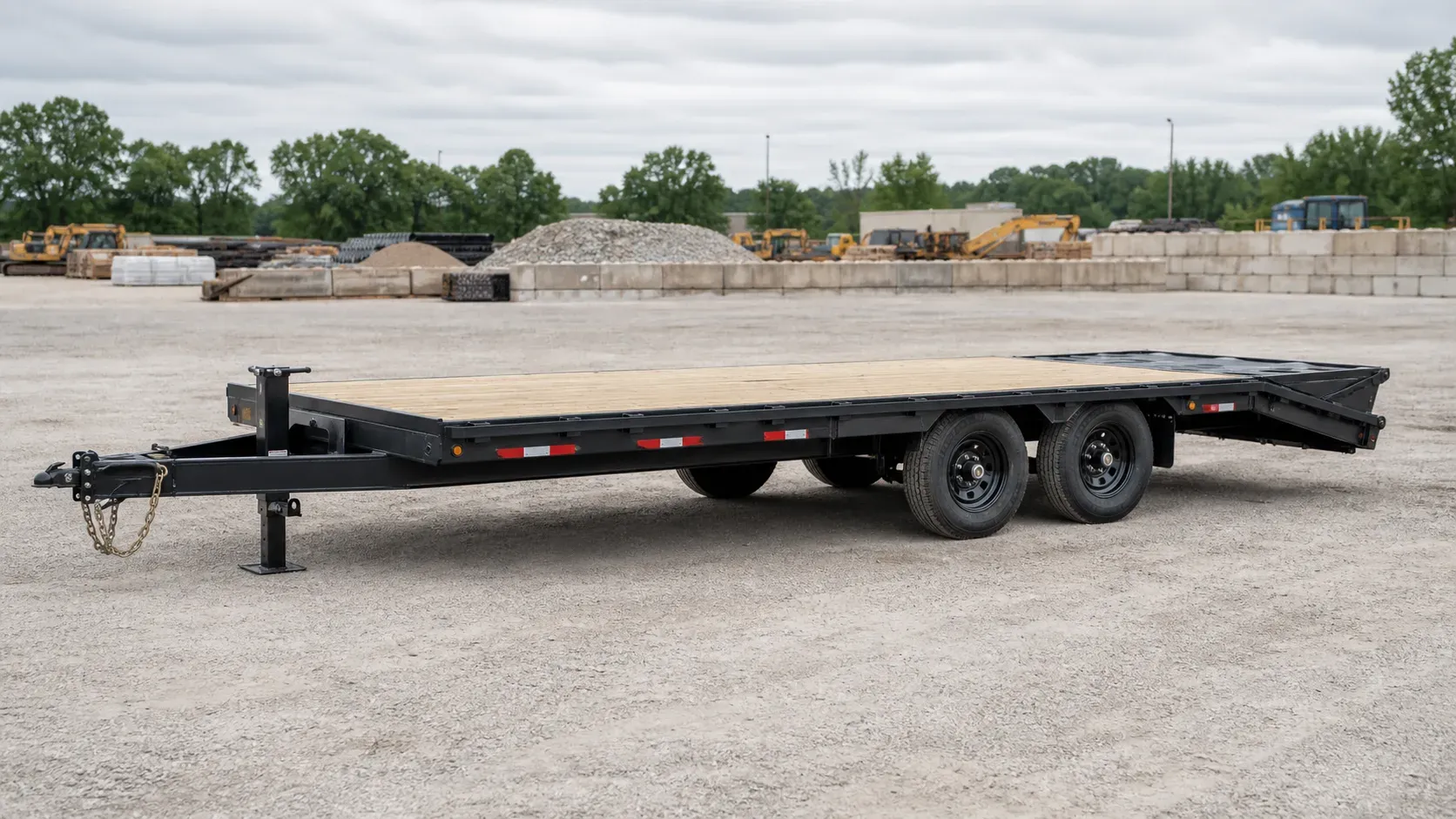
Tandem 8,000-pound axles build the class, carrying heavy-duty flatbeds, equipment decks, and deckover builds at the receiver connection's practical end. The tier's whole identity is the boundary it sits on. Tongue weights of 1,600 to 2,400 pounds work even strong three-quarter-ton placards hard, one-tons serve the loaded top, sway margins thin as the numbers climb, and the gooseneck comparison's physics start voting out loud.
The payload subtraction lands at 10,200 to 12,000 pounds, real capacity for machines past the 14K tier's reach and the daily material volumes fleets run. Buyers here are commercial by definition, since the combined ratings past 26,000 pounds behind working trucks put CDL math on the table, per the rules.
The honest counsel comes back to the tier's geography. Buyers whose loads sit steadily at 10 to 11 thousand pounds buy the class well. Buyers trending upward should buy the gooseneck once instead of this trailer twice, because the trade-in lots run steadiest on 16K bumper-pulls outgrown right on schedule.
The class at a glance
| Spec | Typical Range |
|---|---|
| GVWR | 15,000 to 16,000 lb |
| Empty weight | 3,800 to 5,000 lb |
| Honest payload | 10,200 to 12,000 lb |
| Axles | Tandem 8,000-lb |
| Brakes | Both axles, electric or EOH |
| Tires | 16 in, load range E/G |
| Tow vehicle | Strong three-quarter to one-ton |
The equipment stack runs mandatory at the ceiling. The weight-distribution hitch is standing equipment, the electric-over-hydraulic brakes option is worth taking, and the scale habit every heavy page prescribes matters more than ever, because a class defined by thin margins rewards knowing your real numbers.
16,000-pound class FAQ
What can a 16,000-pound trailer carry?
An honest 10,200 to 12,000 pounds, the machines and volumes past the 14K tier, on the receiver hitch's last honest numbers.
What truck does the class need?
Strong three-quarter-tons at the light end, one-tons loaded, with 1,600 to 2,400-pound tongues doing the placard math.
Why do people call it the bumper-pull ceiling?
Above 16K loaded, tongue weight, sway margins, and receiver ratings all vote gooseneck, per the comparison. The class is the boundary itself.
16K bumper-pull or light gooseneck?
Stable loads at the tier buy the bumper-pull's universality. Growing loads buy the neck once. The trade-in lots are full of the buyers who guessed wrong.
Does the class require a CDL?
Commercial combinations behind working trucks cross 26,001 combined pounds routinely here. The rules run your combination.