Bumper-Pull Deckover Trailers Explained.

The bumper-pull deckover brings the full-width 102-inch deck to the receiver hitch, and it works honestly through the 14-to-16K classes before the job hands off to the gooseneck. It's the width play for buyers whose loads run wide but whose weights haven't outgrown bumper physics. The height tax and the tongue math both collect, so buy it for width the cargo actually uses.
Full width behind the receiver
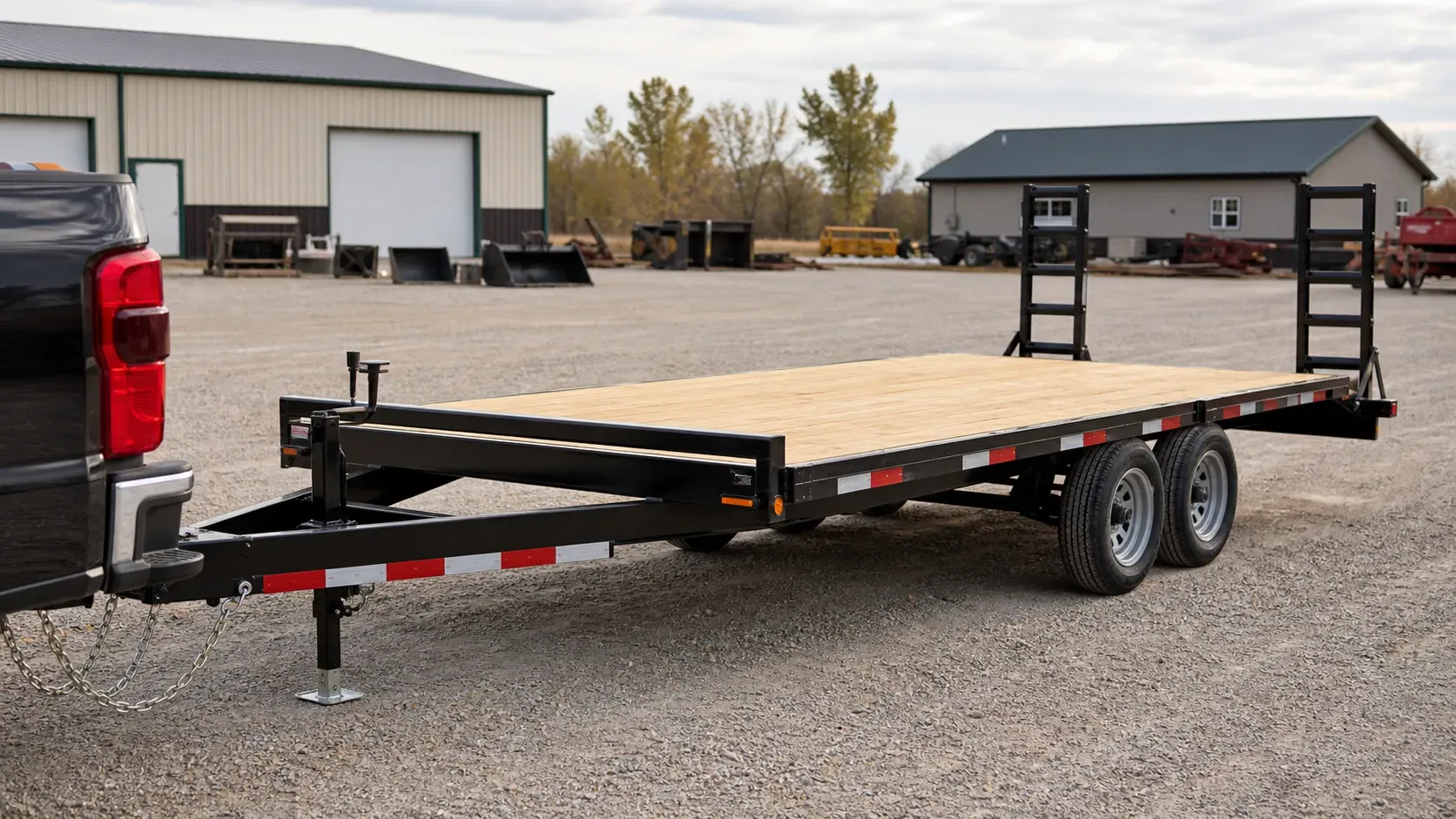
The bumper-pull deckover takes the deckover idea, a deck above the wheels with a full 102-inch width and no fender wells, and delivers it through the connection every truck already has. It covers the classes below the gooseneck deckover's territory, 10,000 through 16,000 GVWR, and it serves the buyer whose cargo went wide before it went heavy.
The width case is the same one the guide makes, applied at receiver weights. Think pallets two-abreast for a forklift-fed operation, wide machines and implements that exceed the flatbed's between-fender math, and hay and materials loaded to use every inch, all at weights a properly equipped three-quarter-ton can legally pull.
The ceiling is the same one the bumper-pull hits everywhere, 14-to-16K loaded, where tongue physics start voting for the gooseneck. The deckover reaches that ceiling faster than most, because the full-width deck's extra steel spends payload the flatbed keeps. The honest market is the 10K-to-14K middle, wide loads at working weights. Buyers whose math trends past it should read the gooseneck page before buying twice.
Height, tongue, and the width structure
The structure follows the guide's full-span rules at receiver scale. The main beams pass over the axles, crossmembers at 16-inch centers carry the 102-inch span with no fender structure helping, and deck heights run 32-to-38 inches, with drop-axle designs clawing back a few inches at the premium tier. The height tax shows up the way it always does. Hand loading sits a foot higher, drive-on angles get steeper and pull you into the ramp and dovetail conversation, and the center of gravity climbs with every load.
The tongue math tightens on this configuration in particular. The deckover's heavy deck raises empty weight, so the 10-to-15-percent tongue target lands at 1,300-to-2,200 pounds loaded across the classes, and the truck's payload absorbs it before anyone checks the tow rating. That arithmetic makes the 14K tier three-quarter-ton work at a minimum and pushes the 16K ceiling toward one-tons. A weight-distribution hitch becomes near-mandatory at the top, restoring the front axle the tall tongue unloads.
Load discipline carries the height. Keep wide loads low and centered, respect the tall deck's crosswind manners the guide warns about, and run your tie-downs through the full-length rub rail and the stake pockets the width exists for. Run brakes all around with the controller tuned to loads the wide deck makes look smaller than they weigh.
Bumper-pull deckover sizes and payload
| Class | Typical GVWR | Typical Payload | Common Fit |
|---|---|---|---|
| 18 to 22 ft, 10K | 9,900 to 10,400 lb | 6,800 to 7,600 lb | Pallets, hay, wide materials |
| 20 to 24 ft, 14K | 14,000 lb | 9,500 to 10,400 lb | The configuration's center |
| 22 to 26 ft, 16K | 15,000 to 16,000 lb | 10,500 to 11,800 lb | The receiver's ceiling |
The payload subtraction runs heavy here, since full-width decks cost 3,200-to-4,200 empty pounds, and the scale-ticket spread between builds is worth the comparison the guide always recommends. The 9,900 badge does its regulatory duty at the bottom, and the top row's combined ratings behind heavy trucks start the rules math that commercial buyers read first.
The bumper-pull deckover's ledger
The buying rule is the guide's width test at receiver scale. If your loads run past the flatbed's fender math but stay under the gooseneck's weight math, this is the lane. Fail either test and the neighboring configuration was the answer.
Bumper-pull deckover FAQ
How much can a bumper-pull deckover haul?
The 14K center carries 9,500-to-10,400 usable pounds, and the 16K ceiling pushes 11,800. The full-width deck's steel spends more payload than a flatbed's, so compare scale tickets.
What truck does it need?
A three-quarter-ton at a minimum for the 14K tier, by tongue-against-payload math, and one-tons toward the ceiling.
Bumper-pull or gooseneck deckover?
Weight decides. Under 14K loaded, the receiver does the job for less. Past it, physics already picked the gooseneck. Width was never the question between the two.
How high is the deck?
The guide's 32-to-38 inches, with drop-axle designs saving a few. Every loading and stability note that comes with the height applies here unchanged.
Deckover or flatbed at these weights?
It's a tape-measure comparison. Loads past the fender width buy the deckover, and narrower loads ride the flatbed lower and cheaper.
Do I need a weight-distribution hitch?
At the 14K-and-up tiers, effectively yes. The tall, heavy tongue unloads the front axle, and the spring bars restore it.