Gooseneck Deckover Configurations Explained.

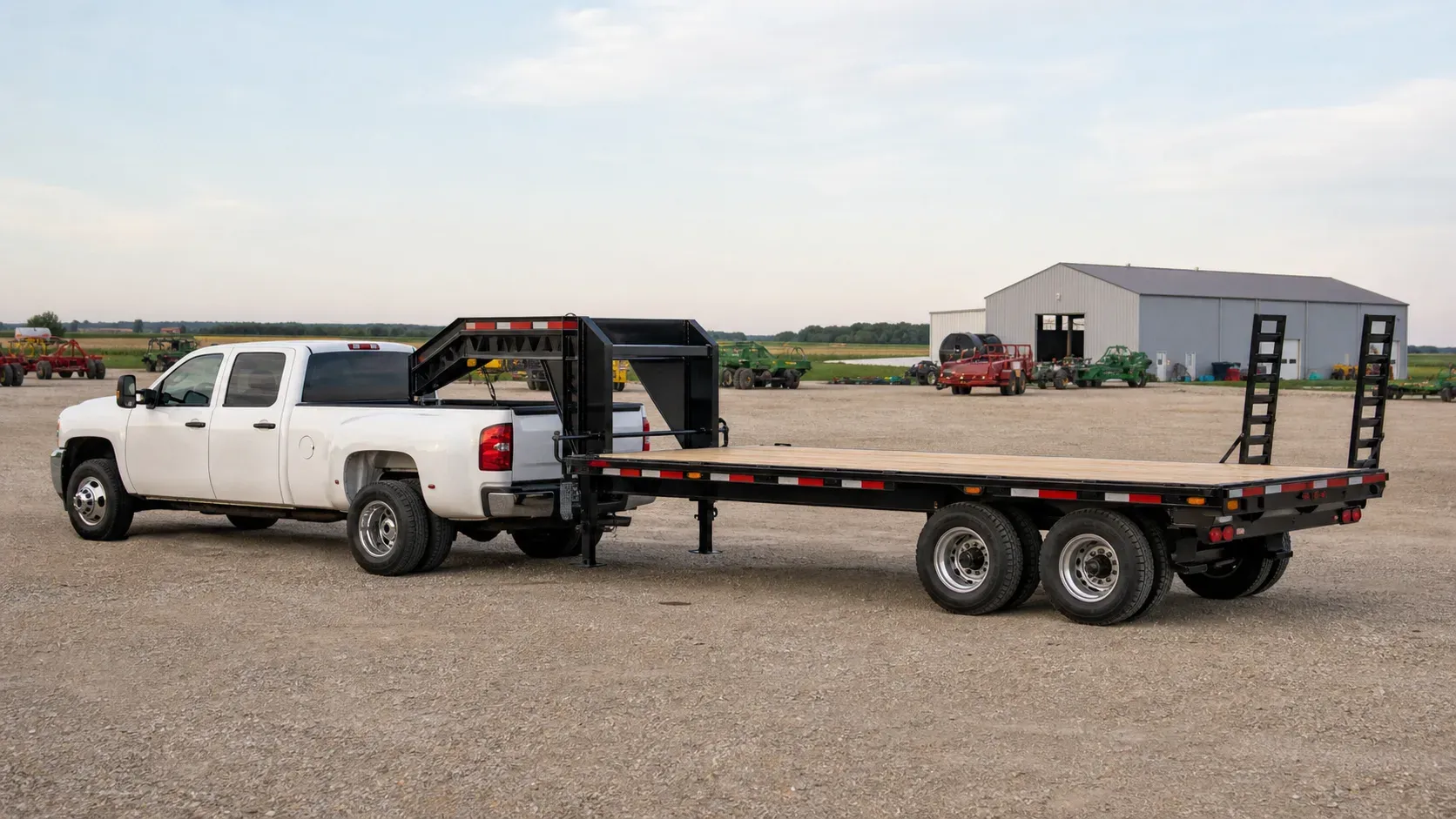
The gooseneck is where the deckover family does its heaviest work. The neck carries the full-width deck past the receiver's 16K ceiling and into the 20-to-30K freight classes. It's also the volume configuration in the family, since most deckovers above the middle classes are goosenecks by build. This page places it in the family. The deep coverage lives at /trailers/gooseneck-trailer/deckover/.
Where the family's weight lives
In the deckover family's range, the gooseneck is where the width idea meets its working scale. The bumper-pull version carries the full-width deck through 16K. Everything above that rides the neck, and it does so by physics, not preference. That's the 20-to-30K territory where hotshot freight, wide machines, and pallet volume actually live.
The family-level point is proportion. Most deckovers sold above the middle classes are goosenecks, and the configuration is so dominant at weight that the gooseneck-side guide reads as the category's main page. Hotshot standards, freight economics, pin math, and the class tables all live there. This page answers a narrower question. When does the deckover buyer's math leave the receiver behind?
The answer is the same threshold you'll see everywhere, loads that regularly run past 14-to-16K. The deckover reaches that line early, because its heavy deck spends the receiver's margin faster than a flatbed's does. Wide and heavy tend to arrive together in working cargo, which is why the family's weight lives on the neck.
What the neck changes for the wide deck
The neck brings the gooseneck family's standard advantages to the wide deck. Start with capacity. The 20-to-30K classes carry 13,600-to-21,500 usable pounds, exactly the freight the 102-inch width exists for. Then stability, since the pin-over-axle geometry calms the tall deck's loaded manners, which matters under cargo whose center of gravity the height already raised. And turning, because the pivot places 30-plus feet of wide deck into docks and sites a receiver combination can only circle.
The costs are the family standard too. You'll need a one-ton dually and the bed hitch, and pin weight runs 15-to-25 percent against the truck's payload. Working weights cross the CDL line by design. The gooseneck-side guide details all of it, along with the rear-treatment options that define the order sheet: straight decks, beavertails, and the hydraulic dovetail.
The family's range in one view
| Configuration | Typical GVWR | Typical Payload | The Lane |
|---|---|---|---|
| Bumper-pull deckover | 9,900 to 16,000 lb | 6,800 to 11,800 lb | Wide loads at receiver weights |
| Gooseneck deckover | 20,000 to 30,000 lb | 13,600 to 21,500 lb | Freight, hotshot, wide machines |
Those two rows are the whole family store, the receiver lane below and the neck lane above. The payload math governs both, and the wide deck's steel gets taxed against every class. The gooseneck-side tables break the upper row into its working tiers, from hotshot standard through triple-axle, and the rules cover the licensing every upper-row combination triggers.
The neck lane's ledger
The buying rule is that threshold, plus one caveat. Deckover loads trend heavy, so they reach it early. The buyer who argues themselves up against the receiver's ceiling was usually a gooseneck customer all along.
Gooseneck deckover FAQ
When does a deckover need the gooseneck?
When loads regularly run past 14-to-16K, which the wide deck's own weight reaches early. Most of the family above the middle classes is gooseneck by build.
Where's the detailed coverage?
The gooseneck-side guide carries the class tables, hotshot standards, and rear-treatment options in full.
What truck and license?
A one-ton dually at working weights, and the CDL math comes with the territory. Federal and state licensing rules lay it out.
What's the rear-treatment decision?
Straight decks for forklift freight, beavertails for climbers, and the hydraulic dovetail for low iron. Let your real manifest choose.
Bumper-pull deckover as the cheaper path?
Through 16K loaded, honestly yes, as its own page explains. Past that, the receiver was never really in the conversation.