Best Trailers for Hotshot Operators.

Hotshot means running expedited freight behind a one-ton dually. The industry standard is the 40-foot gooseneck deckover: tandem 12K axles, around 25,900 GVWR, ramps, and a full securement inventory. The trailer is the easy part. The CDL, authority, and insurance are the real business. Buy the standard tool, spec it for the freight lane you actually plan to run, and read the compliance pages before you set foot on the dealer's lot.
What hotshot freight actually demands
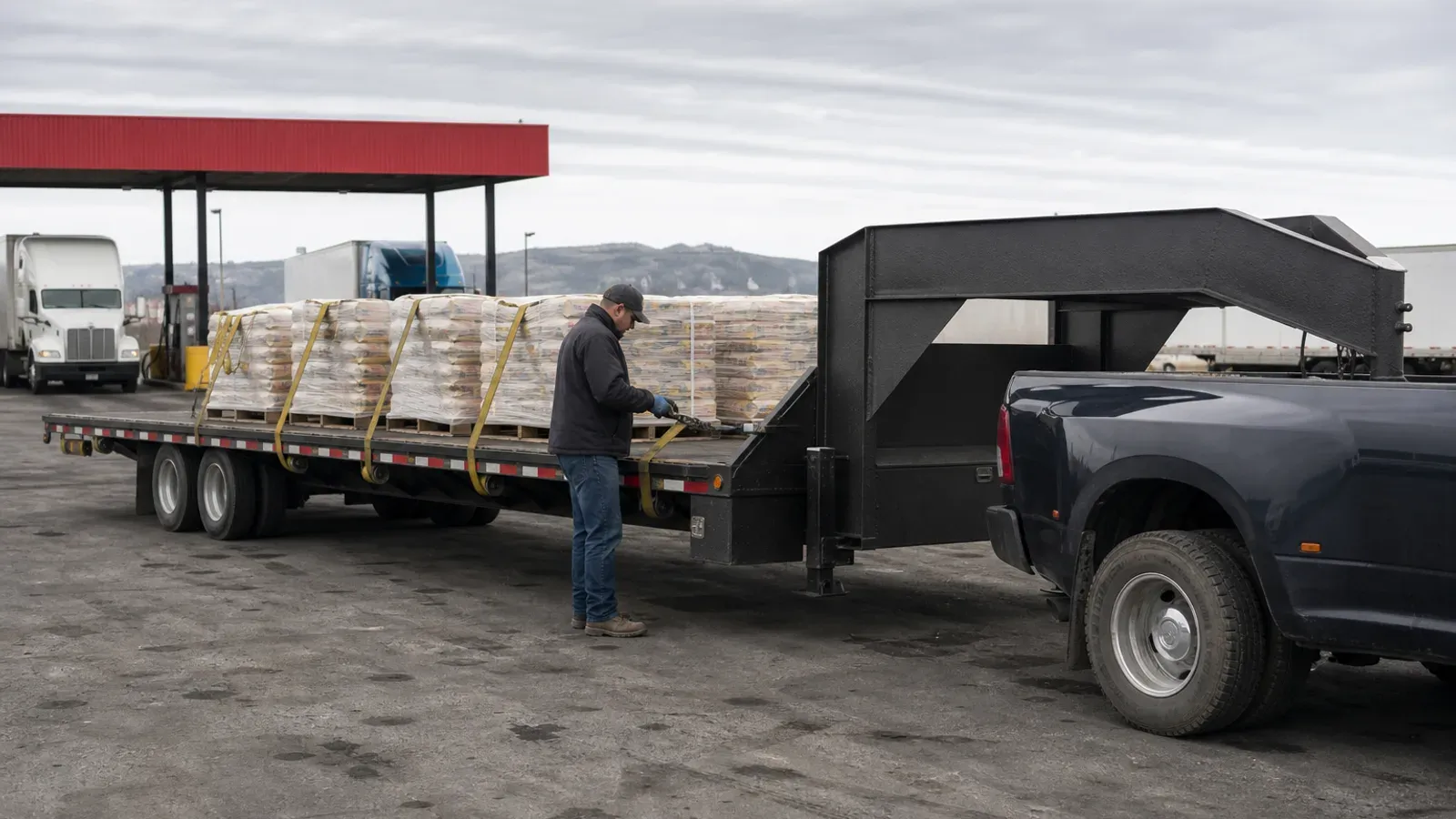
Hotshot is LTL expedited freight at pickup-truck scale: machinery, building materials, oilfield equipment, ag parts, and the palletized miscellany brokers post by the hour. The freight defines the trailer. Loads arrive by forklift in pallet increments, run wide as often as long, weigh anywhere from 2,000 to 20,000 pounds, and change completely every haul. That's why the industry settled on one configuration and mostly stopped debating it.
The gooseneck deckover is that configuration. It runs a full 102-inch width for two-abreast pallets and wide machinery, deck lengths of 36 to 40 feet that divide cleanly by pallet math, and forklift access from every side. The neck's capacity carries what the load boards actually post. The 40-foot tandem-12K build at around 25,900 GVWR is the fleet's most common trailer, and that number is no accident.
The GVWR strategy is the industry's open secret. A 25,900-pound trailer behind a 14,000-pound-GVWR dually stacks up to 39,900 combined. The games around the 26,000-pound CDL line, trailers badged at 25,900 and trucks derated, exist because operators run both models, CDL and non-CDL. Here's the honest version: non-CDL hotshot survives on thin margins at capped weights, and most operators who stick with it get the license and the full envelope. Your state's regulations carry the details.
The rest of the business stack comes with it: DOT authority, MC numbers, insurance at commercial freight rates, ELD logs, and inspections. None of that is trailer content, and all of it is the real barrier to entry. The trailer is a purchase. The compliance is the business.
The hotshot spec, ranked
The standard is the 40-foot gooseneck deckover. Expect tandem 12K axles with brakes all around, electric-over-hydraulic disc at the serious end, load range G rubber with a mounted spare, mega ramps or a beavertail for machinery that has to climb aboard, and a neck toolbox big enough for the chain inventory. Empty weights run 7,000 to 8,500 pounds and payload lands between 17,000 and 18,500. The difference between builds is freight revenue, so compare the scale tickets.
The variations serve different lanes. Straight decks handle pure pallet freight. The hydraulic dovetail suits operators courting low machinery. The 36-foot builds trade capacity for maneuverability in tight-delivery lanes, and triple-axle 30K-plus builds sit at the heavy end, where the freight and the CDL both assume more. Air-ride options pamper freight that pays for it.
The securement inventory is part of the trailer budget: chains and binders in graded sets, straps by the dozen, tarps sized to the deck, corner protectors, and a headache rack's worth of organization. That's several thousand dollars, made mandatory by the securement rules and profitable by the load damage it prevents. Winches along the rub rail and a strap-friendly stake pocket layout are spec-sheet items worth demanding when you buy.
Weights, logs, and the working rhythm
Load planning is the daily craft. You position freight for pin weight at 15 to 25 percent and keep axle loads inside their ratings, heavy pieces over the tandems, with the deck's pallet math worked out before the forklift starts. Buy scale tickets like the cheap insurance they are, because the DOT scale's opinion is the one that invoices. Wide loads either fit the 102-inch envelope or file permits, and the operator who knows the state-by-state rules runs lanes the guessers turn down.
Securement follows the federal playbook. Working-load limits sum to the cargo weight, chains go on machinery, straps on pallets, edge protection under anything abrasive, and tarps wherever the weather or the shipper says so. The ten-mile re-check is what separates operators from cautionary tales. Inspections, pre-trip, en-route, and the annual, are the rhythm the regulations set and the roadside enforces.
The combination is a one-ton dually doing commercial work. Balance pin weight against payload, run a rated, frame-mounted gooseneck hitch, tune the brakes to the day's gross, and maintain everything on a fleet calendar instead of a failure calendar, with bearings, brakes, and rubber as line items. A trailer that sits is a note that isn't getting paid, and that's most of hotshot's economics right there.
Hotshot trailer FAQ
What trailer do hotshot operators use?
The 40-foot gooseneck deckover is the industry standard: tandem 12K axles, around 25,900 GVWR, ramps, and a full securement inventory, all behind a one-ton dually.
Why 25,900 GVWR exactly?
It's the CDL math. Combined ratings under 26,001 pounds keep non-CDL operation possible at capped weights. Most career operators get the license and run the full envelope anyway.
Can I hotshot without a CDL?
Yes, within the combined-rating cap, but the margins are thin and the model barely pencils out. Federal and state rules have the details, so read them before you write the business plan.
How much can a hotshot trailer haul?
The standard build carries 17,000 to 18,500 pounds of payload, with axle positions and pin weight governing how it loads. The scale ticket is the real spec.
What does the securement inventory cost?
Several thousand dollars in chains, binders, straps, tarps, and protection. Regulation makes it mandatory and claim prevention makes it profitable, so budget it alongside the trailer.
40 feet or shorter?
Forty feet is the freight standard. Thirty-six trades capacity for maneuverability in tight lanes. Your lane plan decides, and long trailers only earn their length on long freight.