Gooseneck Deckover Trailers Explained.

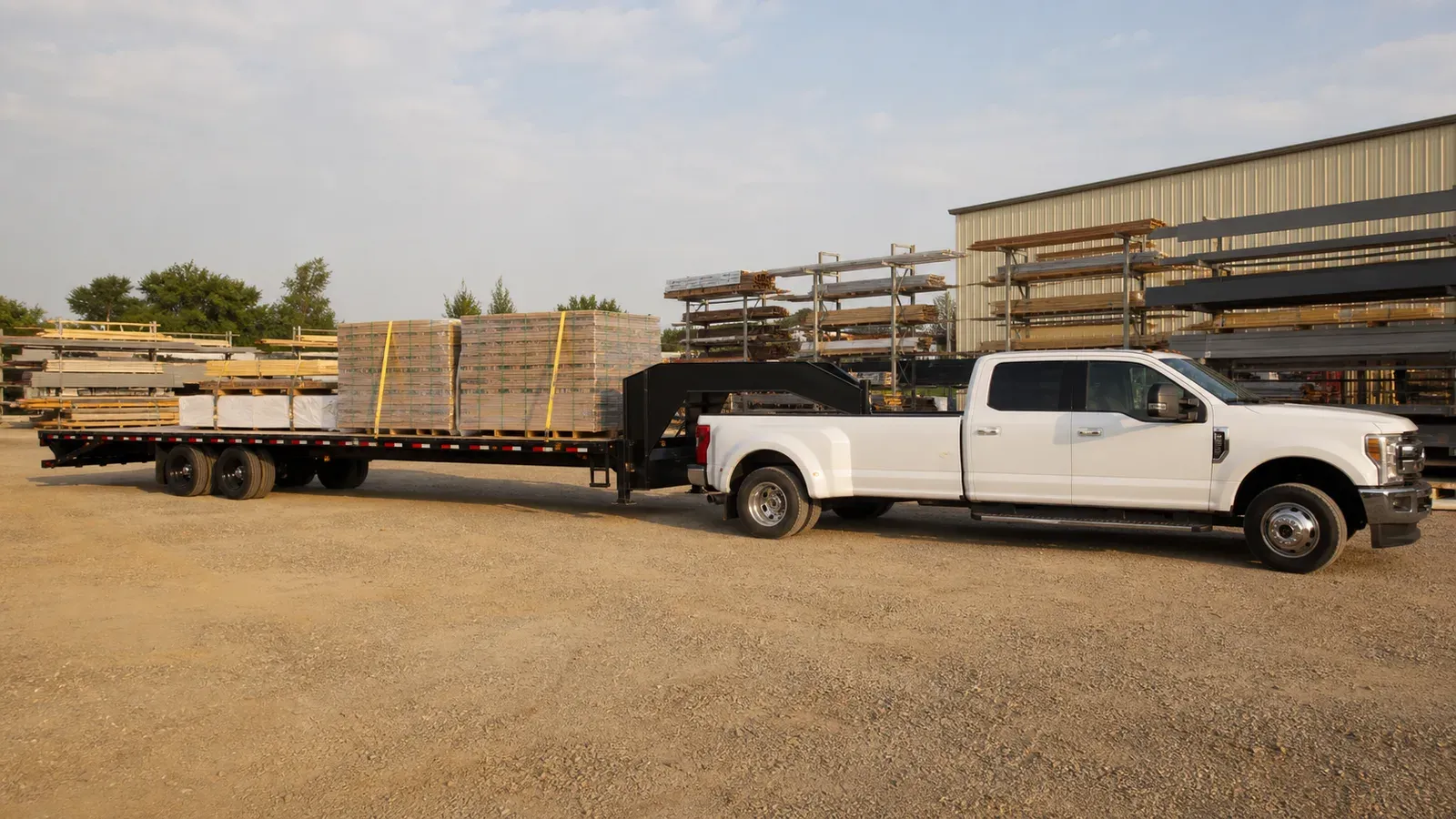
The gooseneck deckover is the freight configuration. It puts a full-width 102-inch deck above the wheels, backed by the neck's 20,000-plus pounds of capacity. It's the hotshot industry's standard tool and the wide-load answer across the heavy trades. You pay for it in deck height, 32 to 38 inches, and everything that rides up with it. Pallets and wide machines make it worth buying. If you load by hand, read the flatbed page first.
The freight deck of the gooseneck world
The gooseneck deckover pairs two configurations built for maximums. From the deckover side you get a full-frame-width deck, 102 inches, the federal limit, with no fenders breaking it up. From the gooseneck side you get capacity and stability past anything a bumper hitch allows. Put them together and you have the trailer freight simply assumes, the hotshot industry's default and the heavy trades' wide-load answer.
Width is the whole product. Pallets load two abreast across the full deck, wide machines drive aboard without fighting fender geometry, and the 102-inch deck is itself the legal envelope. Cargo kept flush to the edges travels permit-free, while overhanging loads have to file paperwork. The deckover guide works through the width economics, and at gooseneck weights they just pay off at a larger scale.
Height is the price, and it's the same one the whole deckover family pays. The deck rides 32 to 38 inches off the ground, so loading anything driven forces the rear-treatment decision among flip-over ramps, mono ramps, beavertails, or the hydraulic tail, and the center of gravity climbs with every load. Forklifts don't care, which is exactly why freight lives here.
Who's buying? Hotshot operators running LTL freight behind duallys, equipment movers whose machines run wide, ag operations with implements past the fender math, and the general heavy-haul trade. The buyer overlap with the gooseneck flatbed is thinner than the two trailers look, because the need for width sorts the crowds almost perfectly.
Full width at full weight
The structure has to carry width and weight at once. You get I-beam mains, pierced-beam on the better builds to route wiring and shave height, crossmembers at 12 to 16-inch centers spanning the full 102 inches with no fender structure helping, and a neck transition gusseted for loads that start at ten tons. The deckover's structural notes apply at this tier's weights, which just means you look underneath before you believe any brochure.
The rear treatment is the option that defines the build, and the hydraulic dovetail page covers it in depth. Straight decks suit pure forklift freight. Beavertails with flip-over or mega ramps suit machines that climb. The hydraulic tail handles iron that can't. Hotshot builds split between straight decks and beavertails by their freight mix, and you're better off making the choice from your actual manifest than from whatever sits on the lot.
The running gear is the tier's commercial standard. You get tandem 10K and 12K axles, triples at the top, brakes all around with electric-over-hydraulic on heavy builds, load range G rubber, dual 12K jacks, and a neck toolbox for the chain inventory a freight deck piles up. Winches and strap systems ride the rub rail, and the tie-down count matters twice as much on a deck whose loads change every week.
The pin math is the main guide's at full scale. Figure 15 to 25 percent of loaded weight into the bed, which at 22,000 loaded pounds puts you in dually territory with no argument, and it's the payload-versus-pin arithmetic that sizes the truck before the tow rating gets a vote.
Gooseneck deckover sizes and payload
| Class | Typical GVWR | Typical Payload | Common Fit |
|---|---|---|---|
| 25 to 30 ft, tandem 10K | 20,000 to 22,000 lb | 13,600 to 15,800 lb | The hotshot standard |
| 30 to 36 ft, tandem 12K | 23,000 to 25,900 lb | 15,800 to 18,600 lb | Heavy freight, wide machines |
| 36 to 40 ft, triple | 25,900 to 30,000+ lb | 17,500 to 21,500 lb | Max legal, multi-drop routes |
| Hydraulic dovetail builds | 22,000 to 25,900 lb | 14,400 to 17,600 lb | Low heavy iron |
Deck lengths follow freight logic. Standard 40-by-48 pallets divide the deck in 4-foot increments, and the 30, 32, and 36-foot standards exist because the manifests do. Payload pays for the full-width steel, empty weights run 6,500 to 8,800 pounds, and the scale-ticket comparison between builds is real freight revenue at this tier.
The license line sits behind every working combination here. A dually and a 22K-plus trailer is CDL math by design, and hotshot operators live under the full commercial regulations stack, DOT numbers, logs, inspections, and securement rules. Most buyers already know this, but the page says it anyway.
Where the gooseneck deckover wins and loses
The buying rule. Buy it for width your loads actually use, at lengths your manifest actually fills. The flatbed page's lower deck hauls everything narrower for less, and an honest measure of your widest regular load settles the whole question.
Gooseneck deckover FAQ
Why do hotshot operators run gooseneck deckovers?
Full-width pallet loading, forklift access, capacity past 20K, and lengths that divide neatly by pallet math. It's the industry's default tool, and the freight networks price around it.
How high is the deck?
Commonly 32 to 38 inches, versus 24 to 30 on the gooseneck flatbed. That gap is the whole width-versus-height trade in one number.
What truck does it take?
A one-ton dually for the working classes, sized by payload against 3,000-to-5,500-pound pin weights. Single-rear-wheel trucks handle only the lightest builds.
Straight deck, beavertail, or hydraulic tail?
Pure forklift freight runs a straight deck, climbing machines want the beavertail and ramps, and low heavy iron buys the hydraulic tail. Your real manifest decides.
Is the 102-inch width legal everywhere?
The deck matches the federal limit, so the trailer travels free while overhanging cargo files permits. For pallets and freight, flush to the edge is the entire point.
Do I need a CDL?
Working combinations here cross 26,000 pounds by design, and hotshot operations run the full commercial stack. Yes, plan on it.