Deckover Trailers. The Complete Guide.

A deckover trailer runs its deck above the wheels instead of between them, trading loading height for a full-width, fender-free surface, typically 102 inches. Buy one when your loads are wide, palletized, or shaped wrong for fender wells. Skip it when hand-loading height and center of gravity matter more than width. It's a width purchase, so price it that way.
What a deckover trailer actually is
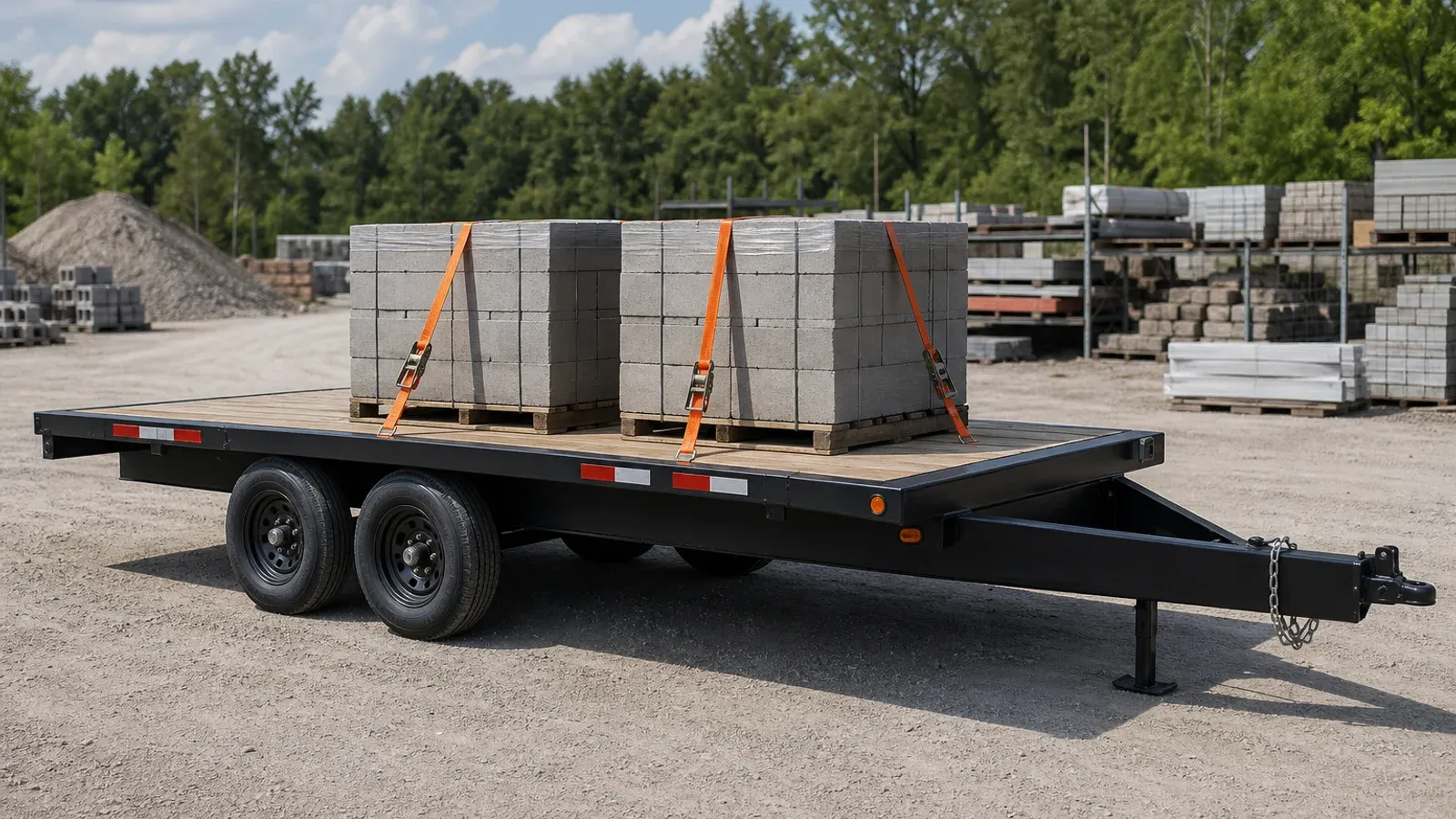
A deckover answers one question: what if the fenders weren't there. By raising the deck above the tires, the trailer gains its full frame width as usable surface, usually 102 inches against the 76 to 83 inches a standard flatbed offers between its fenders. No wheel wells interrupt the deck, and no fenders limit where a pallet lands or a machine tracks.
The price of that width is height. A deckover deck rides roughly 8 to 12 inches higher than a comparable flatbed. That raises the loading angle for anything that drives aboard, raises the center of gravity for everything, and raises the day's step count for anyone loading by hand. The flatbed versus deckover decision is exactly this trade, width against height, and the honest answer follows the cargo.
Deckover loads have a shape. They're full pallets loaded two-wide by forklift, wide machines whose stance won't fit between fenders, hay stacked to use every inch, building materials in bulk, and freight in the hotshot sense, where the 102-inch deck is the industry's working assumption. If your loads are narrow and hand-loaded, the deckover is the wrong answer bought for the right price.
The category overlaps its neighbors on purpose. A deckover dump adds hydraulics. A gooseneck deckover adds the neck and the capacity that comes with it, and most heavy deckovers live in that configuration. This guide covers the deckover idea across all of them, and the bumper-pull versions specifically.
Height, width, and the physics of riding tall
Deck height drives everything downstream. Loading anything wheeled means longer ramps or a dovetail to keep approach angles sane, and the dovetail with flip-over ramps is the category's signature solution, with hydraulic versions at the premium end folding the tail to the ground under power. Hand-loading means lifting cargo to mid-thigh instead of knee height, a difference your back audits hourly.
Center of gravity rides up with the deck. The same load sits higher on a deckover, which the trailer's wider stance partly offsets, since the wheels sit at the frame's full width, but crosswinds, ramps, and emergency maneuvers all notice the height. Load heavy items low and centered, keep tongue weight in the 10 to 15 percent band, and respect that a tall, wide load on a tall deck is the most sail-like thing you can legally tow without permits.
Width is legal right up to the line. The 102-inch deck matches the federal maximum vehicle width, which means the deck itself is at the limit and anything overhanging it needs permits and state rules checked before rolling. That's a feature for freight, since the deck is the legal envelope, and a homework assignment for odd loads.
Structure under a deckover differs from a flatbed in ways worth inspecting. The deck spans the full frame with no fender interruptions, so crossmember quality carries everything everywhere, 16-inch centers or tighter under working decks. The frame-to-axle geometry matters too. Straight-deck models keep it simple, and drop-axle designs claw back a few inches of height at some cost in axle options. Ask which you're looking at, because the spec sheet won't volunteer it.
Deckover sizes and real payload
Deckovers run longer and heavier than their flatbed cousins, commonly 20 to 30-plus feet, and the GVWR classes stack from 10K bumper-pulls to heavy gooseneck territory. The full-width deck adds steel, so empty weights run high, and payload, as always, is GVWR minus the real number on the scale.
| Class | Typical GVWR | Typical Payload | Common Fit |
|---|---|---|---|
| 18 to 22 ft, 10,000 lb | 9,900 to 10,400 lb | 6,800 to 7,600 lb | Pallets, hay, wide materials |
| 20 to 24 ft, 14,000 lb | 14,000 lb | 9,500 to 10,400 lb | Machines, bulk freight |
| 22 to 26 ft, 16,000 lb | 15,000 to 16,000 lb | 10,500 to 11,800 lb | Heavy commercial daily work |
| Gooseneck classes | 20,000 to 25,000+ lb | 13,500 to 18,500 lb | Hotshot freight, big equipment |
The bumper-pull deckover tops out where physics says it should. Past the mid-teens GVWR, hitch weight and stability push the category to the gooseneck connection, and most deckovers above 16K are goosenecks by build. The gooseneck versus bumper-pull threshold applies here with extra force because of the height.
Truck math runs standard but starts higher. A loaded 14K deckover is three-quarter-ton work at minimum, and the heavy classes want the one-ton conversation. The height adds a practical note, since mirror and visibility setups matter more behind a tall wide deck, and a weight-distribution hitch earns its keep on heavy bumper-pull versions.
Length planning follows freight logic. Pallets run 40 by 48 inches, so deck lengths that divide well by four feet load efficiently, part of why 20, 24, and 28-foot decks dominate. Machines add their chain-angle room. And every foot is empty weight against payload, so buy for the manifest, not the maybe.
Deckover sub-types
The sub-types sort by connection and loading. Bumper-pull covers the light and middle classes, and gooseneck takes over above them. The hydraulic dovetail solves the deckover's own height problem for driven loads, and the equipment configuration tightens crossmembers and ramps for machines. Most working buyers land on a gooseneck deckover with one of the two rear treatments.
The features that actually matter
The skip pile is the usual, paint tiers, wheel upgrades, and dealer toolboxes at boutique prices. The dovetail-or-ramps decision is where the option money should go, since it's the difference between a trailer that loads your machines and one that stores them at ground level.
Deckover brands
Deckovers are a core heavy line for the open-trailer majors, with the gooseneck versions carrying flagship status at several builders.
Big Tex and PJ field the deepest deckover ranges with hydraulic tails at the top. Load Trail and Iron Bull press hard on spec value in the gooseneck classes. Diamond C and MAXX-D court the premium buyer with engineering and finish that shows up in the details, the gussets, wiring, and tail hardware. Compare matched GVWR and deck dimensions, then judge the rear treatment quality up close, since it's the hardest-working steel on the trailer.
What deckover trailers cost
Deckover pricing starts above comparable flatbeds, since the full-width deck is more steel, and climbs the same capacity ladder. The 10K bumper-pulls open in flatbed-plus territory, the 14K class steps into five-figure range, and gooseneck models with hydraulic dovetails sit near the top of the open-trailer market. You're buying width and the structure to support it, and the market prices it honestly, mostly.
The padding pattern holds, freight, prep, doc fees, and accessories, plus this category's special, the tail. Ramp packages and dovetail configurations vary wildly between quotes, and a base price with slide-in ramps against a quote with a hydraulic tail isn't a comparison, it's a category error. Spec the rear treatment identically across quotes or the numbers mean nothing.
The buying mistake is paying for width you don't load. If your cargo never needs more than 83 inches, the standard flatbed hauls it lower, lighter, and cheaper, and the comparison page exists to save you from the upsell. The reverse mistake is rarer but pricier, forklift operations discovering fender wells one pallet at a time.
At the heavy end, buy the dealer along with the trailer. Hydraulic tails need parts and service eventually, and the builder whose dealer stocks cylinders and pumps beats the discount quote from three states away the first week something weeps fluid.
Know the fair price before you go
The free Price Guide lists current dealer and MSRP prices for hundreds of new trailer models, brand by brand, with a confidence label on every number.
Get the Price GuideDeckover trailer FAQ
What's the point of a deckover versus a flatbed?
Width. The deck rides above the wheels, so the full 102 inches is usable with no fender interruptions. The cost is 8 to 12 inches of deck height. The comparison referees it load by load.
How high is a deckover deck?
Commonly 32 to 38 inches, against roughly 22 to 28 for a standard flatbed, varying by axle and tire setup. Drop-axle designs claw a few inches back.
Are deckovers harder to load?
Anything driven aboard faces a steeper angle, which is why dovetails, flip-over ramps, and hydraulic tails define the category. Forklift loading doesn't care, which is why freight lives on deckovers.
Do I need a gooseneck deckover?
Above roughly 14,000 to 16,000 pounds loaded, yes in practice, since the gooseneck carries the weight bumper hitches shouldn't. Below that, bumper-pull deckovers do honest work.
What truck does a deckover need?
The 10K class suits a strong half-ton on paper and a three-quarter-ton in practice. The 14K class and up wants three-quarter-ton minimum, and the gooseneck classes are one-ton country.
Are deckovers legal at 102 inches wide?
The deck matches the federal 102-inch limit, so the trailer is legal and anything overhanging it needs state rules and permits checked. For pallets and freight, the width is the whole point.
Is a deckover less stable?
The load rides higher and the wheels ride wider, and the net is a trailer that tows well loaded sensibly and punishes tall careless loads in crosswinds. Load low, center the weight, and keep tongue weight honest.
Hydraulic dovetail or flip-over ramps?
Hydraulic for low, heavy machines and solo operators, at a real price premium and a maintenance line. Flip-overs for everything else. The machines you load decide, not the brochure.