Deckover Dump Trailers Explained.

A deckover dump rides its box above the wheels instead of between them, buying a full-width bed, commonly 96 inches inside, with no fender wells eating the floor. The trade is a taller box that loads higher and carries its weight higher. Buy it for full-width loads, pallet-and-bulk mixed work, and maximum yards per foot. Skip it if loaders and stability rank above width.
What a deckover dump is
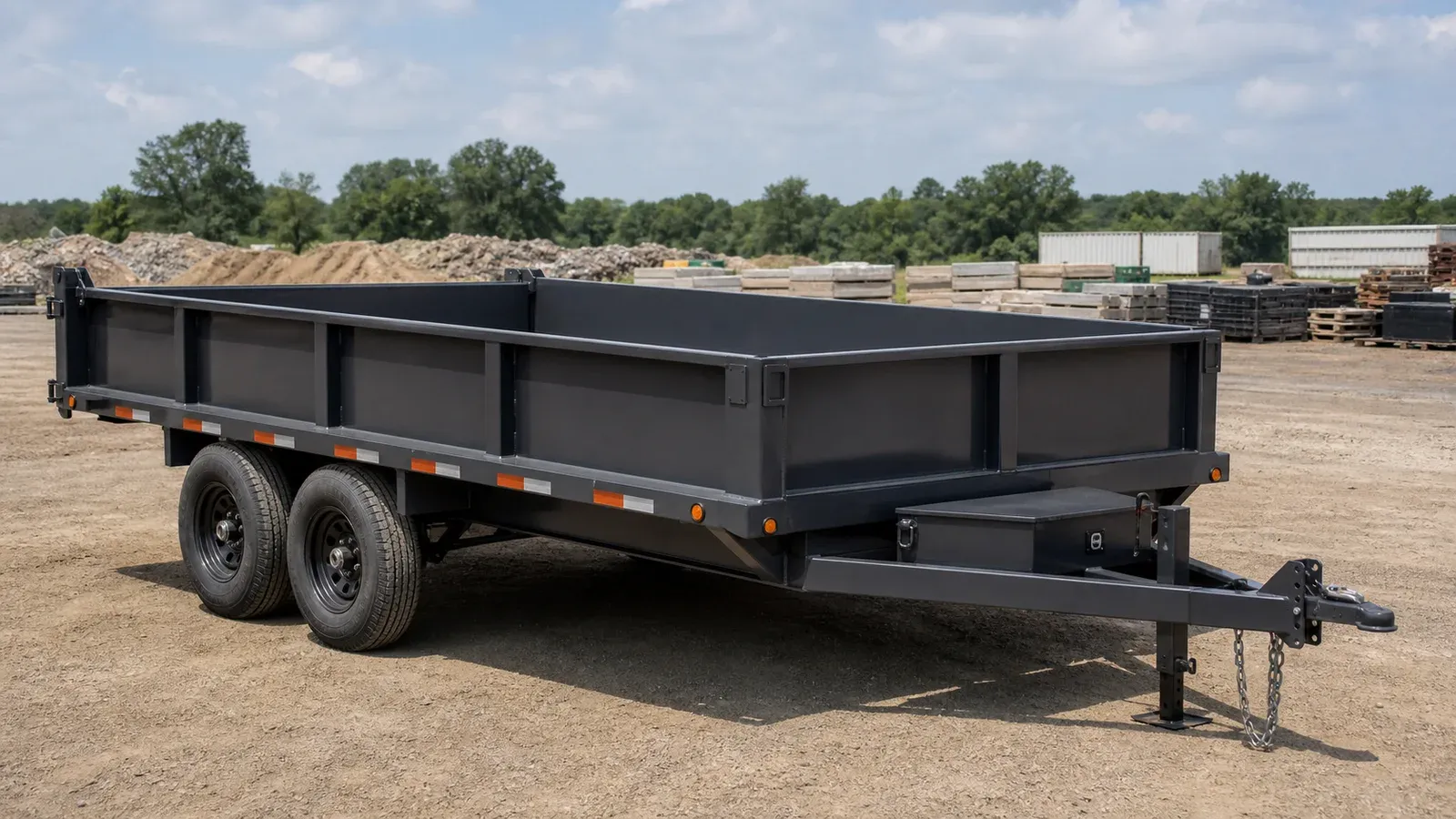
Deckover dump marries two ideas the site covers separately. From the deckover family, the deck-above-the-wheels layout that clears the fenders out of the cargo's way. From the dump family, the hydraulic box that unloads itself. The result is a dump bed at full frame width, flat and rectangular corner to corner, with nothing intruding on the floor.
What the width buys. A standard dump box squeezes between the fenders at 60 to 68 inches of inside width. The deckover box runs 93 to 96, and the difference compounds, more yards per foot of length, a floor that takes pallets and full-width loads a standard box refuses, and a rectangular space that loads, tarps, and sweeps clean without wheel-well geometry. Demolition debris, concrete rubble in volume, bulk ag loads, and mixed pallet-and-loose work all cash that check.
What the height costs. The box floor rides 8 to 12 inches higher than a between-the-fenders build, so every loader bucket clears a taller rail, hand loading gains a step, and the load's center of gravity rides up with the floor. The low-profile dump is this configuration's exact opposite, alike only in the hydraulics.
Who buys it. Contractors moving demolition and bulk at volume, farms with full-width loads, and operations whose material comes in shapes as often as piles. The deckover dump is the least residential trailer in the dump family, it's a production tool, and it prices and tows like one.
Width, height, and dumping from up high
The structure follows deckover logic. The box sits on frame rails that pass over the axles, so the floor spans the trailer's full width with crossmembers carrying everything everywhere, no fender structure sharing the load. Box construction quality matters at this width, floor gauge, crossmember spacing, and side stiffeners all work harder across a 96-inch span, and the good builds show it in the steel schedule, not the paint.
The lift is scissor country. The scissor mechanism's centered cradle and flat force curve suit the wide heavy box, and nearly every serious deckover dump ships with one, sized up for the class. The dump geometry picks up one quirk from the height, the raised bed's rear edge finishes higher off the ground than a standard dump's, so the load drops farther and spreads slightly wider on release, a footnote for most material and a feature for spreading gravel.
Gates run the dump standard, barn doors and spreader combinations, sized to the full width. The wide spreader gate meters material across a genuinely useful swath, one of the configuration's quiet advantages on driveway and pad work. Ramp gates are rare here, the deck height that challenges loading challenges ramps twice as hard, equipment work belongs on the gooseneck dump or a proper equipment trailer.
Stability discipline is part of ownership. The tall box carries its load high, and dumping on any slope multiplies the lever, deckover dumps want level ground under the tires before the bed goes up, more than any other configuration on this site. Good builds spread the stance to the full frame width to compensate, and good operators treat the level-ground rule as scripture. The combination is safe. Casual isn't.
Deckover dump sizes and payload
| Class | Typical GVWR | Typical Payload | Common Fit |
|---|---|---|---|
| 8x12, 14,000 lb | 14,000 lb | 9,300 to 10,000 lb | Bulk and demo entry |
| 8x14, 14,000 to 16,000 lb | 14,000 to 16,000 lb | 9,500 to 11,300 lb | The configuration standard |
| 8x16, 16,000 lb | 15,000 to 16,000 lb | 10,400 to 11,500 lb | Production volume work |
| Gooseneck deckover dump | 20,000 to 22,000+ lb | 13,800 to 16,000 lb | Max capacity dumping |
The classes start where standard dumps peak, this is a heavy configuration by nature, the wide box is steel and the frame under it more so. Payload stays honest the usual way, GVWR minus real empty weight, and deckover empty weights run high, compare them between builds because the spread is real.
Volume math benefits from the width. An 8x14 with 2-foot sides holds about 8.3 cubic yards against a 7x14 standard box's 7, and the full-width floor uses every yard without fender-well dead zones. Dense material fills the weight rating first regardless, the eternal dump rule, width just makes the box more honest about its floor.
Truck requirements start at three-quarter-ton and climb quickly, the bumper-pull classes want real trucks with tongue weight counted against payload, and the gooseneck classes are one-ton work through the gooseneck connection. The tall wide box adds wind to the ledger, loaded light it's a sail with a hinge, and mirror discipline plus honest speeds in gusts come with the title.
Where the deckover dump wins and loses
The buying rule. Buy the deckover dump for the width, specifically, for loads and volumes that use it. Bought as a status upgrade over a standard 7x14, it delivers a taller, heavier, thirstier trailer doing the same job from a worse height.
Deckover dump FAQ
What's the difference between a deckover dump and a standard dump?
The box position. Standard boxes sit between the fenders at 60 to 68 inches wide, deckover boxes ride above the wheels at 93 to 96. Full width and more height, both directions of that trade.
How much more does a deckover dump hold?
Roughly 15 to 20 percent more volume per foot of length at the same side height, with a rectangular floor that uses all of it. Weight rating still rules on dense material.
Is loading harder?
The floor and rails ride 8 to 12 inches higher, so loaders clear a taller side and hand loading works harder. Machine-loading operations with full-size equipment barely notice, compact loaders do.
Is it stable when dumping?
On level ground with a quality wide-stance build, yes. The high box raises the stakes on slopes more than any other dump configuration, level ground before lifting is the rule, not a suggestion.
What truck does one need?
Three-quarter-ton minimum for the bumper-pull classes, one-ton for the gooseneck versions, with tongue or pin weight counted against the truck's payload honestly.
Deckover dump or gooseneck dump?
Different axes. Deckover describes the box position, gooseneck the hitch, and the gooseneck deckover dump combines both at the capacity ceiling. Width need picks deckover, weight need picks the neck.