Deckover Equipment Trailers Explained.

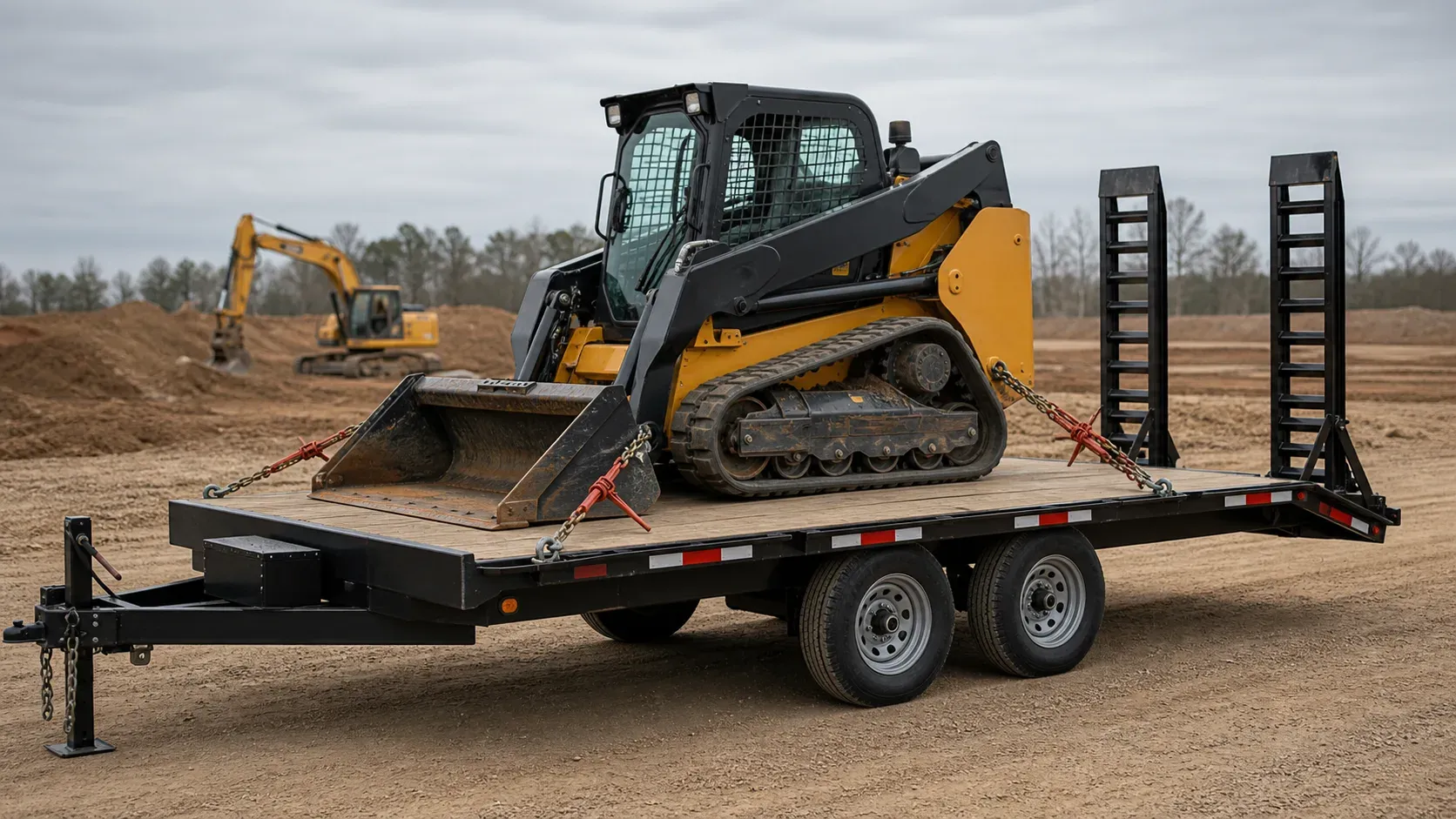
The deckover equipment configuration tunes the full-width deck for machines whose stance outgrew fenders, with tight crossmembers under point loads, ramps or tails engineered against the deck's height, and tie-downs rated in tons at working chain angles. It's the wide-machine answer a flatbed equipment trailer can't be. The height makes the ramp decision harder than anywhere else, and the machine list writes the check.
Machines on the full-width deck
The deckover equipment build exists for the machines the between-fenders world measures and turns away, wide-stance tracked iron, machines with duals, implements past 83 inches, and any load whose footprint wants the deckover's uninterrupted 102 inches. It takes the equipment trailer's purpose-built features, tight crossmembers, rated loading, and ton-rated securement, and rebuilds them on the full-width platform.
The configuration spans both connections. Bumper-pull versions run through the receiver's 16K ceiling for the wide-but-moderate machines, and gooseneck versions handle everything above that, where the wide-and-heavy machines actually live and the gooseneck equipment world's class tables take over.
The buying frame is a double tape measure. Width comes first, the machine's true stance against the fender math, the measurement that ruled out the flatbed equipment trailer. Weight comes second, the machine plus attachment against the payload subtraction, the number that picks the class and the connection. Machines that pass the width test but fail the weight test are rare, because wide iron runs heavy, and that's why this configuration skews gooseneck.
Height meets machine loading
The deck runs equipment spec at full width. Crossmembers sit at 12-to-16-inch centers spanning 102 inches with no fender structure to share the load, which works every member harder than any flatbed's. The frame tier steps up too, with I-beams on the working classes carrying what the guide's structural notes always warned the span demands. Wood decks make sense for the reasons the deck debate lays out, and steel earns its place where tracks and forks abuse it daily.
Loading is the configuration's hardest question, because the deckover's 32-to-38-inch height meets machine geometry at its worst. Long rated ramps and beavertails serve the climbers, with angles steeper than any flatbed equipment trailer asks, and the hydraulic dovetail is the answer for everything those angles rule out. Write the rear-treatment decision from the machine list, the way the family always does. Walk the actual machine's breakover through the actual trailer's numbers, because the deposit depends on it.
Securement runs the equipment standard at width, four-corner chains with rated binders, D-rings placed for wide-stance chain angles, working-load limits summing per DOT, attachments secured separately, and the towing fundamentals at machine weight. Tongue or pin weight tunes by the machine's deck position, and the tall deck's center-of-gravity discipline collects on every slope the loaded trailer meets.
Deckover equipment sizes and payload
| Class | Typical GVWR | Typical Payload | Common Fit |
|---|---|---|---|
| 20 to 24 ft bumper-pull | 14,000 to 16,000 lb | 9,500 to 11,800 lb | Wide compacts, implements |
| 25 to 30 ft gooseneck | 20,000 to 22,000 lb | 13,600 to 15,800 lb | The working standard |
| 30 to 36 ft heavy | 23,000 to 30,000 lb | 15,800 to 21,500 lb | Wide heavy iron |
The classes track the gooseneck deckover's tiers with the equipment features costing their steel, and the truck-and-license math runs the tier standard, three-quarter-tons at the receiver classes, duallys above, and the CDL line per the rules crossed where the configuration actually works.
The deckover equipment ledger
The buying rule, the double tape measure, width past the fenders and weight against the class, with the rear treatment written from the machine list. Both measures honest, the configuration is irreplaceable. Either fudged, the neighbor was the answer.
Deckover equipment FAQ
When does equipment need a deckover?
When the machine's true stance passes the flatbed's between-fender math, roughly 76-to-83 inches. Wide tracked iron, duals, and implements live here.
How do machines board the tall deck?
Long rated ramps and beavertails for the climbers, the hydraulic dovetail for the low and heavy. The height makes this the configuration's defining option.
What class carries a wide excavator?
The 20-to-22K gooseneck tier as the working standard, per the gooseneck equipment tables, with the heavy tiers above for the big iron.
Wood or steel deck under machines?
Wood grips and repairs, steel survives tracks and forks daily, per the comparison. The duty cycle picks.
What truck and license?
Three-quarter-tons at the receiver classes, duallys above, CDL math where the configuration works, per the rules.
Deckover equipment or gooseneck equipment?
The same machines from two family doors, this page's width lens and the gooseneck equipment page's capacity lens meeting at the same trailers.