Wood Deck vs. Steel Deck. Which Trailer Deck to Buy.

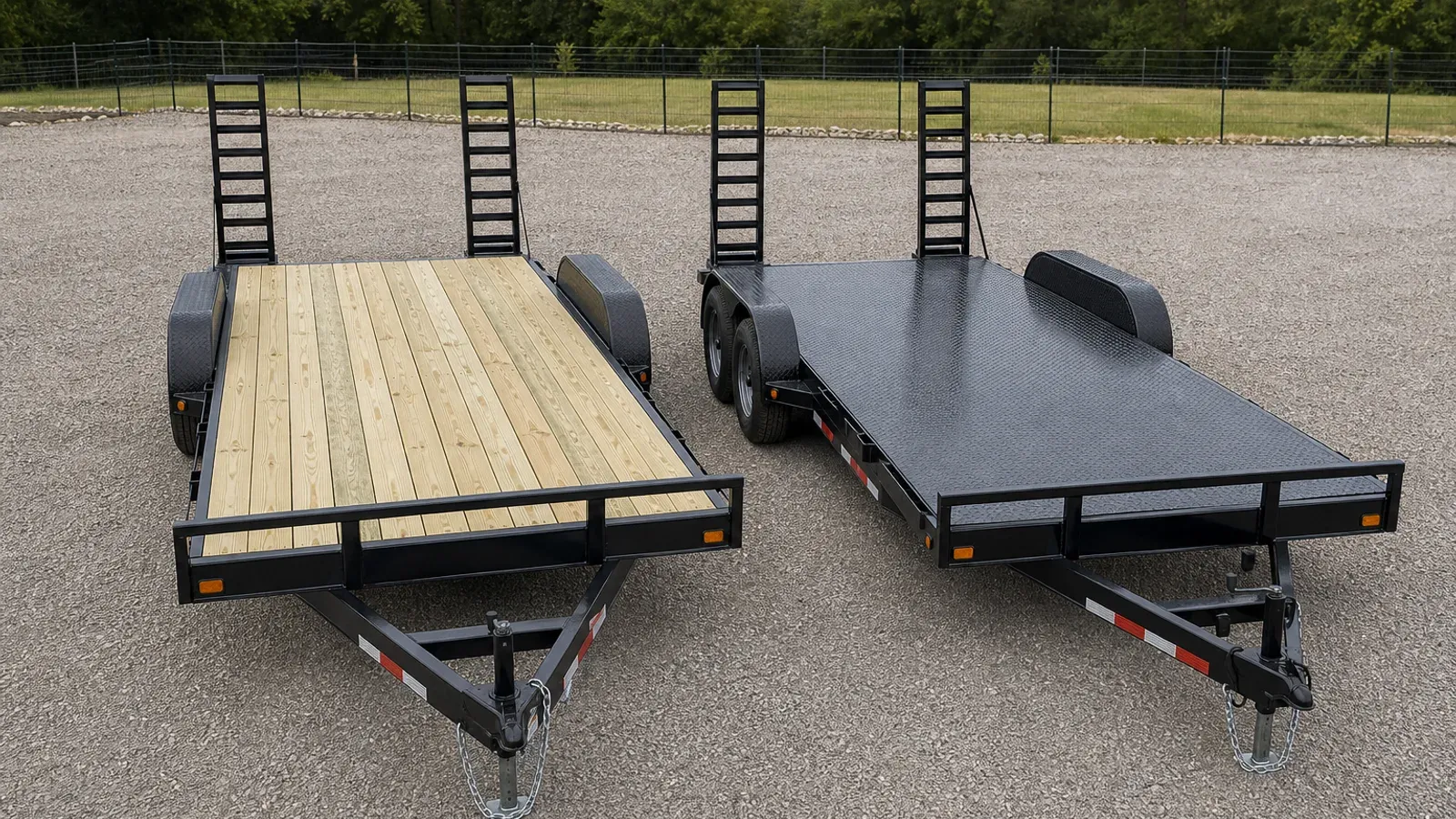
Wood decks grip, absorb impact, and repair plank by plank at lumberyard prices. Steel decks shrug off forks, fire, and fluid leaks, but they cost more, weigh more, and skate when wet. Wood is the right default for most equipment and general hauling. Steel earns its premium under severe daily duty, fork traffic, winch drags, and demolition abuse. Your duty cycle decides this, not the showroom.
Wood vs. steel at a glance
| Wood Deck | Steel Deck | |
|---|---|---|
| Grip, wet or dry | Wins, especially inclined | Slick when wet or worn |
| Repair | Plank by plank, anywhere | Welding, sections, downtime |
| Impact and point loads | Absorbs, dents locally | Resists, transmits to frame |
| Fork and drag abuse | Gouges | Shrugs |
| Fluid and fire | Soaks, burns | Immune |
| Weight | Lighter | Heavier, payload tax |
| Price | The baseline | A real premium |
| Winter and rust | Boards rot eventually | Rust is the deck's clock |
The deck is where the cargo and the trailer actually meet, and the choice runs across the equipment, flatbed, car hauler, and deckover worlds with the same physics every time. Under the boards or plate, the crossmember spacing matters more than either surface, because the frame carries the load and the deck just introduces it.
Grip, forgiveness, and the ten-dollar repair
Wood's first argument is traction. Treated pine grips rubber tires and steel tracks wet or dry, and on ramp climbs and tilt decks that grip is a safety spec, not a preference. Machines walk up wood in conditions where steel plate needs cleats and courage, and the difference announces itself the first rainy morning.
The second argument is repair economics. A gouged, cracked, or rotted plank costs lumberyard money and an hour with a saw and bolts, anywhere in the country, forever. Deck life runs 8 to 15 years by climate and care, and a second deck costs a fraction of what any structural steel repair does. Wood also absorbs impact, so a dropped bucket dents a plank instead of ringing the frame, and its light weight returns as payload the steel deck spends.
The downsides are honest. Forks and winch drags gouge it, fluid leaks soak in, hot work and exhaust scorch it, and weather eventually wins, faster where boards stay wet. Rot starts at the fastener holes and the rub-rail edges, and the maintenance is real if minor. Sealing helps, drainage matters, and a board flipped or swapped early is a deck saved late.
Armor for the trailers that earn it
Steel's argument is survival under abuse wood can't price. Fork traffic loading pallets across the deck daily, winch drags hauling dead machines aboard, demolition debris with edges, scrap and concrete work, and the fluid leaks of a fleet's worth of tired equipment, steel takes all of it and asks for paint occasionally. Under severe daily duty, the premium amortizes into the only deck that's still flat at year ten.
Fire and fluid immunity ride along. Hot exhaust, slag from deck-top repairs, hydraulic fluid, and diesel, none of it matters to plate the way it matters to lumber, which is why roll-off floors, scrap trailers, and shop-adjacent decks run steel by default. Diamond plate adds back some of the traction smooth plate lacks, at more cost, and open steel-runner designs on car haulers split the difference with drainage thrown in.
Then the downsides. Price at purchase, weight against payload every mile, the wet-steel skating rink under tires and boots, and rust as the deck's retirement clock, plate rots from the underside and the weld seams, slower than wood in dry country and faster where salt lives. A steel deck is armor, and armor is heavy, expensive, and worth it exactly when someone's shooting.
Which deck your duty cycle buys
Buy wood as the default it deserves to be. Equipment hauling with rubber and tracks, general and mixed cargo, car hauling at the enthusiast tier, and every duty cycle measured in loads per week rather than per day. The grip, the payload, the price, and the plank-by-plank repair win the middle of the market, which is why the middle of the market ships on wood.
Buy steel when the abuse is the job description. Daily fork loading, dead-machine winching, demolition and scrap, fleet duty where downtime costs more than decking, and any deck that meets fire, fluid, or dragged steel weekly. Diamond plate where feet and tires need the help, smooth plate where shovels do the cleaning.
The split cases sort by one question: what's the worst thing that happens to this deck in a normal month? If the answer involves forks, drags, or leaks, buy steel. If it involves weather and tire tracks, buy wood and pocket the difference. And whichever surface wins, check the crossmember spacing first, because a great deck over 24-inch centers is upholstery on a bad couch.
Wood vs. steel deck FAQ
How long does a wood trailer deck last?
Eight to 15 years by climate, drainage, and care, with individual planks swappable for lumberyard money anytime. Sealing and dry storage stretch the top end.
Is a steel deck worth the extra cost?
Under severe daily duty, forks, winch drags, demolition, fluids, yes, it's the only deck still flat at year ten. Under normal equipment and general hauling, wood's math wins.
How much heavier is a steel deck?
Commonly several hundred pounds on equipment-class trailers, paid straight out of payload. Compare real empty weights between matched builds, since the spread is the spec.
Is steel slippery for loading machines?
Wet or worn smooth plate, genuinely yes, and inclined loading multiplies it. Diamond plate and traction strips help, and wood never had the problem.
What wood do decks use?
Treated pine as the standard, with oak and tropical hardwoods at a premium for severe duty and longevity. Rough-sawn full-thickness boards outlast nominal lumber.
Can I convert wood to steel later?
Practically, no. The deck systems and weights differ structurally. Buy the surface for the duty cycle you actually run, and buy the crossmember spacing under it first.