Wood-Deck Car Haulers Explained.

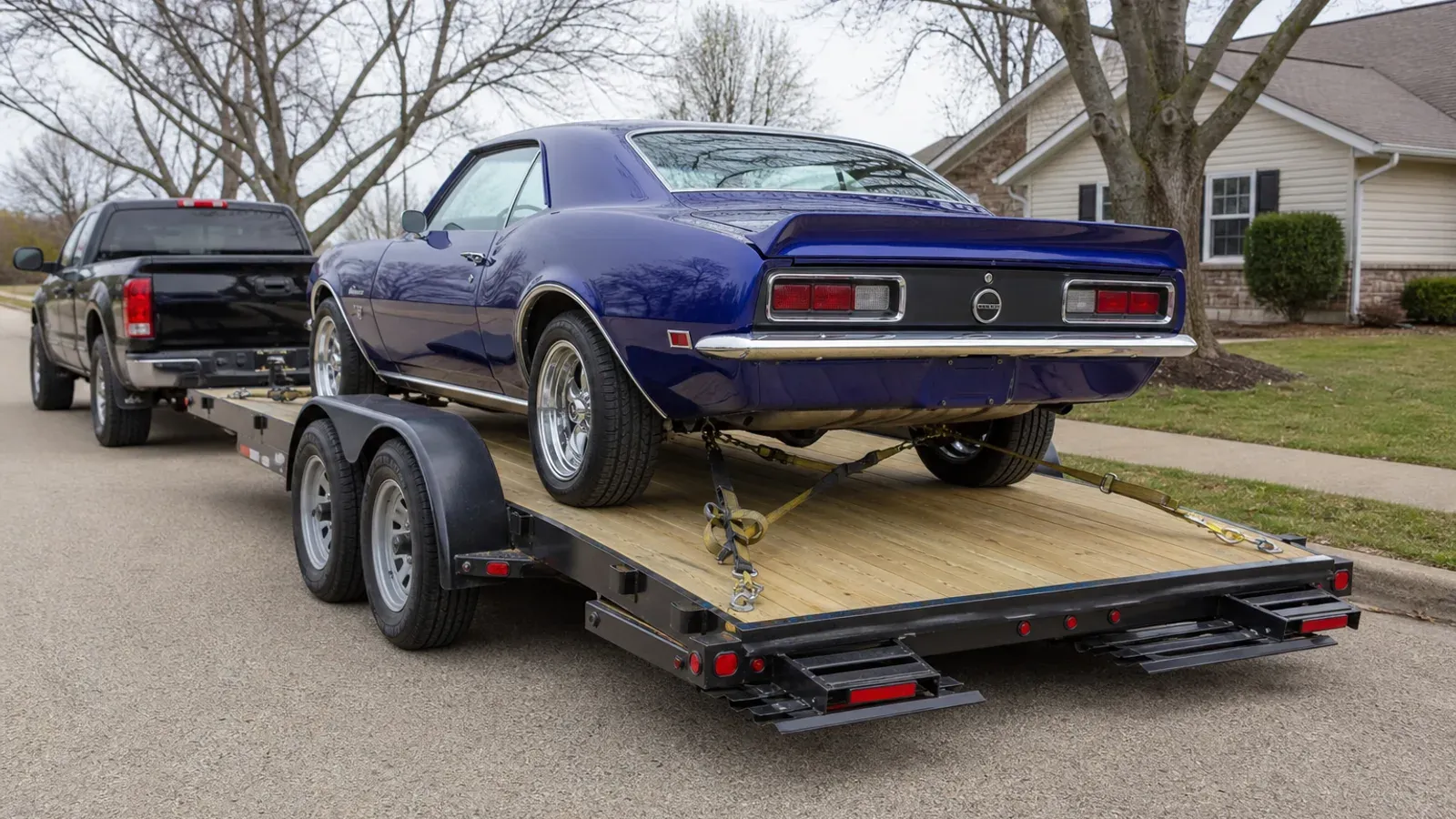
The wood-deck car hauler is the enthusiast standard, treated planks that grip street tires wet or dry, shrug off the small abuse of car life, and repair one board at a time for lumberyard money. It weighs less and costs less than steel, and it pays for fluid leaks and winch drags in stains and soft spots. For running cars hauled by their owners, wood's math wins, which is why the market defaults to it.
Why the enthusiast market runs on wood
The wood deck is the car hauler's factory answer, treated pine planks bolted across the crossmembers, and it earned its default status rather than inheriting it. Street tires grip wood wet or dry at the loading angles car haulers run, the surface forgives a dropped strap hook or the foot of a jack, and the repair story fits the enthusiast's ownership rhythm exactly. One gouged board swaps out in an hour for lumberyard money.
The weekend-car life is wood's home field. Running cars climb aboard under their own power, loaded dry more often than not, strapped and hauled and unloaded without drama, and the deck's job is grip and honesty rather than armor. The steel deck exists for the other life, the leakers, the winch drags, and shop duty, and the deck comparison draws the line between them cleanly. This page covers wood's side of it.
The weight and money math favors the boards. Wood runs 200 to 400 pounds under full plate on common sizes, and that goes straight into payload on trailers whose margins matter, while the discount against steel funds the tire budget. Resale runs neutral to positive, since the market expects wood and prices the deck's condition rather than its material.
Who's here. The project-car owner whose project runs, the racer hauling to track days, the family moving the classic between houses, and every marketplace buyer whose search results default to exactly this trailer. It's the market's most common car hauler, wearing its most common deck.
Species, spans, and the care rhythm
The lumber spec is the quality tell. Treated pine in a 2-inch nominal is the standard, rough-cut full-thickness boards outlast surfaced lumber, and the premium tier runs oak or tropical hardwoods at real cost for real longevity. Boards run lengthwise on car haulers so tires roll with the grain, and the gaps between planks, an eighth to a quarter inch, drain the deck and vent the moisture that kills a bad build.
The structure under the boards does the carrying. Wood's job is spreading the tires onto the crossmembers, and 16-inch centers under the runner zones is the spec that keeps planks from flexing. Fastener quality writes the deck's aging story. Use self-drilling deck screws or carriage bolts into the frame, galvanized or coated, because the fastener holes are where water starts every case of rot the deck ever sees.
The care rhythm is light but real. A deck sealed every year or two sheds the water bare boards drink up, boards flipped or swapped at the first soft spot cost dollars instead of the whole deck, and parking the trailer nose-high enough to drain does more good than any product. Fluid spills wipe or sand out when you catch them and soak in when you don't, and the leaker that visits occasionally is livable where the one that lives aboard argues for steel.
Lifespan lands at 8 to 15 years depending on climate and habit, dry-stored and sealed decks at the top, with boards individually replaceable the whole way and a full re-deck at end of life costing a fraction of any structural repair. Treating the deck as a consumable, and pricing it like one, is wood's honest ownership model.
Wood-deck sizes and payload
| Class | Typical GVWR | Typical Payload | Common Fit |
|---|---|---|---|
| 16 ft, 7K | 7,000 lb | 5,000 to 5,400 lb | Compacts, classics |
| 18 ft, 7K | 7,000 lb | 4,900 to 5,300 lb | The enthusiast standard |
| 20 ft, 9,900 | 9,900 lb | 7,100 to 7,600 lb | Trucks, heavy classics |
| 20 to 22 ft, 9,900 to 14K | 9,900 to 14,000 lb | 7,000 to 10,400 lb | Big iron, margin buyers |
Wood's weight savings is the table's quiet advantage. The 18-foot 7K wood deck carries 200-plus pounds more than its full-plate twin, margin that matters exactly when a 4,800-pound modern muscle car meets a 5,000-pound payload. The guide's sizing rules run unchanged, deck length from the longest car and payload from the heaviest, with the 9,900 class absorbing the modern truck reality.
Truck math holds the class standard, 7K loaded behind honest half-tons and 9,900-plus into three-quarter-ton territory, with tongue weight tuned by where the car sits on the deck, wood or steel either way.
Where the wood deck wins and loses
The buying rule. Running cars, owner loading, a weekend rhythm, buy wood and pocket the difference. Leakers, winches, and shop duty, the steel guide was always where you belonged.
Wood-deck car hauler FAQ
How long does a wood car hauler deck last?
Eight to 15 years, depending on climate and care, with sealed and dry-stored decks at the top. Individual boards swap out the whole way, and a full re-deck is cheap at end of life.
Is wood strong enough for a heavy car?
The crossmembers carry the load and the wood spreads it, so 2-inch treated planks over 16-inch centers handle anything the trailer is rated for. The spacing is the spec, so check it.
What about oil leaks on the deck?
Caught early, they wipe or sand out. Left alone, they soak, stain, and soften boards on their way to the swap pile. The resident leaker is the steel deck's whole customer profile.
Should I seal the deck?
Yes, every year or two, and park nose-high to drain. Those two habits together buy the top half of the lifespan for an afternoon and a few dollars.
Rough-cut or surfaced lumber?
Rough-cut full-thickness outlasts surfaced nominal boards, since the extra sixteenths are structure. Premium builds and re-decks both favor it.
Wood deck with a winch?
For occasional dead loads it's fine with care, and skid plates under locked tires help. Regular winch duty gouges the wood, which is the steel deck's whole argument.