Gooseneck Equipment Configurations Explained.

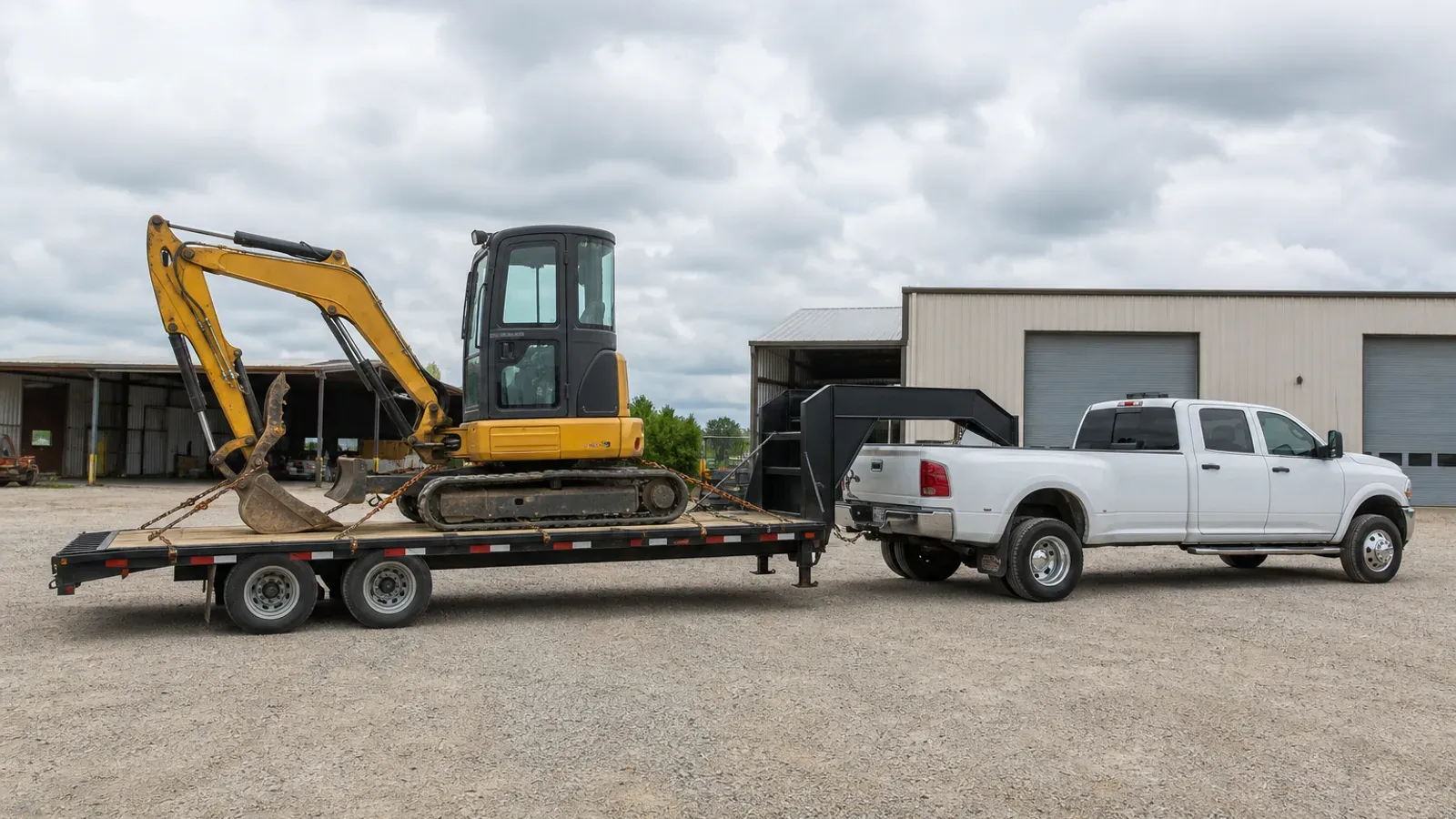
The equipment configuration is the gooseneck family's machine mover, with decks, ramps, and securement built for the excavators and dozers that outgrew bumper-pull physics. Of all the neck's configurations, it's the one you buy around a specific list of machines. This page shows where it fits in the family. The deep equipment coverage lives at /trailers/equipment-trailer/gooseneck/.
The machine mover at the gooseneck table
In the gooseneck lineup, the equipment configuration is the one with a manifest. The flatbed hauls the general catalog, the deckover hauls freight by the pallet, and the dump hauls loose material. The equipment build hauls machines, specific ones you've weighed and measured, because at this tier you buy the trailer around the iron rather than the other way around.
The configuration is really a stack of decisions laid over the family's decks. You match the rear to what climbs, whether that's stand-up ramps, mega ramps, beavertails, or the hydraulic dovetail. You tighten crossmember spacing for point loads. You rate the tie-down hardware in tons and place it at chain-angle positions. And you pick deck height from the family's menu, a low flatbed-style deck for narrow machines or deckover width for wide ones. It's the same trade the family always runs, applied to iron.
The deep coverage lives on the equipment side. The equipment gooseneck page carries the class tables, pin-weight math, and loading procedure, and the heavy-duty tier page handles the 16K-and-up engineering. What we tackle here is the family-level question, when does a gooseneck shopper's answer land on the equipment build?
The answer is a machine list. Think excavators past the mini class, dozers, loaders, large tractors with implements, and the multi-machine days that define an excavation fleet. If the iron in your yard tops 9,500 pounds a piece, the family conversation was always heading here.
Machines on the neck's terms
The neck gives machines everything the guide promises, capacity past bumper physics, stability under the densest loads, and turning tight enough to back 30 loaded feet into a job site. The equipment build puts each of those to specific use. Capacity becomes the 20-to-25K classes where real excavators ride legally. Stability becomes composure under cargo whose mass sits high and concentrated. Turning becomes the difference between delivering to the cut and delivering to the road.
Machine placement runs the family's pin-weight math with an equipment twist. Where you park the machine sets both the 15-to-25-percent pin target and how the axles load down the deck, and the equipment-side page covers the deck-marking habit the trade uses to nail it. The loading procedure lives there too, low range, boom and bucket management, and four-point chains with rated binders, along with the securement fundamentals DOT auditors check.
The rear treatment is the configuration's biggest fork. Straight decks with stand-up ramps serve wheeled and standard-clearance machines at the lowest cost. Beavertails ease the angle for tracks. The hydraulic dovetail lays the tail flat for iron that can't climb at all, and it carries the family's steepest option premium. Your machine list decides which one you need.
The running gear matches the tier: tandem 10K and 12K axles up into triples, brakes all around, G-rated rubber, and dual jacks, all behind one-tons and duallys sized by pin weight against payload. Working combinations cross the CDL line by design, so the rules are part of the package.
Where equipment sits in the family's range
| Configuration | Typical GVWR | Typical Payload | The Job |
|---|---|---|---|
| Gooseneck equipment | 14,000 to 30,000 lb | 9,500 to 22,500 lb | Machines, bought by list |
| Gooseneck flatbed | 14,000 to 25,900 lb | 9,800 to 18,800 lb | General and mixed |
| Gooseneck deckover | 20,000 to 30,000 lb | 13,600 to 21,500 lb | Wide freight |
| Gooseneck dump | 15,900 to 22,000 lb | 11,000 to 16,000 lb | Loose material |
The equipment row spans the family's widest range because the machine list does. A compact-fleet 14K build and a dozer-class triple-axle dovetail are the same configuration at opposite ends. The class-by-class tables live on the equipment-side pages, and the same payload rule governs every row, machine plus attachment plus margin against the scale ticket.
At the family level, the thing to notice is the pairing pattern. Equipment goosenecks anchor fleets that also run a dump for the material those machines move, and the two-trailer, one-dually yard is the excavation trade's standard footprint. If you're speccing your first, pencil in the second. The dump configuration's page makes the same point from its side.
The equipment build against its siblings
The buying rule here is the family's oldest. Start from the heaviest machine plus its attachment, add margin, buy one class up if the fleet is growing, and let the machine list decide the rear treatment.
Gooseneck equipment FAQ
Gooseneck equipment or gooseneck flatbed for occasional machines?
If the machines are occasional and narrow, a flatbed with ramps does the job honestly for less. Regular machine work, or anything past compact class, calls for the purpose build. How often you load decides it.
When does the equipment build need deckover width?
When the machines run wide. Tracked iron past the fender math and wide implements push you to the deckover configuration's 102 inches, the same width-versus-height call the family always makes.
What's the working class for excavators?
The 20-to-22K tandem-10K tier carries the popular excavator classes with margin. The equipment-side page lays out the full table.
What truck and license?
One-tons moving up to duallys as pin weight climbs, and working combinations cross the CDL threshold by design. Federal and state rules spell it out.
Is the hydraulic dovetail worth it?
For low, heavy iron loaded regularly, it replaces ramps, risk, and a spotter. For machines that climb fine on their own, it's the family's most expensive unused option. The dovetail page runs the numbers.
Where's the detailed equipment coverage?
The equipment family's own pages, the guide, the gooseneck page, and the heavy-duty tier, carry the full class tables and procedures.