Best Trailers for Hauling a Tractor.

Tractor hauling spans from a 1,500-pound subcompact on a 7K utility trailer to a 12,000-pound utility tractor with a loader on a gooseneck. The popular compact classes with loaders ride the 10K to 14K equipment trailers, and the implement riding along is the weight everyone forgets. Weigh tractor plus loader plus implement, watch the loading angle under the front axle, and chain all four corners.
Weights, loaders, and the implement problem
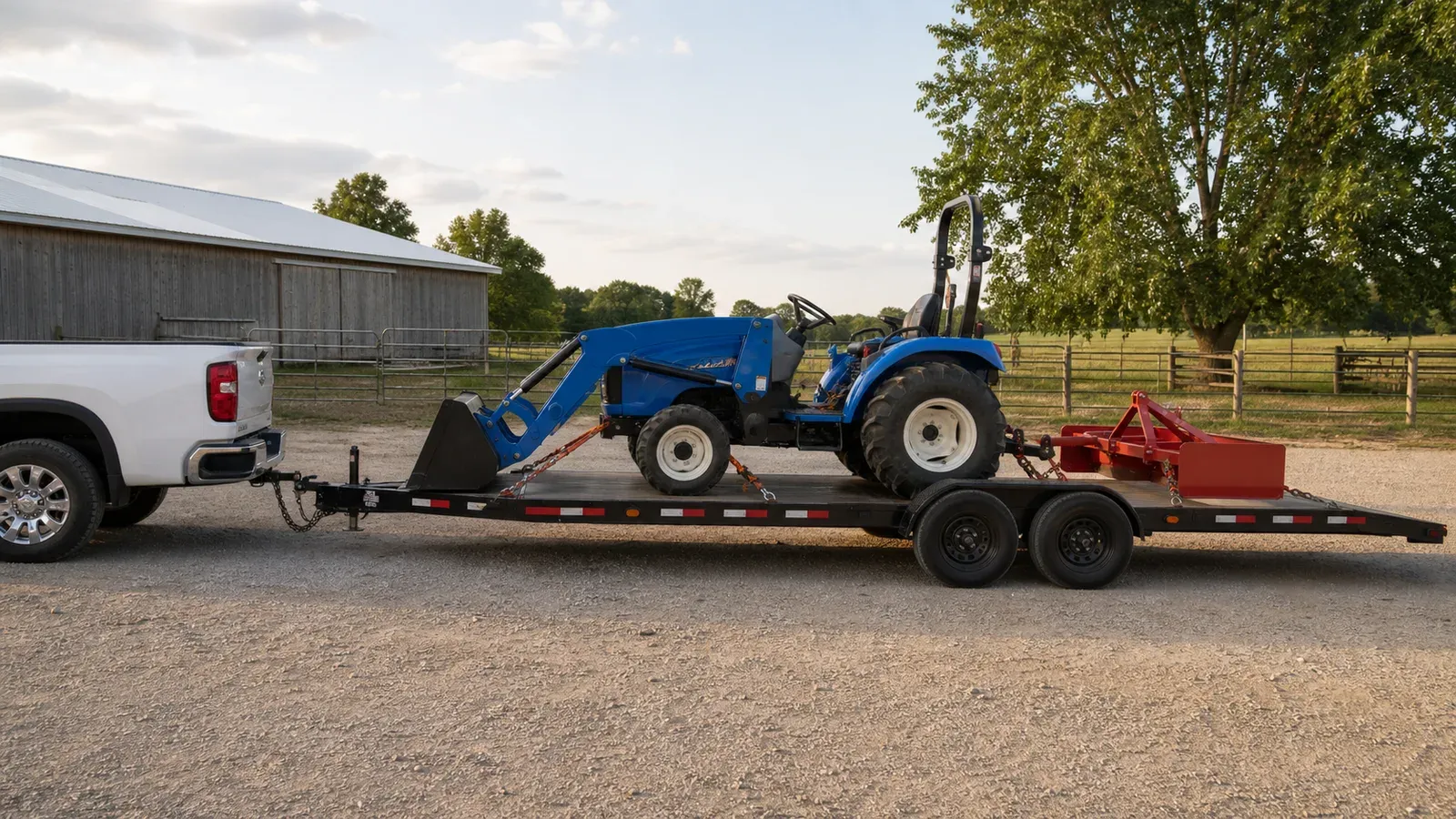
Tractor weights lie by omission more than any machine on this site. The bare-tractor brochure number leaves out the loader that's always mounted, 800 to 1,500 pounds, the filled tires common on working machines, hundreds more, and the rear implement that rides along, since a rotary cutter alone runs 500 to 1,500 pounds. Add the ballast box or weights and the combination that boards the trailer routinely runs 40 to 60 percent over the number in the buyer's head.
| Tractor Class | Bare Weight | Real, Loader + Implement | Trailer Class |
|---|---|---|---|
| Subcompact | 1,400 to 1,800 lb | 2,400 to 3,300 lb | 7K utility or 10K equipment |
| Compact, 25 to 40 hp | 2,500 to 4,000 lb | 4,000 to 6,200 lb | 10K equipment |
| Compact, 40 to 60 hp | 4,000 to 5,500 lb | 6,000 to 8,500 lb | 14K equipment |
| Utility, 60 to 100 hp | 6,500 to 10,000 lb | 9,500 to 13,500 lb | 14K edge to gooseneck |
Geometry matters as much as weight. Tractors run long, and a compact with loader and cutter stretches 18 to 22 feet, which sizes the deck before payload does. Front axles and low-hanging loaders catch ramp breakover points, R4 and turf tires grip differently than ag lugs on wet ramps, and the whole machine carries its weight high enough that deck height matters at the heavy end.
Best trailers by tractor class, ranked
The compact-tractor standard is the equipment trailer, an 18-foot 10K for the 25-to-40-horse machines and a 20-foot 14K once loaders and implements push past 6,000 real pounds. The bumper-pull configuration covers the class behind a three-quarter-ton, and dovetail options earn their deck space here more than anywhere, because a long wheelbase and low loader arms appreciate every degree of angle relief.
The light lane is honest about subcompacts. A 7K tandem utility with a reinforced gate carries a 2,500-pound subcompact-and-mower package legally and cheaply, and plenty of acreage owners never need more. The heavy lane runs gooseneck from the utility-tractor tier up, 16K-plus classes behind one-tons, which is where the farm and ranch world already lives for a dozen other reasons.
The judgment call is the 40-to-60-horse compact with everything mounted, the class that straddles 14K's edge just as the 5-ton excavator does. Scale the real combination, and when it crowds 9,500 pounds, buy the gooseneck once instead of explaining the bumper-pull twice.
Angles, splits, and the four-corner chain
Loading is about managing the machine's length and the loader's droop. Climb in low range with the loader bucket a few inches off the ramps as ballast and bumper, watching the front axle at the breakover and the drawbar at the crest, the two spots long machines touch. Dovetails and longer ramps buy the angle relief, and the running start belongs on YouTube, not your ramps. Park at the deck mark for tongue weight, loader down on the deck, implement lowered, brake set, key out.
The implement question splits by weight and length. Light implements ride mounted with their own securement, the cutter chained at its corners. Heavy or long ones come off and chain separately on the remaining deck, which gives you better tongue-weight control and one less lever arm working the three-point at highway frequency. Either way, payload counts all of it, tractor, loader, implement, and ballast, against the trailer's honest number.
Chain all four corners per the machine's manual, rated, with binders, and secure the loader and implement as their own cargo. R1 ag tires on wet wood ramps deserve respect, and wood decks grip better than plate here, which the deck debate covers. The road rules come along too, brakes tuned to the load and state regulations on securement and width, since wide loaders and duals can cross the 8.5-foot line. Re-check every binder at ten miles.
Tractor hauling FAQ
What size trailer for a compact tractor with a loader?
An 18-foot 10K equipment trailer for 25-to-40-horse machines, stepping to a 20-foot 14K once the loader-and-implement combination passes 6,000 real pounds. Deck length matters as much as payload.
Can I haul a subcompact tractor on a utility trailer?
Yes. A 7K tandem with a reinforced gate carries subcompact packages legally, the acreage owner's honest answer. Weigh the combination with the mower deck mounted.
Should the implement stay on for transport?
Light implements ride mounted with their own chains. Heavy or long ones come off and secure separately for better balance and less three-point wear. All of it counts against payload.
What truck do I need for tractor hauling?
The 10K classes suit strong half-tons run honestly, the 14K classes want a three-quarter-ton, and utility-tractor goosenecks are one-ton work.
How do I keep the loader from hitting the ramps?
Keep the bucket low as ballast but inches clear, use a dovetail or longer ramps for the angle, and stay in low range. The front axle at the breakover is the spot to watch.
Do filled tires change the math?
Yes, by hundreds of pounds. Loaded rears are common on working compacts and invisible on brochures. The scale ticket is the only honest weight.