Heavy-Duty Equipment Trailers Explained.

Heavy-duty equipment trailers cover the 16,000-pound-and-up tier. They run I-beam frames, tandem 10K or triple axles, and gooseneck connections almost universally, and they carry real excavators, dozers, and multi-machine loads. This is commercial territory, where you deal with one-ton duallys, CDL math, and running gear treated as infrastructure. Buy the class above where your fleet is headed, because at this money, buying twice is the expensive way.
What heavy-duty means in equipment trailers
Heavy-duty is the equipment world's top shelf, the tier where the 14K standard stops being enough and the engineering changes in kind, not just degree. GVWRs run 16,000 through 30,000-plus. Frames step from channel to I-beam mains, axles pair at 8K, 10K, and 12K or triple up, and the gooseneck connection becomes effectively universal because bumper physics gave out two tiers below.
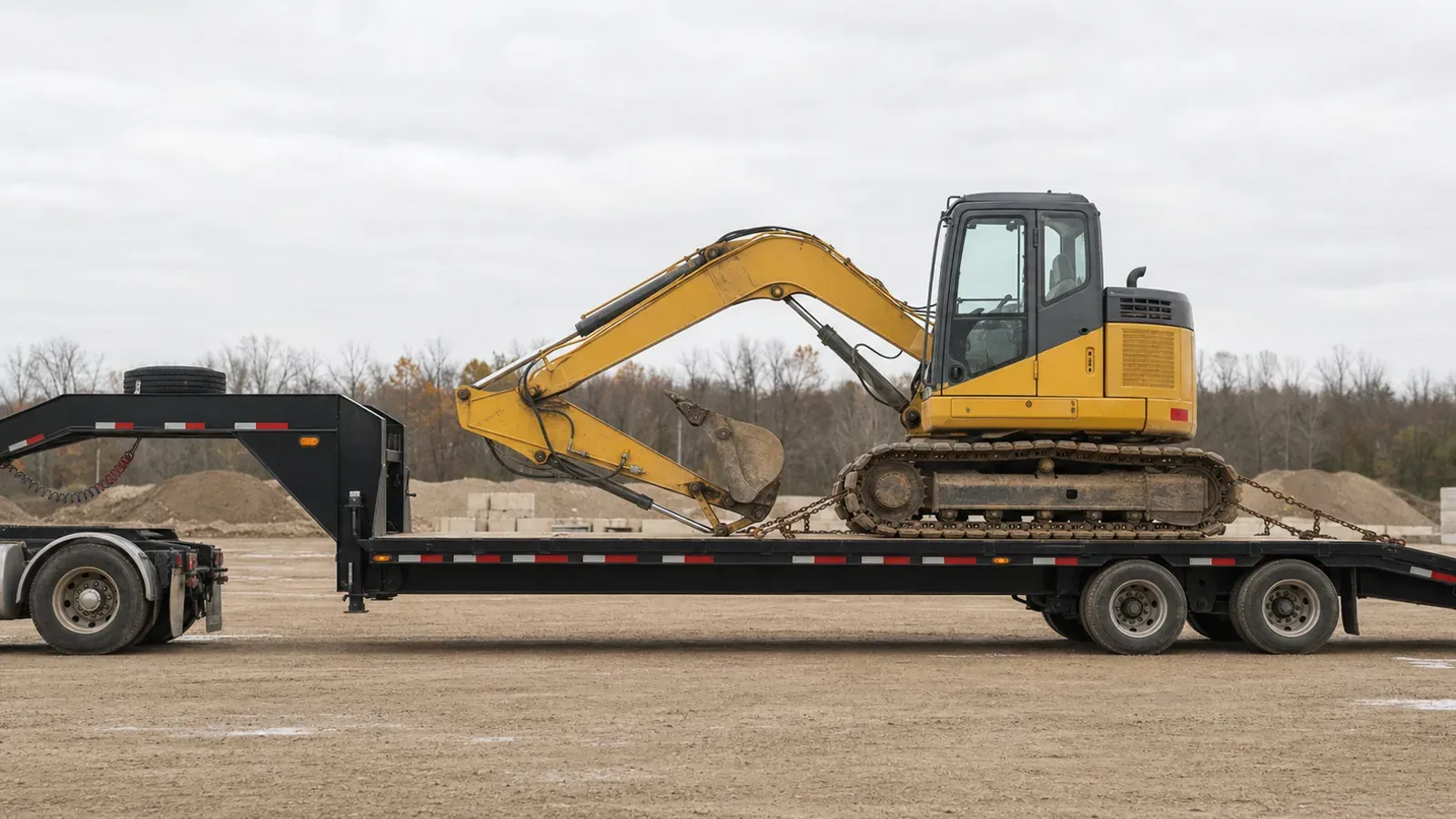
The loads define the tier. You're hauling excavators past the mini class, dozers and their blades, wheel loaders, large tractors with implements, and the multi-machine days where a skid steer rides along with the excavator it feeds. These are 12,000 to 22,000-pound cargos with attachments that weigh what whole compact machines do, and every spec below exists because of them.
The overlap matters at this tier. The heavy-duty equipment trailer shares its top classes with the equipment coverage in the gooseneck guide, its width options with the deckover world, and its severe-service end with the pintle tags fleets run. What this page owns is the equipment-specific setup, the deck, ramps, and securement built for machines at commercial weight.
Who's here. Excavation and sitework contractors, land clearing and demolition crews, ag operations with real iron, equipment dealers and rental fleets, and the hotshot end of machine transport. These are commercial buyers by definition, and that shapes the licensing, the maintenance economics, and the way the tier gets bought, on spec sheets and dealer parts shelves rather than paint.
I-beams, triples, and severe-service systems
The frame graduates first. I-beam main rails, 10 to 14 inches deep, replace the channel steel of lighter tiers. Pierced-beam designs route the wiring and drop deck height, and crossmembers tighten to 12 and 16-inch centers under the load zones. The neck-to-frame transition on gooseneck builds is the highest-stress joint on the trailer. Gussets and weld quality there separate builders more than any brochure line, so look at it with your own eyes.
Axles and brakes run commercial arithmetic. Tandem 10Ks build the 20 to 22K classes, tandem 12Ks and triples build above them, and you get brakes on every axle without exception. Electric-over-hydraulic disc systems appear at the top, where drum fade turns into a grade-descent conversation. Expect load range G rubber, oil-bath hubs on some builds, and a spare mounted where a jack can actually reach it, because the tier's tire failures don't schedule appointments.
Loading systems scale to the iron. Stand-up and mega ramps handle tracked climbs, beavertails ease the angle, and the hydraulic dovetail at the premium end lays the tail flat for machines that can't climb anything. Securement runs DOT's heavy playbook. Figure a four-point minimum with rated chain and binders, working-load limits that sum against the machine, and dedicated attachment tie-downs, because an excavator's bucket riding loose is a wrecking ball with paperwork.
The systems around the steel finish the tier. Look for dual 12K drop-leg jacks, a toolbox in the neck for the chain inventory, breakaway systems you test like the legal equipment they are, and LED lighting in guarded channels. At this tier the maintenance calendar stops being advice. At 25,000 pounds the running gear is infrastructure, and you grease, inspect, and budget it like the fleet asset it is.
Heavy-duty equipment sizes and payload
| Class | Typical GVWR | Typical Payload | Common Fit |
|---|---|---|---|
| 22 to 26 ft, tandem 8K | 16,000 to 17,500 lb | 11,000 to 12,800 lb | Large skid steers, small excavators |
| 24 to 30 ft, tandem 10K | 20,000 to 22,000 lb | 13,800 to 16,200 lb | The tier's working standard |
| 28 to 34 ft, tandem 12K | 23,000 to 25,900 lb | 16,000 to 19,000 lb | Excavators, loaders, dual machines |
| 30 to 36 ft, triple or dovetail | 26,000 to 30,000+ lb | 17,500 to 22,500 lb | Dozers, max legal iron |
The payload subtraction hits hardest here. Empty weights run 6,200 to 8,500 pounds, and every scale-ticket difference between builds is four figures of daily capacity. Pin-weight math from the gooseneck page governs the truck, putting 15 to 25 percent of loaded weight into a one-ton's bed, with duallys standard past the middle of the table.
The license question is behind you at this tier, not ahead. Nearly every working combination stacks past 26,000 combined pounds, commercial use means a CDL, and the regulations add securement rules, marking, and inspection habits fleet buyers already run. If you're new to the tier, read those pages before the dealer visit, because the trailer is the easy part of the purchase.
Where heavy-duty wins and loses
The buying rule is the same one from the guide, and it matters more here. Size for the heaviest machine, the heaviest attachment, an honest margin, and the class above a growing fleet. At five-figure trailer prices, that discipline pays for itself.
Heavy-duty equipment FAQ
What GVWR counts as heavy-duty?
The 16,000-pound tier and up, where I-beam frames, 10K-plus axles, and gooseneck connections become standard. The 20 to 22K classes are the tier's working center.
What can a 22K trailer actually haul?
Around 14,000 to 16,000 usable pounds. That's the little brother of a 13-ton-class excavator with its attachments, or a dozer in the small frames, with an honest margin kept back.
What truck does the tier require?
A one-ton, dually past the middle classes, sized by payload against pin weight. The truck is half the combination, and it's priced like it.
Is a CDL required?
For commercial use at this tier, effectively yes. Combined ratings pass 26,000 pounds by design. Federal and state rules carry the details and the exceptions.
Triple axles or tandem 12K?
Triples spread the load and add redundancy, at the cost of more tires and scrub, while heavy tandems run simpler. Builders split by model, so compare total axle rating, brakes, and tire spec rather than the axle count.
Hydraulic dovetail or mega ramps at this tier?
Low-clearance iron loaded regularly buys the tail. Tracked machines that climb honestly keep the ramps and the money. Your machine list decides, same as always.