Tandem-Axle Flatbed Trailers Explained.

The tandem-axle flatbed is the category's working configuration. Two axles carry the 7,000-to-14,000-pound classes, with brakes standard, blowout redundancy, and the highway composure that long open loads demand. Single-axle flatbeds exist at the light fringe, but the real work lives here. Buy the axle tier that matches your honest load, and pay for brakes on both axles instead of the one-axle minimum.
Why the flatbed went tandem
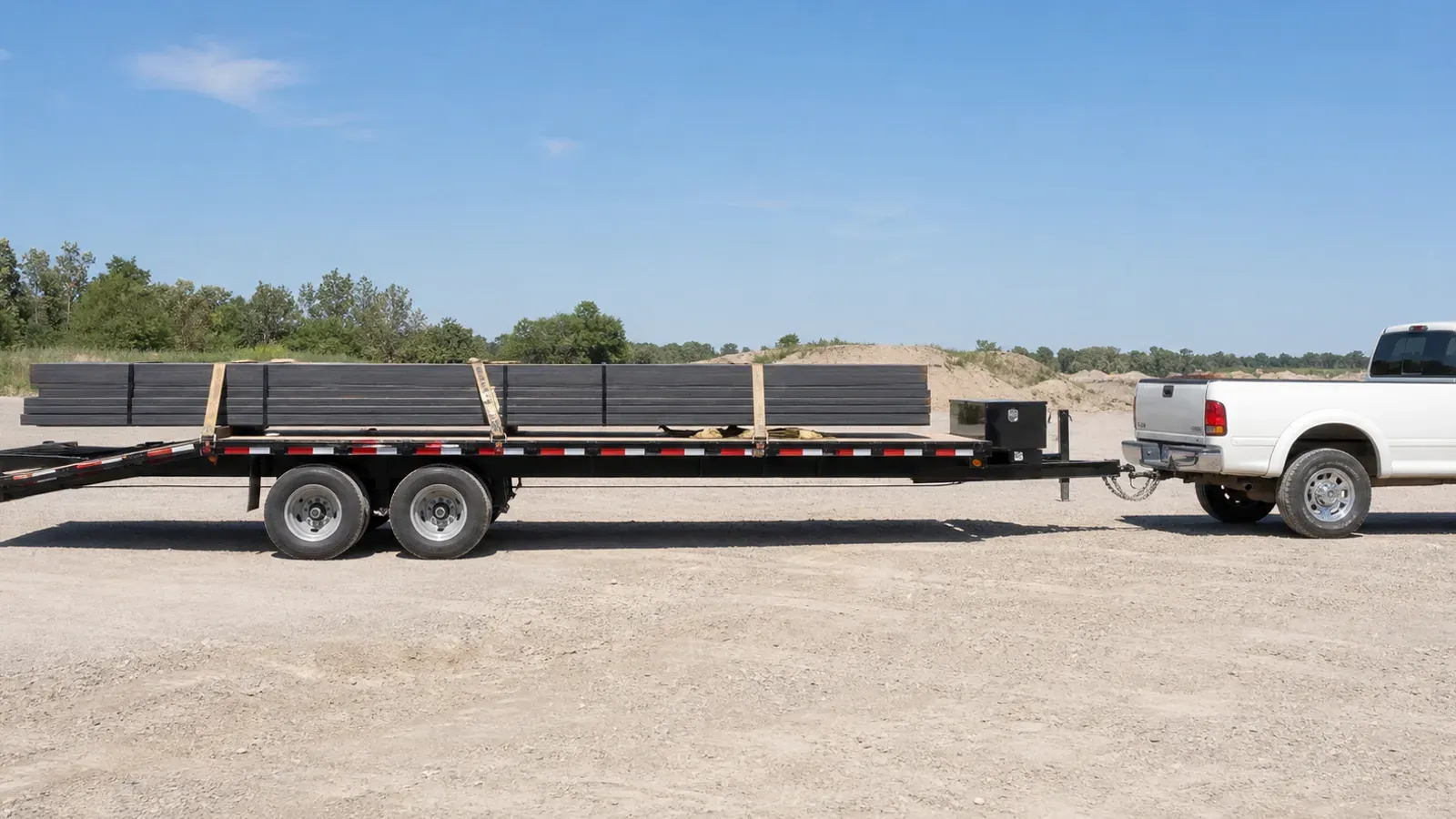
In practice the flatbed is a tandem-axle category, and the reasons stack up. The deck's job, hauling materials, pallets, and machines, runs heavy by nature, and it passes the single axle's 3,500-pound ceiling before the second pallet lands. The loads also run long, and long cargo at highway speed rewards the pitch-and-sway damping that two axles provide. The single-versus-tandem math that splits the utility market barely applies here, because the flatbed buyer's weights answered the question before anyone asked it.
The configuration covers the working middle of the category. Tandem 3,500-pound axles build the 7K classes, tandem 5,200s handle the 9,900-to-10,400 tier, and tandem 7,000s reach the 14K working ceiling. At each step the frame, tires, and brakes scale up alongside them, following the build standards in the main guide.
Who's here? Just about everyone above hobby weight. Trades hauling daily, acreage owners whose loads got serious, and the material-and-machine generalists the bumper-pull page describes. All of them are buying the axle count their cargo already decided on.
Equalizers, brakes, and long-load composure
The hardware follows the tandem standard. Leaf-spring pairs are linked by an equalizer that rocks the load between axles over bumps and keeps four tires planted. Torsion pairs show up at the premium tier, with the ride-and-height trade the axle page covers. Either way you take on the maintenance rhythm of four bearings, four tires, and the brake system the class carries standard.
The flatbed's own payoff is long-load composure. Cargo stretching 16-plus feet, lumber, pipe, rows of hay, amplifies every pitch input a single axle would pass straight through, and the tandem's damping is why a loaded flatbed tows like a trailer instead of a seesaw. The tongue-weight discipline the bumper-pull page preaches rides on this hardware. The equalized pair forgives the loading drift long material invites, but it forgives, it doesn't ignore.
Brakes are worth a spec-sheet fight. One braked axle meets most state minimums at 7K, but braking both axles shortens loaded stops meaningfully at every class, and the flatbed's dense cargo makes that difference physical rather than theoretical. The controller in the truck finishes the system, tuned to the day's gross weight, and the breakaway kit gets tested like the legal equipment it is.
One last ownership note is axle scrub, the tight-turn tire chirp and shoulder wear a tandem makes. It's normal, you manage it with rotation and wider arcs, and it's the price of everything the second axle bought you.
Tandem flatbed sizes and payload
| Class | Axles | Typical GVWR | Typical Payload |
|---|---|---|---|
| 14 to 16 ft | Tandem 3.5K | 7,000 lb | 4,900 to 5,400 lb |
| 16 to 20 ft | Tandem 5.2K | 9,900 to 10,400 lb | 7,200 to 8,000 lb |
| 18 to 22 ft | Tandem 7K | 14,000 lb | 10,000 to 10,800 lb |
Those three rows are the category's working market. The payload subtraction governs, the 9,900 badge does its regulatory work, and the truck math steps from half-ton to three-quarter-ton as the class climbs. Above the table, the gooseneck classes get their own page. Below it, the single-axle fringe serves loads this configuration's buyers already outgrew.
The tandem flatbed's ledger
The buying rule. Your cargo picked the tandem before you did, so the only decisions left are the axle tier for your honest load and the brake count the class deserves.
Tandem flatbed FAQ
Do flatbeds come in single axle?
At the light fringe, yes, but the category's working weights outgrow them right away. The tandem classes are the market's real floor.
One braked axle or two?
Both, at every class. The one-axle minimum is legal, but braking both axles gives you the stopping distance dense cargo actually wants.
What's the tire chirp in tight turns?
That's axle scrub, the tandem pair dragging sideways through sharp arcs. It's normal and harmless in moderation, and it's why you take wider turns and rotate your tires.
Torsion or leaf springs on a flatbed?
Leaf pairs share load through the equalizer and can be repaired anywhere. Torsion rides smoother at a premium, with the pairing caveats the axle page covers. The working market runs leaf.
What truck for the 14K tandem?
A three-quarter-ton, based on the payload-against-tongue math with an honest load. The 7K tier stays inside half-ton numbers.
When does the tandem hand off to the gooseneck?
Around 14-to-16K loaded, where hitch physics give out and the gooseneck flatbed takes over. That's the configuration's honest ceiling.