Dovetail Flatbed Trailers Explained.

A dovetail slopes the flatbed's last 2 to 4 feet downward, cutting the loading angle for anything that drives aboard, machines, vehicles, and mowers. You pay for it in that section's flat storage and some rear ground clearance. Buy it if things drive onto your deck monthly. Skip it for pure materials hauling, where the flat deck stacks better and never drags a driveway.
The slope that splits the flatbed market
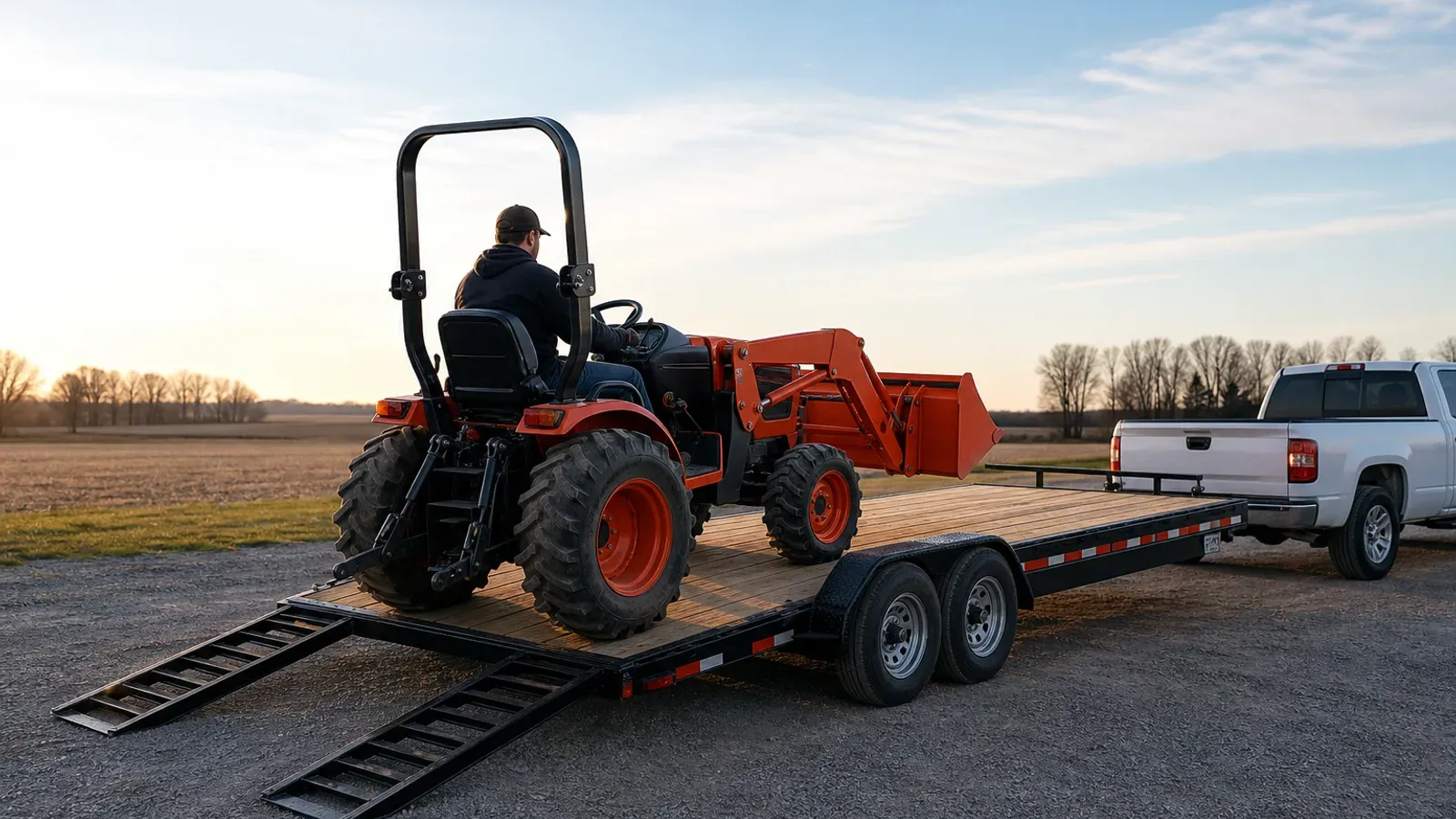
The dovetail builds a loading-angle solution into the deck itself. The rear 24 to 48 inches slopes down 4 to 6 inches, meets the ramps at a friendlier height, and splits the climb into two gentler stages. It's the single option that most changes what a flatbed is. Without one you have a materials deck, with one you have a drive-on deck, and it's the order sheet's most job-specific checkbox.
The angle math is the whole pitch. A 24-inch deck reached by 5-foot ramps runs a steep single stage. The same deck with a dovetail drops the ramp connection 5 inches and adds its own gentle slope, and the combined approach clears front overhangs and low frames the straight-deck setup scrapes. Vehicles feel it most, and the car hauler is essentially a flatbed that made the dovetail standard. Machines with attachments feel it at the crest, where the breakover geometry lives.
The cost is flatness. The tail section slopes, so pallets won't stack on it and lumber bridges it awkwardly, and the deck's usable flat length is the badge length minus the tail, so a 20-foot dovetail flatbed offers 16 to 18 flat feet. The tail also hangs low, and the rear overhang meets steep driveways and grade breaks with the scrape every dovetail owner's rear crossmember knows well.
Who checks the box. Anyone loading machines, vehicles, or mowers monthly, following the frequency rule in the car hauler comparison. Who skips it is the pure materials hauler, whose forklift never cared about angles and whose pallet count wants every flat foot.
Two stages, the crest, and the drag line
The dovetail works by splitting one steep angle into two shallow ones. Ground-to-ramp and ramp-to-tail each run gentler than the single-stage alternative, with the tail-to-deck transition as the third and mildest break. Low cargo takes the stages in sequence, and the geometry's win compounds with ramp length. Long ramps plus a dovetail make the open-deck market's gentlest hinged approach, and only the tilt deck runs gentler.
The crest still matters. The tail-to-deck break catches the long overhangs the approach cleared, and knuckled transitions and slower commitment manage it. Machine buyers should walk their specific geometry, wheelbase, overhang, and breakover, through the trailer's numbers before the deposit, the same equipment world discipline applied at flatbed scale.
The drag line is the ownership tax. The tail's rear edge runs closest to the ground of anything on the trailer, and steep driveway entries, loading dock approaches, and rutted sites all find it. The fix is route awareness plus the skid shoes better builds bolt under the tail's corners. Check for them, because they're the difference between a scuff and a bent crossmember.
Ramp pairing finishes the spec. Slide-ins store under the flat section, stand-ups hinge at the tail's end, and the ratings-and-width math from the ramp page applies verbatim, rated for the heaviest climber and sized for the lowest.
Dovetail configurations and flat-deck math
| Configuration | Badge Length | Flat Deck | Tail |
|---|---|---|---|
| 16 ft + 2 ft dove, 7K | 18 ft | 16 ft | 2 ft |
| 18 ft + 2 ft dove, 10K | 20 ft | 18 ft | 2 ft |
| 18 ft + 4 ft dove, 14K | 22 ft | 18 ft | 4 ft |
| 20 ft + 4 ft dove, 14K | 24 ft | 20 ft | 4 ft |
Builders badge dovetail lengths both ways, flat-plus-tail and overall, and the buying number is the flat deck, where the machine parks and the pallets stack. Ask which one the sticker means, then measure, and apply the guide's sizing rules to the section that's actually flat.
The classes and truck math run the tandem page's table unchanged, with the tail adding modest steel against payload and nothing to the axle conversation. Longer tails buy gentler angles at more flat-deck sacrifice. The 2-footer serves most vehicles, and the 4-footer serves machines and the seriously low.
The dovetail's ledger
The buying rule is the frequency test one more time. If things drive aboard monthly, take the tail. For pure materials, keep the flat feet, because the forklift never asked for the slope.
Dovetail flatbed FAQ
What does a dovetail actually do?
It slopes the deck's last 2 to 4 feet down, splitting the loading climb into two gentler stages so vehicles and machines board without scraping. It's the category's angle solution.
How much flat deck do I lose?
You lose the tail's length, 2 to 4 feet, which slopes and doesn't stack. A 22-foot dovetail badge is 18 flat feet, and the flat number is the one you buy on.
Does the tail drag?
On steep driveways and grade breaks, yes, because it's the trailer's lowest rear point. Skid shoes under the corners and route awareness manage it.
Dovetail or tilt deck?
The dovetail plus ramps serves standard-clearance drive-ons cheaply. The tilt runs gentler still for the machines nothing hinged can handle, though you pay its premium.
Two-foot or four-foot tail?
Two feet serves vehicles and mowers. Four feet serves machines and the seriously low, at double the flat-deck sacrifice. Your lowest regular climber decides.
Can I add a dovetail later?
It's structurally impractical, because the tail is frame, not an accessory. Buy the deck shape your cargo list already chose.