Car Hauler Ramps Explained.

Ramps decide whether the car gets on the trailer with its bumper still attached. Slide-ins store under the deck and suit standard clearance, stand-ups deploy faster and carry a higher rating, and length is the spec that saves low cars, since a longer ramp means a gentler angle. Rate them for your heaviest vehicle, size them for your lowest, and work the deploy yourself before you buy, because you'll do it a thousand times.
The ramp decision on a car hauler
Ramps are the car hauler's working end, the 5 to 8 feet of steel or aluminum that turn deck height into a climb the car can survive. Almost every loading problem in the category, a scraped bumper, a spun tire, the pucker at the crest, is really a ramp problem in disguise, so the ramp line on the option sheet deserves more attention than the paint does.
The styles split by storage and duty. Slide-in ramps tuck into channels under the rear deck, out of sight and out of the wind, and you pull and set them by hand each load. They're the enthusiast default. Stand-up ramps hinge at the rear of the deck and swing down, faster to deploy, rated heavier, and always aboard, which makes them the pick for transport and heavy use. Mega and full-width variants borrow from the equipment world for an odd track width or an extra-wide load. The dovetail, where the rear of the deck slopes down, works with all of them, and its angle plus the ramp angle is the geometry the car actually meets.
Two ratings matter. The first is per-ramp capacity under a moving load, which has to clear half your heaviest vehicle's weight with margin, because a moving car loads a ramp harder than a parked one does. The second is the pair's width against the widest tire and stance in your fleet, with room to spare for aim, because the driver loading at dusk after a long tow is not the one who measured at the dealer.
Who this page is for. Low-car owners first, since the whole approach-angle section is theirs. Then transporters who run the ramp cycle daily, and anyone whose last trailer taught them what a flexy ramp feels like mid-climb, a lesson nobody signs up for twice.
Angles, length, and the low-car problem
Approach angle is the whole science. The car's front overhang and ground clearance set what it can crest, the ramp's angle is deck height divided by ramp length, and the two either clear or they don't. A 20-inch deck on 5-foot ramps runs roughly 18 degrees, fine for a truck and fatal for anything lowered. The same deck on 8-foot ramps runs 12 degrees. Every extra foot of ramp buys clearance, and it's the cheapest fix in the category.
The low-car toolkit stacks up. Longer ramps first, always. The dovetail second, since its built-in slope splits the climb into two gentler stages. Race-ramp extensions third, lightweight blocks that stretch the transition further. And the tilt-deck alternative as the last resort, one continuous plane at 7 to 11 degrees for the cars nothing hinged can handle. The guide's deck-height numbers matter here too, because a lower deck needs less ramp to hit the same angle.
Traction and the crest finish the geometry. The ramp surface, whether punched steel, expanded mesh, or wood-filled channel, either grips in the wet or it doesn't, and the crest where ramp meets deck is where a front overhang drags even after the angle math cleared. A rounded or knuckled transition is the detail good builders get right. Technique carries the rest, straight, slow, and committed, with a spotter watching the gap the driver can't see.
Storage is the spec you live with daily. Slide-ins want channels that don't bind and ramps one person can actually lift, so weight matters, and aluminum costs more while saving your shoulders. Stand-ups want spring assists that work and latches you trust at highway speed. Either way, deploy them yourself at the dealer, twice, because the ritual is the review.
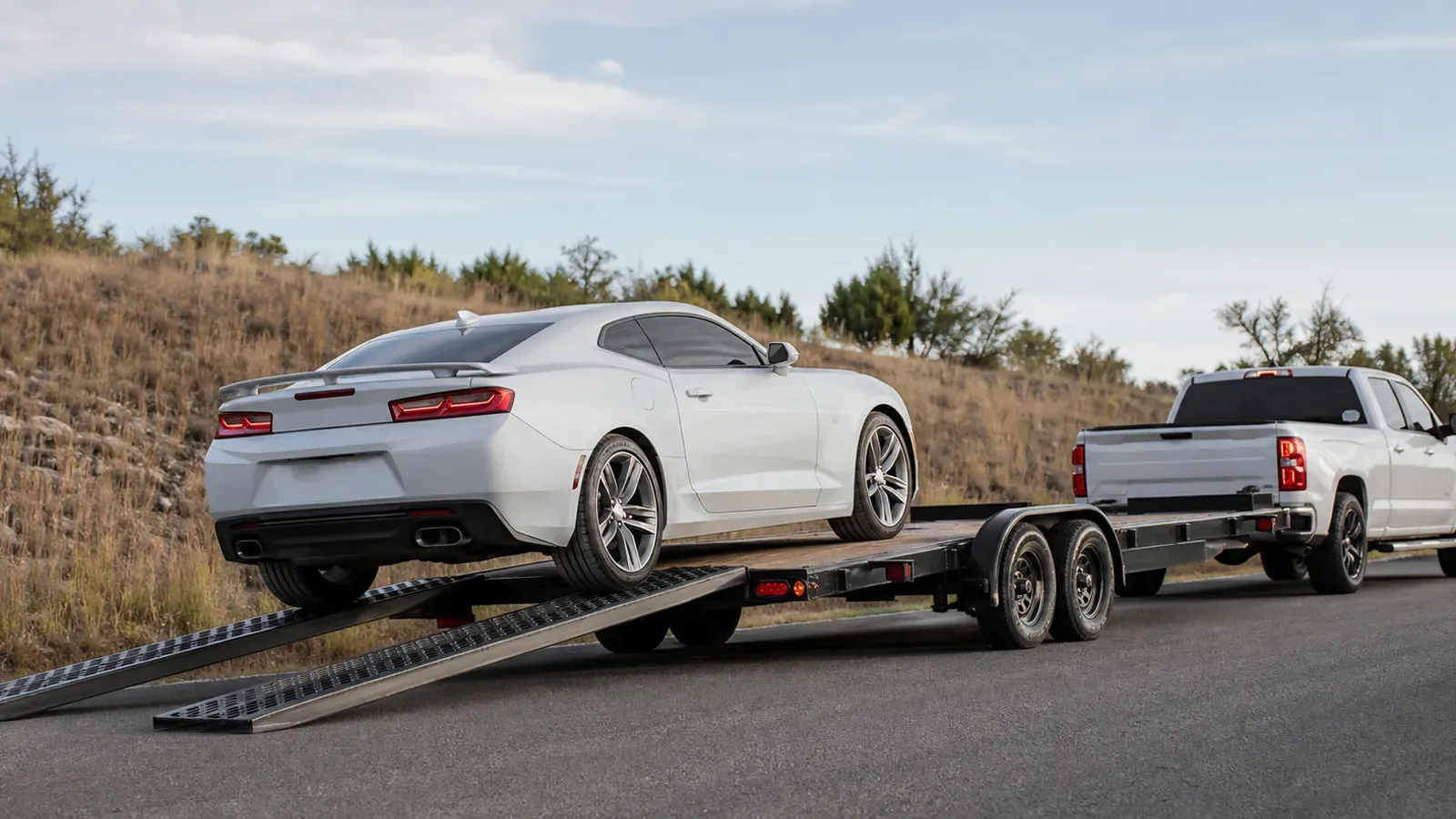
Ramp configurations by duty
| Configuration | Typical Length | Typical Rating | Best For |
|---|---|---|---|
| Slide-in steel pair | 5 ft | 2,500 to 3,500 lb each | Standard cars, occasional use |
| Slide-in aluminum pair | 5 to 6 ft | 2,500 to 4,000 lb each | Same duty, lighter lifting |
| Stand-up pair | 5 to 6 ft | 3,500 to 5,000 lb each | Daily cycles, heavy vehicles |
| Extended and race setups | 7 to 10 ft effective | Varies | Low cars, the angle buyers |
The rating math is per ramp against half your heaviest vehicle. A 6,000-pound truck wants 3,000-plus pounds per ramp before margin, and margin matters because the rating assumes centered, smooth loading and drivers rarely deliver either. Aluminum's weight savings, 30 to 50 percent per ramp, is a shoulder-and-back line item, and daily users value it more than occasional ones do.
Width runs against your widest stance plus room to aim, with 14-to-16-inch ramps serving most cars and wider ones serving trucks and nerves. Length runs against your lowest car's approach math from the geometry above, the spec low-car owners should settle before anything else on the sheet.
Ramp styles against each other
The buying rule. Rate for your heaviest vehicle, size the length for your lowest, pick the storage style by how often you'll cycle it, and deploy the actual ramps at the dealer before you leave a deposit. The thousand repetitions ahead are worth a ten-minute test.
Car hauler ramp FAQ
What ramps do I need for a lowered car?
Length first, and it's the cheapest, since a 7-to-8-foot effective run cuts the angle a low car needs. Race-ramp extensions stretch it further, and the tilt deck waits past that. Run the overhang-and-clearance math before you buy anything.
How are ramps rated?
Per ramp, under load, and the honest math is half your heaviest vehicle's weight plus margin on each side. A moving load stresses a ramp harder than the parked assumption behind the rating.
Slide-in or stand-up ramps?
Slide-ins for clean storage and occasional use, stand-ups for daily speed and heavier ratings. Frequency decides, and the deploy test on the dealer lot confirms it.
Steel or aluminum ramps?
Aluminum halves the lifting weight for a premium, which is money a daily slide-in user is glad to spend. Steel serves occasional use and a tighter budget just as well.
Why does my car scrape at the top of the ramps?
The crest where ramp meets deck catches overhangs even when the approach angle clears. A knuckled transition, a dovetail, and slower commitment all help.
Can I use equipment trailer ramps for a car?
If the width, rating, and surface suit the car, then mechanically yes. Car-specific ramps run narrower and smoother for street tires, and the right fit loads nicer.