Tilt Deck vs. Ramps. Which Loading System to Buy.

Ramps are cheap, simple, and fine for machines with clearance. A tilt deck loads at a gentler single-plane angle and works solo at latch-pull speed, and it charges for that in purchase premium and pivot maintenance. Low-clearance machines and daily-cycle operators should buy the tilt. Standard machines loaded once a week should keep the ramps and the money. In the end, your lowest machine makes this call.
Tilt vs. ramps at a glance
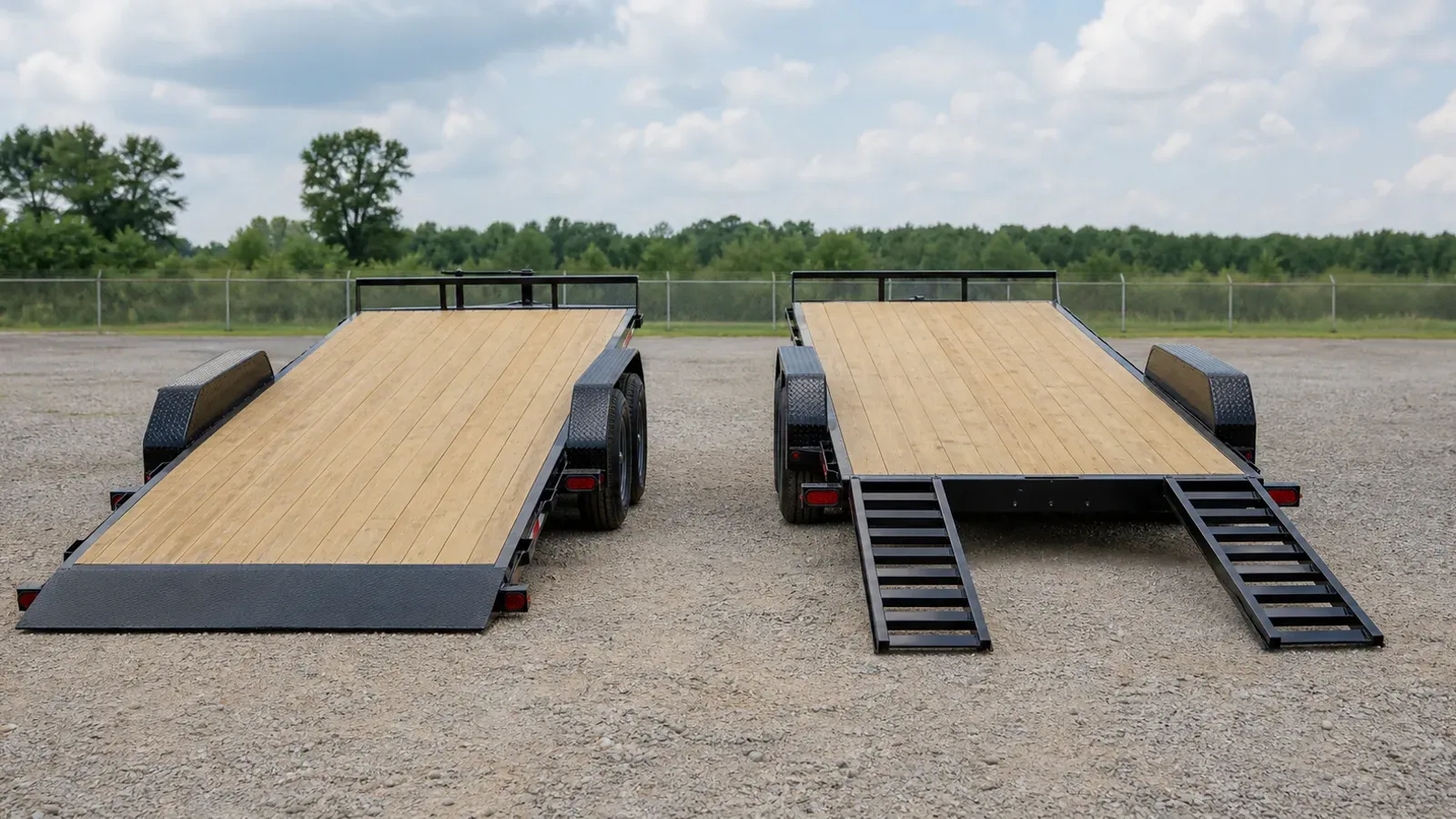
| Tilt Deck | Stationary Ramps | |
|---|---|---|
| Loading angle | 7 to 11 degrees, one plane | Steeper, two breakover points |
| Low-clearance machines | The whole point | The whole problem |
| Solo operation | Latch pull or button | Deploy, aim, stow, repeat |
| Price | Real premium | The baseline |
| Moving parts | Pivot, cylinder, latch | Hinges and springs |
| Deck while towing | One more thing latched | Fixed, nothing moves |
| Payload | Pivot steel costs some | Lean deck keeps it |
The question shows up across the equipment, car hauler, and compact-machine worlds, and the tilt guide covers the tilting side's full engineering. This page settles the choice, and the deciding vote almost always belongs to the lowest machine in your fleet.
One gentle plane, no ramp ballet
The tilt's first argument is geometry. Ramps create two breakover points, ground-to-ramp and ramp-to-deck, and low machines find both. Scissor lifts high-center, lowered cars scrape, and attachments plow the crest. A tilted deck is one continuous plane at 7 to 11 degrees, gentler than nearly any ramp setup, and a machine that can't climb ramps at all will walk up a tilt like a driveway. For the low-belly fleet, that isn't a preference. It's the difference between loading and not.
The second argument is the solo operator's clock. A gravity tilt loads at latch-pull speed and a hydraulic tilt at button speed, with no ramps to deploy, aim, or stow and no second person spotting the tire-to-ramp lineup. Those minutes compound across a daily-cycle operation into real payroll. Landscapers, rental yards, and one-person operations do the arithmetic and buy the pivot.
The downsides are the premium and the pivot itself. Purchase price runs meaningfully over the ramp equivalent, the mechanism's steel taxes payload modestly, and the moving parts, pivot pins, cushion or hydraulic cylinder, and latch, want greasing and inspection on a schedule the ramp trailer never had. Neglect a tilt and it develops the exact behaviors its safety depends on avoiding. The tilt guide covers the maintenance in detail.
Simple, cheap, and nothing to grease
The ramps' argument is everything that isn't there. No pivot, no cylinder, no latch to check before every tow, just hinged steel that folds down, holds a climb, and stows, with spring assists as the only luxury. Purchase price stays at baseline, payload keeps the pivot's steel, and the maintenance list is grease on the hinges once a year and the occasional spring. For machines that climb honestly, the ramp trailer does the whole job at the lowest cost of ownership in the category.
Capability holds through most of the market. Standard skid steers, tractors with clearance, wheeled machines generally, and tracked compacts on properly rated ramps all load fine at ramp angles, and stand-up ramp systems on equipment trailers deploy in seconds once the habit sets. The fixed deck also tows with nothing to latch wrong, a small quiet virtue the tilt owner checks for every night.
The downsides are the angle and the ballet. Low machines don't negotiate, they scrape or stop, and the workarounds, ramp extensions, cribbing, running starts, are all worse than either buying decision. And the deploy-aim-stow cycle, trivial once, adds up at daily frequency. Those are the exact minutes the tilt sells back.
Which system your machines buy
Walk the fleet under a tape measure. Any machine with under 6 inches of clearance, scissor lifts, lowered vehicles, some rollers and shop equipment, votes tilt, and one such machine loaded monthly outvotes ten climbers loaded weekly, because the alternative is that machine not loading at all. If everything climbs, keep the ramps.
Then count the daily cycles. Loading twice a day, every day, the tilt's solo speed turns the premium into payroll math, and the hydraulic version's total control earns its further premium at commercial frequency. Loading weekly, the ramps' simplicity and price win, and the maintenance you don't have to do is worth something too.
Split verdicts have a standard answer. The fleet's low machine gets the tilt, everything else rides ramps behind the other truck, and single-trailer operations buy for the low machine because access beats optimization. Whichever wins, your deck surface choice rides along, since grip on an incline is a safety spec on both.
Tilt vs. ramps FAQ
How much gentler is a tilt deck's angle?
Commonly 7 to 11 degrees on one continuous plane, against steeper ramp angles with two breakover points. Low-profile tilts run gentler still.
How much more does a tilt trailer cost?
A real premium over the ramp equivalent, with gravity tilts costing less and hydraulic full tilts more. Daily-cycle operations amortize it, weekend use rarely does.
What maintenance does a tilt add?
Greased pivot pins on schedule, cushion or hydraulic cylinder inspection, and a latch checked before every tow. It's a small list, but not optional, and the tilt guide covers it.
Can ramps handle a tracked machine?
Yes, on rated ramps sized for tracks, and mega and full-width designs exist for exactly this. The per-ramp rating under a moving machine is the spec that matters.
Is a tilt deck safe to load solo?
That's its selling point. Gravity models want balance-point awareness, and hydraulics remove even that. Secure the load after leveling and latch before towing, same as any deck.
Which holds resale better?
Both resell well to their markets. Tilts carry a premium to the buyers who need them, and ramp trailers sell to everyone. Condition and pivot health decide the tilt's number.