Car Tie-Downs and Winches Explained.

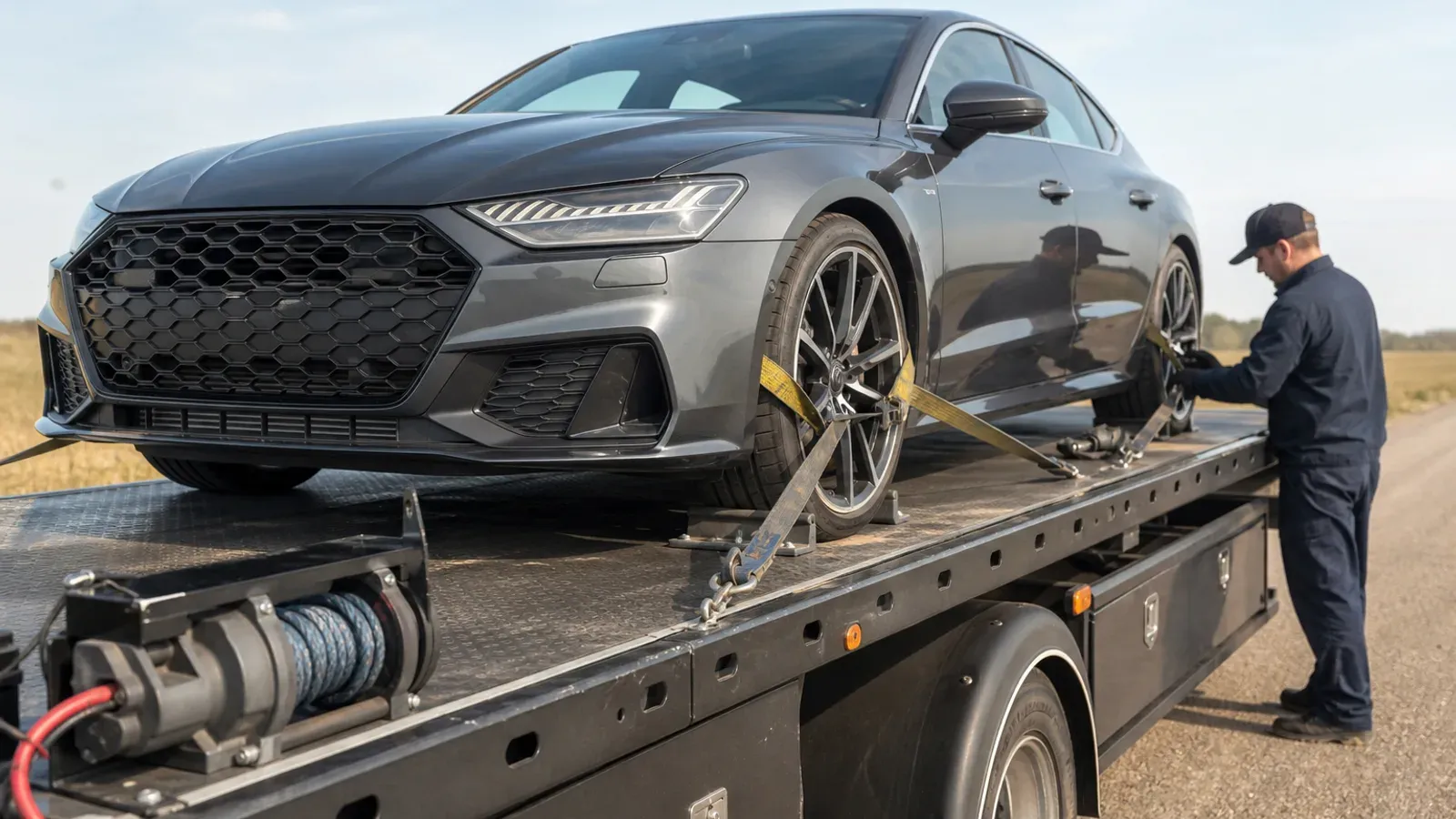
Cars secure at four points, and the modern standard is wheel straps, ratchet baskets over the tires that work with the suspension instead of fighting it. Frame chains still serve heavy and vintage iron. A winch earns its mount the first time you face a dead car, so size it at 1.5 times the heaviest vehicle and order the factory wiring even if the winch itself waits. The hardware layout is the spec that matters, so buy anchors where cars actually need them.
Holding a car still at 70 mph
Once the wheels stop, securement is the car hauler's entire job, legally and morally. Cars are a particular kind of cargo. They ride on suspension that moves, they're valuable enough that a scratch becomes a claim, and their shape means anchor placement either matches their footprint or fights it. A purpose-built hauler's tie-down layout is half of why it beats the improvised flatbed, and this page is that half.
The two systems split on approach. Wheel straps capture the tires with ratchet-tensioned baskets or three-point lassos over the rubber, holding the car by its unsprung corners so the suspension floats free beneath the body. That's the transport industry's standard and the modern default. Frame chains bind the chassis itself to the deck, compressing the suspension into preload. That's the traditional method, and it still owns heavy trucks, vintage iron with real frames, and anything whose wheels can't take a basket.
The winch is the system's fourth piece. A deck-mounted electric winch pulls dead, wrecked, and project cars aboard when no amount of pushing will do it. The oldest advice in the category still holds. Take the factory winch mount and wiring at purchase whether the winch comes now or later, because the retrofit costs triple and a dead car never picks a convenient time.
Who reads this page hardest. Transporters whose cargo is a customer's property, racers strapping six figures to a deck, and the first-time hauler about to learn that suspension movement and strap tension are related, ideally before the interstate teaches the lesson.
Wheel straps, chains, and winch math
Wheel straps work because tires don't have suspension. The basket wraps the tire at three points, the ratchet tensions it to the deck anchors, and the car's sprung body floats above, soaking up bumps as designed while the unsprung wheels stay pinned. No frame contact, no paint risk, no argument about preload, and the strapped corner stays tensioned because nothing above it moves the geometry. Four corners, four baskets, with anchors placed 12 to 18 inches fore and aft of each tire's contact patch. That's the layout a purpose-built deck provides, and it's why good haulers carry E-track strips and swivel D-rings right where cars actually park.
Frame chains work by preload. Hooks or axle straps go to rated chassis points, chains to deck anchors, and binders compress the suspension about a third of its travel so the car can't pogo slack into the system at speed. It's the stronger raw connection, the standard for 7,000-pound trucks and pre-war frames, and the method with the most ways to go wrong. Wrong hook points bend brake lines, over-compression rides the bump stops for 500 miles, and soft loops get forgotten on a painted chassis. Technique carries it, and the towing fundamentals apply word for word.
The winch math is simple and worth doing once. Rated line pull at 1.5 times the heaviest dead vehicle covers rolling resistance up the ramps' grade with margin, and 8,000-to-12,000-pound winches cover the category. Synthetic rope trades steel cable's memory and burrs for a higher price, and a snatch block halves the load on the truly stuck day. Wire it with a direct battery feed and a breaker, because the trailer's charge line won't run a working winch, and mount it to the frame, not the deck boards.
One habit finishes every load. Straps and chains settle as the suspension finds its ride and the deck takes its set, so pull over at ten miles and re-tension. It's what separates seasoned operators from incident reports, and it goes for wheel straps and chains alike.
Hardware by duty
| System | Working Load Range | Best For | The Spec to Check |
|---|---|---|---|
| Wheel strap set, 4 | 3,300 to 4,000 lb WLL each | Modern vehicles, transport | Anchor placement vs. wheelbase range |
| Frame chain set, 4 | 4,700 to 6,600 lb WLL each | Trucks, vintage, heavy | Rated chassis points on the vehicle |
| E-track and swivel anchors | 3,000 to 6,000 lb WLL each | Layout flexibility | Deck-mounted rating, not strip rating |
| Winch, electric | 8,000 to 12,000 lb line pull | Dead and project cars | 1.5x heaviest vehicle, battery wiring |
The working-load math follows the federal rule, summing the system's WLL against half the cargo's weight as the floor, and four points at these ratings clear any car with room to spare. Anchors are the quiet spec. What matters is the rating at the deck connection, not the catalog strip, and placement for the wheelbase range the trailer actually hauls. Ask about the layout at purchase, because welding anchors on later costs far more than the option did.
The systems against each other
The buying rule. Wheel straps for the modern fleet, chains where weight and vintage demand them, the winch mount either way, and the anchor layout checked against the actual cars before you put down a deposit. The hardware costs hundreds. The claim it prevents costs a trailer.
Tie-down and winch FAQ
Wheel straps or chains for my car?
Modern vehicles run wheel straps, which are suspension-friendly and paint-safe. Heavy trucks, vintage frames, and basket-defeating wheels run chains, with technique. Many haulers carry both.
How tight should wheel straps be?
Ratchet them firm enough that the basket can't walk, but not so hard you haul the suspension down. The wheel is captured, the body floats. Re-tension at ten miles, always.
How much winch do I need?
Rated line pull at 1.5 times the heaviest dead vehicle, which puts most of the category between 8,000 and 12,000 pounds. Wire it to the battery with a breaker and mount it to the frame.
How many tie-down points does a car need?
Four, one per corner, with the summed working-load limits clearing the federal math. Two-point securement is a short trip away from a citation.
Do wheel straps damage tires?
Properly tensioned, no. The tire carries clamping loads far past strap tension every day it rolls. Shredded or flat tires defeat the method, and that's a chain day.
Synthetic rope or steel cable on the winch?
Synthetic saves weight, spares your hands, and has no burrs, but it costs more and hates abrasion. Steel is cheaper and shrugs off a drag across gravel. Both pull the car.