Best Trailers for an Auto Hauler Business.

Auto transport scales by how many cars you carry per trip, and the trailer ladder runs from the 20-foot single-car hauler up to the three-car wedge behind a dually. The trailer is the smallest barrier to entry. The real business is the stack of CDL, operating authority, and commercial insurance, and broker load boards price per car in a way that makes the wedge the tier where full-time math starts to work. Buy the tier the load board supports, not the one you daydream about.
Transport's tiers and their math
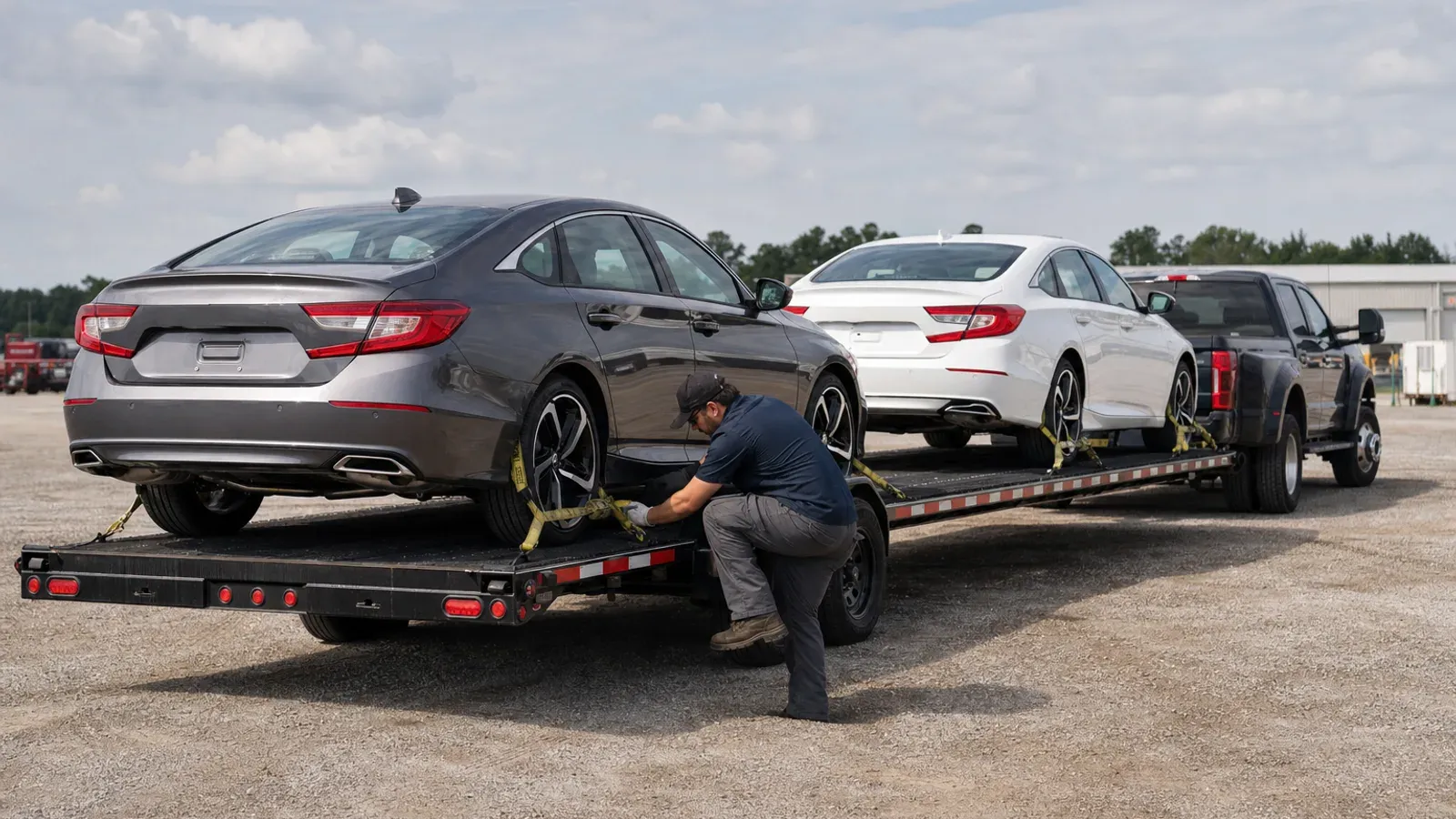
Auto transport gets paid per car per mile, so the number of cars you carry per trip is the whole lever, and the trailer tiers line up neatly with business models. Single-car hauling serves premium and local lanes: enclosed classics, dealer trades, and marketplace deliveries. The rates reward the specialty and the mileage rewards a light rig. Two-car flat decks serve dealers and short lanes. The three-car wedge is where full-time owner-operator math traditionally starts to clear. It's the tier broker boards assume, and our multi-car guide covers it from the operator's side.
The cargo drives the spec. Transport cars show up dead, low, damaged, and full of surprises, and that puts a winch on every tier's build. Wheel straps are the industry standard for securement. Steel decks earn their keep under inventory that leaks fluid, and ramp geometry has to clear the lowest car the board might post.
The compliance stack is the real barrier. You need DOT authority, MC numbers, commercial insurance at auto-transport rates (the highest in light freight), a CDL once the wedge tier's combined weights cross the line, and the steady rhythm of ELD logs and inspections. Check your state's rules for the details. The trailer is a one-time purchase. The stack is the business, and the operators who priced it first are the ones still running in year three.
The transport ladder, ranked
The entry tier is the 20-foot 9,900 open hauler with a steel deck, a winch, and a wheel-strap anchor layout, towed by a three-quarter-ton or one-ton. It runs single-car lanes and marketplace delivery at the lowest rig cost in the trade. The enclosed single works the premium lane, where classics and six-figure inventory pay enclosed rates for the protection of walls.
The volume tier is the three-car wedge, 40 feet behind a one-ton dually. It's the tool broker boards assume you have, and the loading order and clearance habits on the wedge page are the daily craft. The two-car flat gooseneck sits between the two and serves dealer lanes well. Above the wedge, stingers and stackers belong to fleet economics beyond this page.
A few specs hold across every tier. Size the winch to 1.5 times the heaviest dead car. Place the wheel-strap anchors for the wheelbase range the boards actually post. Run load-range rubber with a mounted spare, and treat maintenance as overhead, because transport miles force the calendar on you.
Boards, inspections, and the per-car rhythm
The load board is the weather you work in. Rates per car per mile move with the lane, the season, and the snowbird migration, and deadhead miles eat into whatever the posting promised. Profitable operators know their all-in cost per mile before they accept anything, and the wedge's third car exists to spread that cost. Photograph and sign condition reports at pickup and delivery. That's the claims defense the insurance rates assume you'll have.
Securement follows the transport standard: wheel straps at all four corners of each car, every vehicle tied down independently. Run the full procedure from the tie-down page at a commercial pace, and fold the ten-mile re-tension into a walk-around at every stop. Planning the wedge's loading order from its page against your drop sequence is the tier's daily puzzle.
Compliance closes out every day. Keep your logs current, your inspections scheduled, and the combination's weights inside their ratings at every scale. Treat the rules as the operating system they are. Transport is a thin-margin business run at highway speed, and the margin lives in the boring disciplines.
Auto hauler business FAQ
What trailer starts an auto transport business?
The 20-foot 9,900 open hauler with a winch and steel deck gets you into single-car lanes at the lowest rig cost. The three-car wedge is where full-time math traditionally clears.
How many cars make the business work?
It comes down to per-car-per-mile rates against your all-in costs, and the third car is there to spread the fixed miles. Most full-time operators run the wedge tier for exactly that reason.
Do I need a CDL for car hauling?
The wedge tier's combined weights cross the line by design, while single-car rigs can stay under it at capped ratings. The rules settle the math, so price the license into your plan.
What insurance does auto transport need?
Commercial auto plus cargo coverage at transport rates, the highest in light freight, sized to the value of the inventory aboard. The operators still in business priced it before they bought the trailer.
Open or enclosed transport?
Open runs the volume lanes, enclosed runs the premium ones at premium rates. Your lane plan decides, and plenty of operators end up running one of each.
What's the one spec every transport trailer needs?
The winch, sized past the heaviest dead car. Transport inventory doesn't start on its own, and the board posting won't warn you which cars are dead.